
22MP Film & Slide Scanner with 5 LCD LCD
4.3Editor score
Affordable entry level pricing
Instant preview display feature
Simple one touch scanning
Preserving your cherished memories is more important than ever in a digital world. A reliable film scanner to digital converter allows you to transform old slides and negatives into shareable files effortlessly. Choosing the right device ensures your photos remain vibrant and accessible for generations to come.
We evaluated ten leading models based on ease of use, image quality, and versatility. Each product was assessed for its ability to handle various film formats and deliver high resolution results. Our goal is to help you find the perfect solution for your unique collection needs today.
Each pick highlights specific strengths and ideal user scenarios to guide your decision. Remember that availability and pricing may fluctuate over time. We recommend verifying current details before purchasing to ensure you get the best value for your investment in preservation technology.
4.3Editor score
4.3Editor score
4.3Editor score
As an Amazon Associate we earn from qualifying purchases.
This side-by-side comparison highlights key specifications and capabilities across all selected models to help you make an informed decision based on your specific needs and budget constraints.




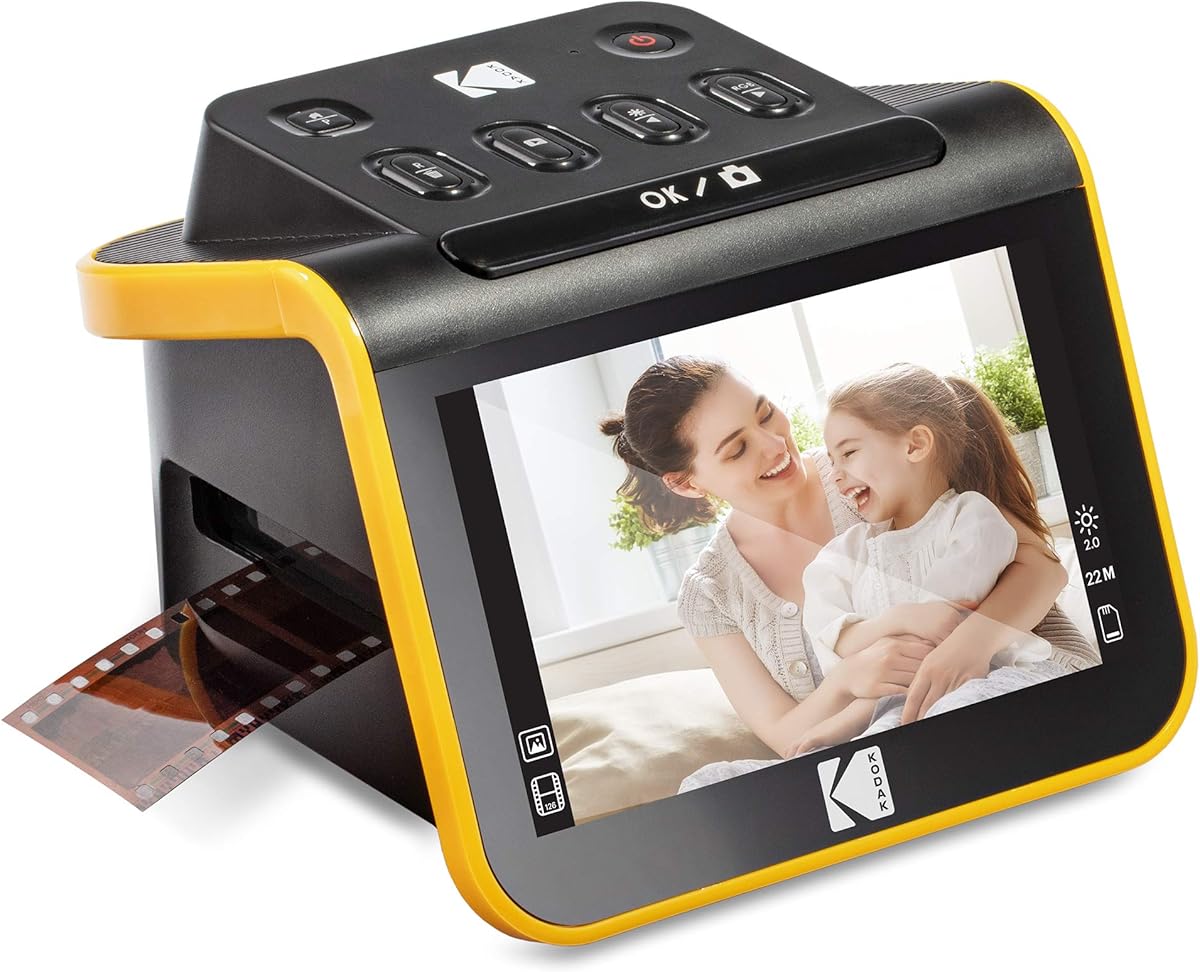
The KODAK Slide N Scan stands out as a top choice for preserving old photos. With a 22MP sensor and 5 inch screen it delivers high quality results. Users appreciate the ease of converting negatives and slides without technical expertise.
We may earn a commission when you buy through this link, at no additional cost to you.
Its gallery mode turns the device into a digital frame which is a unique feature. The one touch editing options simplify color correction and resizing directly on the device. This makes it ideal for families looking to digitize memories quickly.
While the scanner handles multiple formats well users should note the SD card is sold separately. The lack of advanced software integration might be a downside for professionals. However for general home use the trade-off is minimal given the ease of use.
Anyone looking for a reliable standalone scanner will find this model excellent. It balances performance and simplicity effectively. We recommend it for those who want a straightforward way to save cherished memories digitally.
The device operates independently without requiring a computer connection for basic tasks. This allows for faster scanning sessions right from the start of your project.
The large LCD screen enables you to see results immediately after scanning. You can adjust brightness and color on the fly to ensure optimal output.
We may earn a commission when you buy through this link, at no additional cost to you.
This scanner is notable for its ability to handle Super 8 film which many models miss. The 24MP resolution provides detailed digital copies of old negatives. It offers a robust solution for those with mixed film collections.
We may earn a commission when you buy through this link, at no additional cost to you.
Users can view images directly on the 5 inch screen or via HDMI to a TV. This feature is great for family gatherings where everyone can enjoy old movies. The lack of driver installation simplifies the setup process significantly.
Some users report that image quality depends heavily on the condition of the original film. The tray system is efficient but requires careful alignment for best results. Despite minor quirks it remains a strong contender for versatility.
If you have Super 8 reels or need high resolution JPEG files this is a great pick. It caters to those who want to preserve more than just slides. The balance of features makes it a versatile tool for home archiving.
One of the few scanners that supports both 8mm and Super 8 formats seamlessly. This ensures you can digitize your movie reels without extra equipment.
Connecting via HDMI allows you to share memories on a large screen easily. It transforms the digitization process into an interactive family experience.
We may earn a commission when you buy through this link, at no additional cost to you.
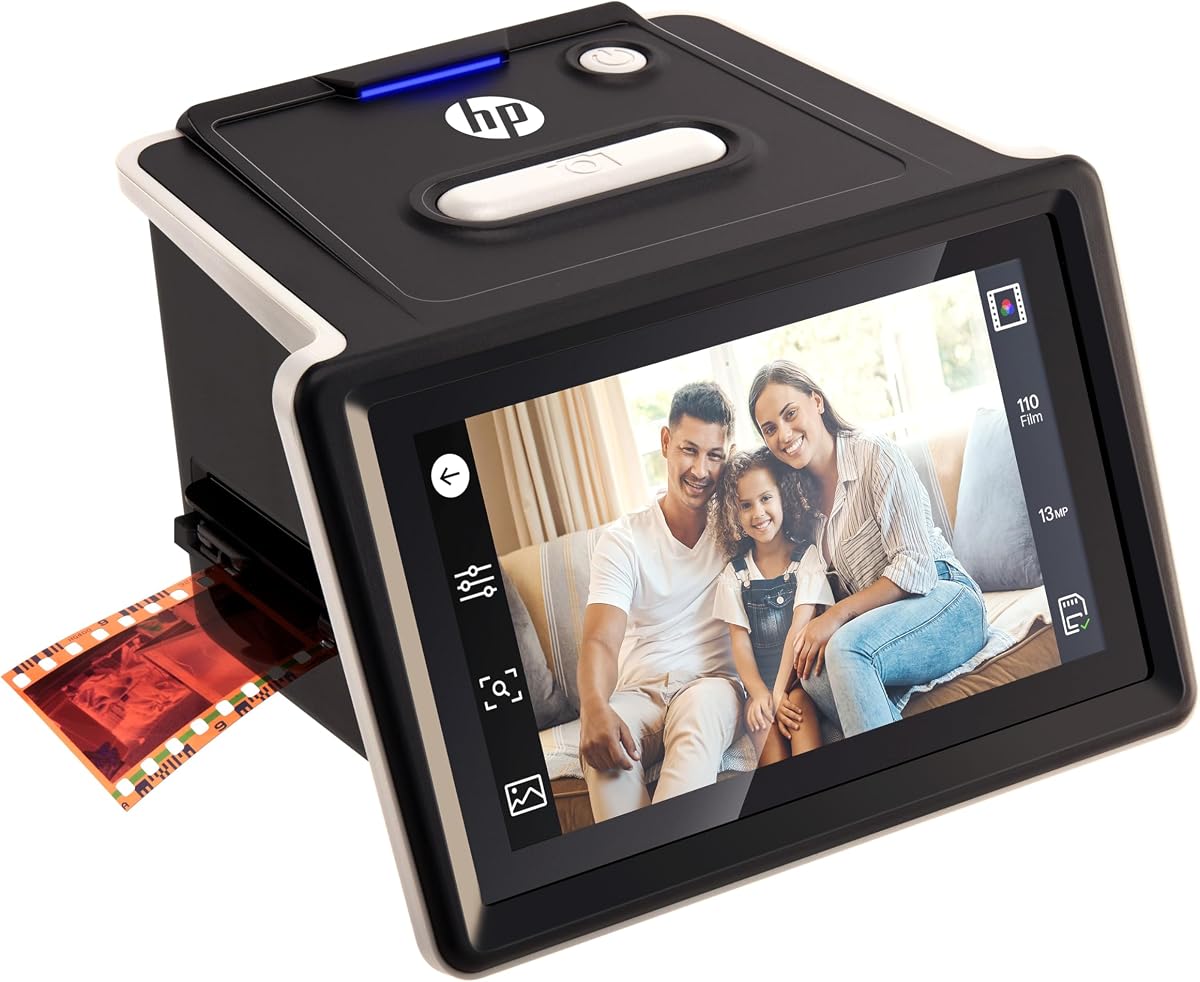
The HP FilmScan HPFS500 offers a premium experience with its intuitive touchscreen and high resolution sensor. It is designed for users who value a polished interface and reliable performance. The standalone workflow ensures you can work without a computer easily.
We may earn a commission when you buy through this link, at no additional cost to you.
Its batch scanning feature streamlines the process for large collections. The touchscreen allows for quick edits and previews which saves time during digitization. The device is built to handle mixed archives with varying film types efficiently.
While the price is higher than budget options the build quality and features justify the cost. Some users may find manual adjustments limited compared to software-based solutions. However for a hassle-free workflow this unit excels.
Ideal for serious hobbyists or families with extensive archives this scanner is a top pick. The premium design fits well in home offices. It ensures your memories are preserved with clarity and ease.
The 5 inch touch screen makes navigating menus and editing images simple. It brings a modern user experience to traditional film scanning tasks.
Quick load trays allow you to scan multiple frames with minimal downtime. This feature is essential for digitizing large collections quickly.
We may earn a commission when you buy through this link, at no additional cost to you.
The SCANZA model offers a compact solution for digitizing slides and negatives. It supports a wide range of formats including Super 8 and 8mm. The included cables ensure you can start scanning right out of the box.
We may earn a commission when you buy through this link, at no additional cost to you.
The 3.5 inch screen is bright and adjustable for comfortable viewing. Users can edit images on the fly using simple interface controls. Its portability makes it easy to store when not in use.
While the screen is smaller than other models it is sufficient for basic previews. Some users note that the build feels lighter than premium options. However for the price it provides significant value for small collections.
If space is a concern or you need a portable scanner this model works well. It is suitable for those who want to digitize without a large footprint. The feature set covers most standard scanning needs effectively.
This unit handles everything from 35mm negatives to 8mm movie reels. It is a versatile choice for those with mixed media collections.
The package comes with HDMI and USB cables plus a cleaning brush. This reduces the need for additional purchases upon setup.
We may earn a commission when you buy through this link, at no additional cost to you.
This device is unique because it converts film reels into 1080p MP4 files. It is designed specifically for motion picture film rather than still images. The interface allows you to control exposure and sharpness directly on the screen.
We may earn a commission when you buy through this link, at no additional cost to you.
The touch buttons make it easy to zoom and align frames during conversion. You can play back the films on the device or transfer them to a TV. This feature brings old family movies back to life in a digital format.
While the lack of audio in the output is a limitation the video quality is clear. It is not suitable for still slides but excellent for reels. The design is portable and easy to store in a drawer.
For those looking to digitize Super 8 or 8mm reels this is the ideal choice. It simplifies the process significantly compared to frame grabbing software. We recommend it for families with old movie reels.
Instead of images it outputs MP4 video files which are easier to share. This modernizes your old films for streaming on current devices.
Works with standard reel sizes from 3 to 9 inches. The universal supply reel makes loading different types of film straightforward.
We may earn a commission when you buy through this link, at no additional cost to you.
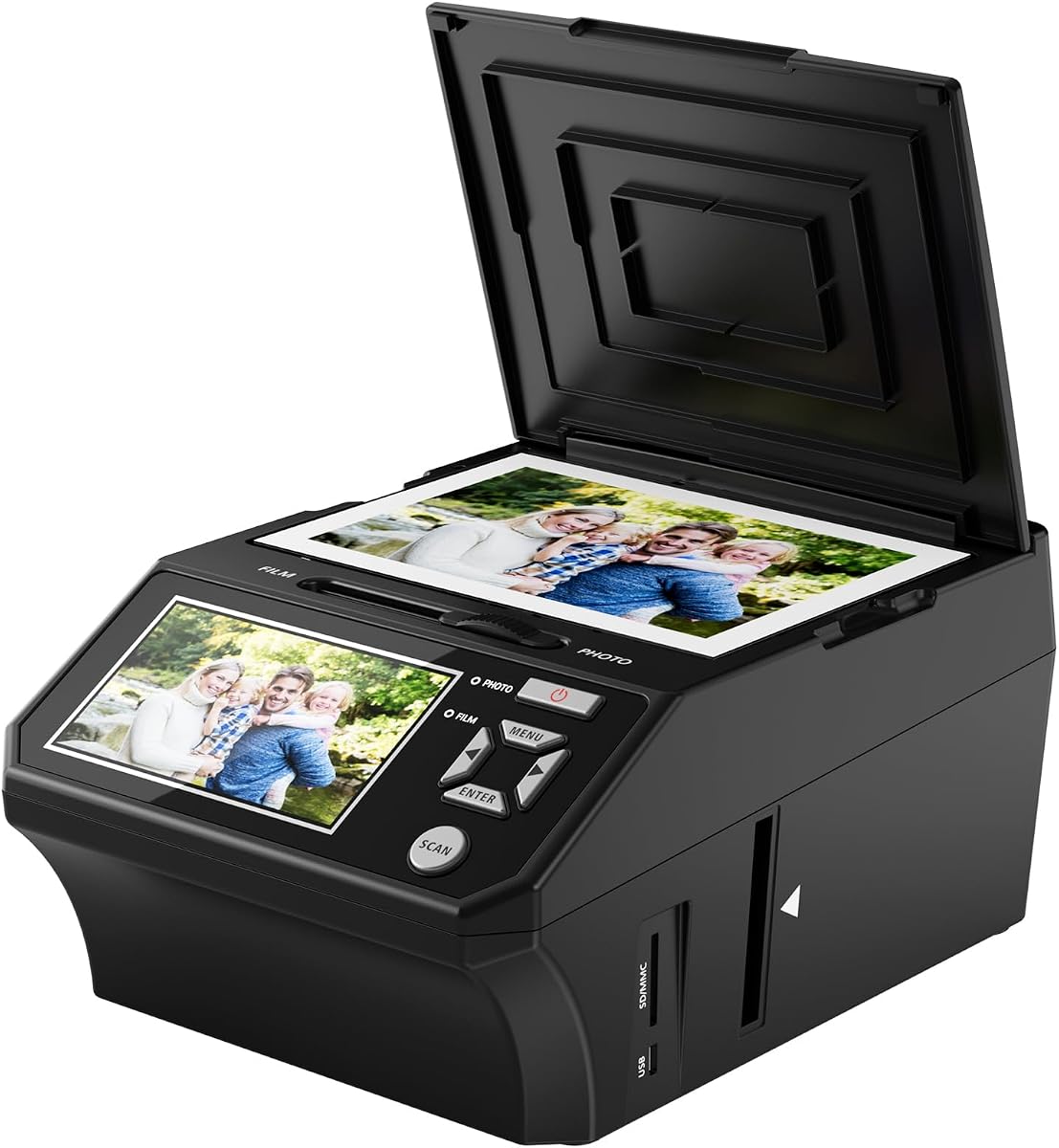
This scanner stands out by supporting printed photos in addition to film formats. It offers a comprehensive solution for families who want to digitize all paper memories. The included 8GB SD card is a convenient bonus.
We may earn a commission when you buy through this link, at no additional cost to you.
The 5 inch screen provides clear previews without the need for external monitors. Users appreciate the simple one touch buttons that make operation straightforward. It works offline which is great for users who do not want to install drivers.
With a three year warranty this product offers peace of mind for long term use. While editing tools are basic they are sufficient for most household needs. The high user rating reflects satisfaction with its performance.
If you need to scan both slides and printed photos this is a versatile pick. The value proposition is strong due to the warranty and included accessories. We recommend it for general home archiving tasks.
Unlike many film scanners this also digitizes printed photos and business cards. This dual capability makes it a true all-in-one converter.
Backed by a three year warranty it provides better protection than standard one year plans. This adds value to the purchase for long term reliability.
We may earn a commission when you buy through this link, at no additional cost to you.
The Slide N Scan Max features a 7 inch screen which is larger than many competitors. This makes it easier to view and edit photos during the scanning process. The continuous feed tray ensures a smooth workflow for multiple slides.
We may earn a commission when you buy through this link, at no additional cost to you.
Users can save directly to SD cards up to 32GB without using a computer. The one touch editing simplifies the process for those who want quick adjustments. The design is sleek and fits well on any desk surface.
While it lacks some advanced connectivity options it covers the basics effectively. The price point is reasonable for the screen size and performance offered. Some users may prefer larger storage options but 32GB is ample for many.
Ideal for those who prioritize screen size this scanner provides a clear view of your memories. The quick feed system saves time compared to manual loaders. We recommend it for users who want a larger display.
The 7 inch tiltable LCD offers a better viewing experience than standard screens. It makes reviewing images easier without eye strain.
The quick feeding tray allows for continuous scanning without repositioning frames. This efficiency is crucial for digitizing larger batches of slides.
We may earn a commission when you buy through this link, at no additional cost to you.
This model offers excellent value with its 22MP resolution and affordable price point. It supports a variety of formats including Super 8 film. The built-in memory allows for temporary storage if you do not have an SD card.
We may earn a commission when you buy through this link, at no additional cost to you.
Output options include HDMI for TV viewing and USB for computer transfer. The large LCD screen lets you preview and edit photos easily. It is designed for simplicity requiring no complicated setup steps.
While the build materials are basic they hold up well for home use. The software is minimal which may limit advanced editing but suits general users. The warranty adds a layer of trust to the purchase.
For budget conscious buyers this scanner provides the core features needed for digitization. It is a practical tool for getting started with digital preservation. We recommend it for casual users with standard needs.
The internal 128MB memory provides immediate storage for scanned images. This is helpful if you do not have an SD card available.
You can choose between HDMI for large screen viewing or USB for file transfer. This flexibility accommodates different viewing preferences.
We may earn a commission when you buy through this link, at no additional cost to you.
This scanner is praised for its simplicity and ease of use. It converts slides and negatives into JPEG files with a single click. The 5 inch screen supports gallery mode for displaying images like a digital frame.
We may earn a commission when you buy through this link, at no additional cost to you.
The three year warranty offers significant protection for a consumer electronic device. Users can connect via USB to a computer or HDMI to a TV. The design focuses on making the process intuitive for anyone.
While it lacks power adjustments it is perfect for straightforward digitization. The gallery mode is a nice touch for sharing photos with guests. It is a reliable choice for those who want a quick start.
If your main goal is to convert slides to digital photos without hassle this model is ideal. The high rating indicates satisfaction among users. We recommend it for seniors or non-tech savvy individuals.
Simply load the film and press scan to begin digitization immediately. No complex settings are required to get started.
When not scanning the device transforms into a digital photo frame. This allows you to enjoy your old photos on a display.
We may earn a commission when you buy through this link, at no additional cost to you.
This HP model features a large 7 inch touch screen for intuitive control. It allows users to crop and adjust scans directly on the display. The quick feed tray simplifies batch scanning for mixed slide collections.
We may earn a commission when you buy through this link, at no additional cost to you.
The touch interface removes the need for physical buttons which appeals to many users. It works without requiring a computer making it a standalone solution. The gallery mode keeps your digital memories visible on the screen.
Some users report touch sensitivity issues which can be a minor inconvenience. The higher price reflects the modern interface and build quality. Despite this it remains a strong option for those prioritizing screen size.
For users who value a modern touchscreen experience this scanner is worth considering. It offers a premium feel and reliable performance for home use. We recommend it for tech savvy families.
The interface allows you to touch and adjust images without a keyboard or mouse. It makes editing feel more like using a tablet.
The quick load tray paired with adapters helps process mixed slides efficiently. This speeds up the process significantly for larger batches.
We may earn a commission when you buy through this link, at no additional cost to you.
Selecting the right film scanner involves considering several key factors to ensure you get the best results for your collection.
Resolution determines the detail in your digital copies. Look for sensors offering at least 22MP for high quality results that can be printed later. Higher resolution ensures fine details in your negatives remain sharp.
Prioritize a high resolution sensor to ensure your memories are preserved with clarity.
Different scanners handle different types of film. Ensure the device supports your specific formats like 35mm 110 126 or Super 8. Missing support can limit your ability to digitize your entire collection.
Check the supported formats carefully to match your existing photo and film archives.
Many models allow you to scan without a computer. This standalone feature is crucial for users who want to avoid software installation. Look for devices with SD card slots for direct saving.
A standalone workflow simplifies the process by eliminating the need for a PC.
Larger screens make it easier to preview and edit your scanned images. A 5 inch or larger display is recommended for comfortable viewing. Some devices also offer gallery mode to display photos as a frame.
Choose a model with a large screen to easily review your photos during scanning.
Connectivity allows you to transfer files to other devices. USB ports are standard for connecting to computers while HDMI enables TV viewing. Having multiple options gives you flexibility in how you access your files.
Look for USB and HDMI connections to ensure you can share photos easily.
User friendly interfaces save time during digitization. Look for one touch scanning and intuitive editing tools. Complicated menus can discourage you from finishing your scanning projects.
Prioritize models with simple controls and clear instructions for a smooth experience.
Storage options like SD card slots are essential for saving your files. Accessories like cleaning brushes help remove dust before scanning. Ensure you know what is included to avoid extra purchases.
Verify the included accessories and storage options to ensure you have everything needed.
A reliable warranty provides peace of mind for your investment. Many brands offer one to three year coverage. Good customer support ensures you can resolve issues if they arise.
Choose a product with a solid warranty to protect your purchase long term.
Start by inserting the SD card into the device if it is not included. Connect the power adapter to ensure the scanner stays on during use. The device does not require a computer for basic scanning tasks.
Insert your film into the appropriate holder or tray. Most scanners come with adapters for different film types. Slide the tray in and press the scan button to begin digitization.
Clean your film with the provided brush before scanning to remove dust. Save your files to the SD card and then transfer them to your computer. This ensures your memories are backed up safely.
Most of the recommended scanners operate standalone without a computer. You can save files directly to an SD card and view them on the device screen. This makes them ideal for users who prefer a simple workflow.
The majority of these devices save images as JPEG files. This format is widely supported and easy to share online. Some models might offer TIFF options but JPEG is standard for most.
Only specific models support Super 8 film. Check the product details to confirm support for this format before purchasing. If you have movie reels look for a dedicated film digitizer.
Most scanners do not include an SD card by default. You will need to purchase one separately to store your digital files. Ensure you buy a card compatible with the device requirements.
Scanning time varies by model but is typically under a few seconds per slide. Batch scanning features help process multiple images faster. The process is designed to be efficient for large collections.
Yes many models offer on-device editing tools. You can adjust brightness, color, and resize images directly on the screen. This eliminates the need for external software for basic fixes.
We hope this guide helped you find the perfect device to preserve your memories. Each model offers unique strengths depending on your needs and budget. Selecting the right tool ensures your photos last for years to come.
Prioritize features like resolution and film support that match your collection. Ease of use is just as important for ensuring you complete your digitization projects. A good scanner makes the process enjoyable rather than a chore.
Remember to check current availability and offers before making your decision. Prices and stock levels may change frequently. We wish you the best in digitizing your cherished family history.