
TP-Link 10GB PCIe Network Card (TX401)
4.2Editor score
10GBase-T Technology support
Backwards compatible with lower speeds
Includes CAT6A Ethernet Cable
This expert guide compares the top 10GbE Network Card options available in October 2026 for high speed data transfers and reliable networking performance.
Finding the right 10GbE Network Card can transform your workstation or server capabilities by enabling faster data transfers and reducing latency significantly during critical tasks.
We compared ten leading models based on controller quality, compatibility, port types, and build reliability to help you choose the best adapter for your specific networking needs.
Each pick highlights key features and real world use cases while noting that availability and pricing may change so always verify current details before finalizing your purchase decision today.
4.2Editor score

4.6Editor score

4.3Editor score
This side by side comparison outlines the core specifications and strengths of each 10GbE Network Card model to help you quickly identify which adapter fits your infrastructure requirements.




The TP-Link TX401 offers an accessible entry point into 10GbE networking with solid real world performance for home labs and small office setups.
We may earn a commission when you buy through this link, at no additional cost to you.
Its 10GBase-T technology ensures compatibility with existing copper cabling while delivering ten times the speed of standard Gigabit connections for smoother workflows.
While it lacks some advanced enterprise features like offloading engines the included CAT6A cable and low-profile bracket make installation straightforward and efficient for most users.
This adapter is ideal for anyone needing a reliable upgrade without breaking the budget and the two-year warranty provides peace of mind for daily operations.
The TX401 automatically negotiates between 10 Gbps and lower rates like 5 Gbps or 1 Gbps ensuring it works with your current router or switch without hassle.
Quality of Service technology prioritizes traffic for gamers reducing congestion and latency during intense online sessions or large media file transfers.
We may earn a commission when you buy through this link, at no additional cost to you.
Synology users will find this dual-port adapter delivers exceptional stability and performance for storage applications where redundancy and throughput are critical priorities.
We may earn a commission when you buy through this link, at no additional cost to you.
Built specifically for DSM systems it ensures deep integration with network tools and management features that generic cards often lack in complex enterprise environments.
The five-year warranty stands out as a major advantage signaling manufacturer confidence in longevity while the dual ports allow for link aggregation or failover configurations.
If you operate a Synology NAS this card removes guesswork from compatibility and provides a robust foundation for high-speed storage access and backup workflows.
Having two 10GbE ports lets you set up link aggregation to boost bandwidth or configure failover to maintain connectivity even if one port loses signal.
The adapter works natively with Synology DiskStation Manager eliminating driver headaches and enabling advanced storage pool configurations directly from the NAS interface.
We may earn a commission when you buy through this link, at no additional cost to you.
The Vogzone X550-T2 brings enterprise-grade capabilities to workstations and servers with its Intel controller and extensive feature set tailored for demanding environments.
We may earn a commission when you buy through this link, at no additional cost to you.
Dual copper ports provide flexibility for redundant connections and this adapter supports advanced protocols like iSCSI and FCoE which are vital for virtualized infrastructure.
Unique firmware update tools allow remote management without system downtime making it an attractive option for IT teams managing multiple machines across a network.
Premium buyers seeking maximum reliability and throughput will appreciate the robust build quality and support for virtualization standards that generic alternatives often miss.
The included NVM utility allows administrators to refresh adapter firmware directly from Windows or Linux reducing the need for physical access or bootable drives.
With SR-IOV and VMDq support this card offloads network processing tasks improving performance in virtual machines running on VMware or other hypervisors.
We may earn a commission when you buy through this link, at no additional cost to you.
This 10Gtek card leverages the well-known Intel 82599EN controller to deliver stable performance for servers and home labs requiring fiber connectivity.
We may earn a commission when you buy through this link, at no additional cost to you.
The SFP+ port enables you to connect high-speed switches or transceivers making it versatile for datacenter environments or advanced home lab networking topologies.
It supports virtualization platforms like VMware ESXi and Linux distributions which appeals to users running complex setups needing reliable network throughput.
While limited to a single port it remains a solid choice for those prioritizing controller quality over port count and offers strong value for its capabilities.
The SFP+ slot accepts various modules including DAC cables and fiber optics giving you freedom to match your network infrastructure needs precisely.
Intel's 82599EN is a mature chipset known for reliability and performance ensuring your server maintains stable connections under heavy load conditions.
We may earn a commission when you buy through this link, at no additional cost to you.
The VunLink adapter utilizes the Realtek RTL8127 chipset to bring modern efficiency and speed to compact builds and home lab configurations.
We may earn a commission when you buy through this link, at no additional cost to you.
Its PCIe 4.0 x1 interface ensures it fits in smaller slots without sacrificing bandwidth while supporting a wide range of auto-negotiated speeds for flexibility.
Energy efficient design reduces heat output making it suitable for silent PCs or mini towers where thermal constraints are a primary concern.
Users looking for a balance of performance and power savings will find this card a compelling option for upgrading older systems without major hardware changes.
Running on PCIe 4.0 this card leverages newer motherboard slots to ensure maximum throughput potential for your network adapter.
The RTL8127 controller is engineered for lower power consumption helping to keep system temperatures stable during extended periods of use.
We may earn a commission when you buy through this link, at no additional cost to you.
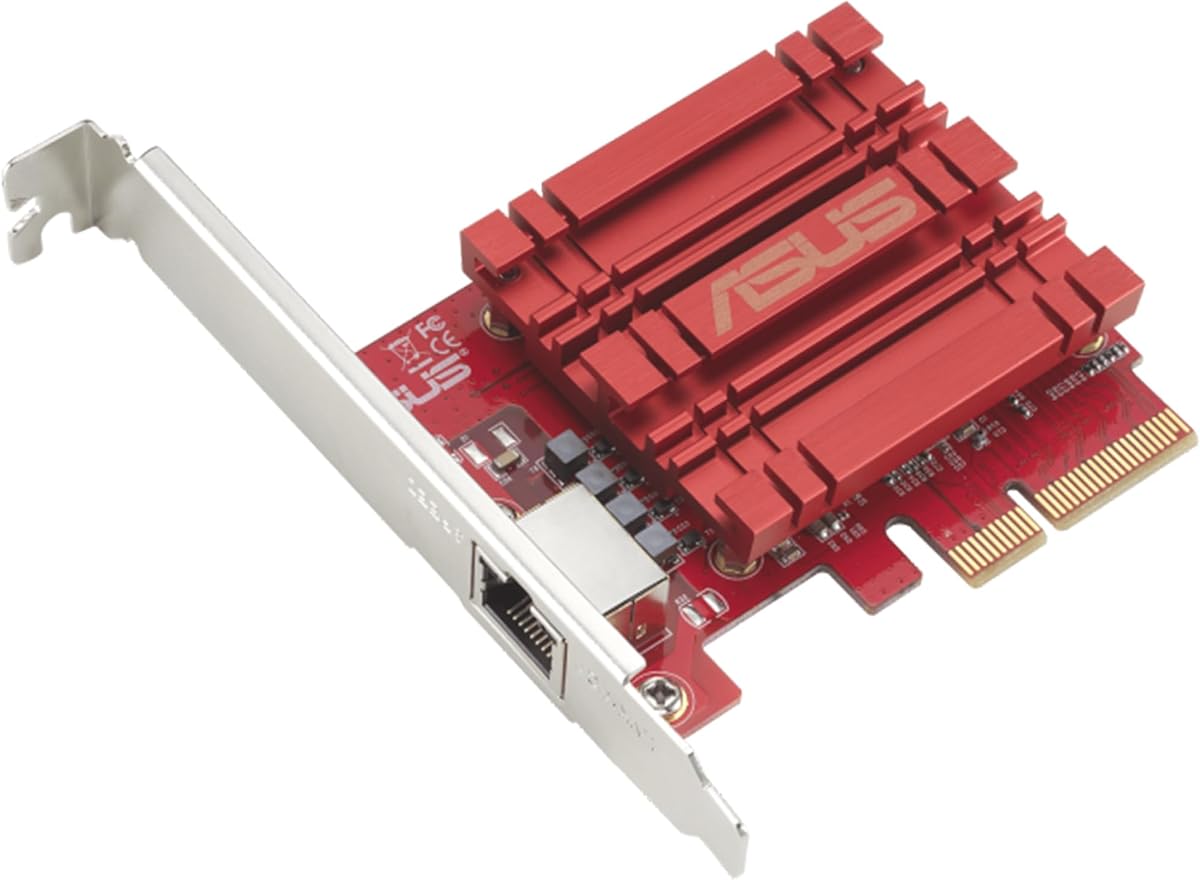
Asus delivers a straightforward 10GbE solution that emphasizes ease of use and compatibility with existing network standards and operating systems.
We may earn a commission when you buy through this link, at no additional cost to you.
The adapter supports a wide range of speeds and includes Quality of Service features to prioritize traffic for smoother online experiences during heavy usage.
Linux kernel support is a notable plus for users running open source environments who need robust networking without relying on proprietary drivers.
While it may lack some advanced features found in enterprise gear this card provides a reliable upgrade path for desktop and workstation users.
Full compatibility with 10/5/2.5/1Gbps ensures you can integrate this card into diverse networks without worrying about mismatched hardware speeds.
Built-in QoS technology allows you to prioritize critical data packets ensuring smooth performance during online gaming or streaming tasks.
We may earn a commission when you buy through this link, at no additional cost to you.
For Synology owners this single-port adapter offers a seamless upgrade path with validated performance and long-term support backed by a five-year warranty.
We may earn a commission when you buy through this link, at no additional cost to you.
The auto-negotiation feature ensures smooth integration with your existing network gear providing flexibility when connecting to various routers or switches.
While it offers a single port it delivers high performance for demanding storage tasks making it ideal for users who do not need redundancy.
The perfect rating reflects strong user satisfaction with its reliability and simplicity making it a safe choice for dedicated Synology environments.
Validated by Synology this card ensures maximum compatibility with your NAS operating system reducing potential driver or configuration issues.
Optimized for storage applications it enables rapid file transfers and efficient data backups crucial for media production or office workflows.
We may earn a commission when you buy through this link, at no additional cost to you.
This card stands out for its openness allowing third-party DAC and fiber optics to work seamlessly without vendor lock-in issues common with branded cards.
We may earn a commission when you buy through this link, at no additional cost to you.
It is detected by major virtualization platforms and NAS systems without drivers making setup effortless for users of Proxmox TrueNAS or Unraid environments.
The passive heatsink design helps maintain stability but requires adequate case airflow to prevent overheating during sustained high-traffic network operations.
Budget-conscious professionals seeking enterprise-grade silicon will appreciate the reliability and cost savings enabled by avoiding proprietary module restrictions.
Unlike some branded cards this one accepts third-party optics which can significantly reduce costs over time for fiber network connections.
Automatic detection on most Linux and virtualization platforms eliminates driver headaches and speeds up deployment in busy server environments.
We may earn a commission when you buy through this link, at no additional cost to you.
TRENDnet offers a compliant networking adapter suitable for government and enterprise projects requiring NDAA and TAA compliance alongside reliable throughput.
We may earn a commission when you buy through this link, at no additional cost to you.
Its support for 2.5G BASE-T enables flexible cabling options that work with standard Cat5e cables for certain network configurations without immediate upgrades.
Backed by three years of manufacturer protection and English-speaking tech support users gain confidence in long-term reliability and assistance availability.
This adapter is a practical choice for organizations needing certified hardware with stable performance across various operating environments and legacy systems.
NDAA and TAA compliance ensures this adapter meets strict government standards for security and sourcing in public sector projects.
TRENDnet provides dedicated support teams to assist with technical questions ensuring smooth deployment and troubleshooting when issues arise.
We may earn a commission when you buy through this link, at no additional cost to you.
This 10Gtek card provides a straightforward single-port 10GbE solution leveraging a trusted Intel chipset for stability in diverse server environments.
We may earn a commission when you buy through this link, at no additional cost to you.
It supports a wide range of speeds and operating systems making it adaptable for various setups from home labs to small business servers.
While firmware updates are not supported the lifetime technology support offers users help with setup and troubleshooting when needed.
For those needing a basic yet reliable upgrade this adapter offers solid performance and compatibility at a competitive price point.
Equipped with an original Intel X550-AT2 chip it ensures stable connections and compatibility with standard virtualization and server protocols.
Compatible with Windows Server Linux and FreeBSD this card adapts easily to different software environments and legacy systems.
We may earn a commission when you buy through this link, at no additional cost to you.
Selecting the right 10GbE Network Card involves balancing performance, compatibility, and budget to ensure your infrastructure benefits from high-speed upgrades.
The chipset determines stability and throughput; Intel controllers like X550 and 82599EN are industry standards for reliability while Realtek offers budget-friendly efficiency.
Always verify the chipset brand to ensure consistent performance under load and avoid unverified clones that may drop connections during heavy transfers.
RJ45 ports use copper cables similar to standard ethernet but may require CAT6A for full 10G speeds whereas SFP+ allows fiber optics for longer distances.
Consider your existing switch and cabling to avoid unexpected costs and ensure your chosen card matches the physical media you plan to use.
Ensure the card supports your current OS like Windows Server Linux or VMware ESXi as some models rely on specific drivers or kernel versions to function.
Linux users especially should check community support since some cards lack official open-source drivers or require manual configuration to enable all features.
Check your motherboard's PCIe slot type such as x4 or x16 and whether you need a low-profile bracket for small form factor cases.
Some cards require PCIe 3.0 x4 or higher lanes so verify your slot speed to ensure the adapter runs at full 10G speed without throttling.
Enterprise use cases benefit from features like SR-IOV TCP offloading and QoS which reduce CPU load during virtualization or network congestion scenarios.
For basic home use these may be optional but for servers handling large datasets these capabilities ensure smoother multitasking and system stability.
Look for cards with at least a three-year warranty and accessible technical support to handle potential issues without expensive replacements.
Brands like Synology and TRENDnet offer longer coverage which can protect your investment against early failures or compatibility hurdles after purchase.
Cards with firmware update tools let you refresh the card's software remotely to fix bugs or improve performance without reinstalling hardware.
This feature is vital for server environments where minimizing downtime during maintenance is critical to operational continuity and data security.
Active or passive cooling determines how well the card handles heat; passive heatsinks need good case airflow while active fans may add noise to silent builds.
Evaluate your case's airflow to ensure the card does not overheat during extended transfers which could lead to instability or hardware damage over time.
Begin by powering down your PC and opening the case to locate a free PCIe slot compatible with the card's requirements such as x4 or x16 lanes.
Gently insert the card into the slot ensuring it sits flush before securing the bracket with screws; reconnect any case fans and power cables that were detached.
Turn on your system and install any required drivers from the manufacturer's website to enable full functionality and verify the link light indicates a successful connection.
Most 10GbE RJ45 cards require Cat6A cabling for full 10G speeds but some support 2.5Gbps over existing Cat5e for shorter runs; check the card's specs before planning.
Generally no updates are needed as most modern motherboards handle PCIe cards plug-and-play but enabling PCIe slot settings in BIOS may help with compatibility on older boards.
Look for cards supporting SR-IOV and TCP offloading features to reduce CPU load; Intel X550 or 82599EN controllers are popular choices for VMware and Proxmox environments.
If your router lacks 10GbE ports you will need a switch or router upgrade to realize the card's speed potential otherwise it will only connect at the router's maximum rate.
Most work with mainstream kernels but older or custom distributions may need manual driver installation; check the manufacturer's compatibility list before purchasing to avoid issues.
Yes but models optimized for specific brands like Synology ensure better integration; check official compatibility lists to avoid firmware or driver limitations on NAS platforms.
The 10GbE Network Card market offers excellent choices ranging from budget options like TP-Link to premium server adapters from Synology and Vogzone with robust features.
Prioritize controller quality and compatibility with your OS and switches to ensure your upgrade delivers the intended speed and stability improvements for your workflows.
Always verify current availability and confirm technical specs with the seller before purchasing to avoid compatibility surprises in your specific hardware configuration.