
BOSGAME E4 Air Mini PC
4.2Editor score
Ryzen 5 3500U Processor
Triple 4K Display Support
Compact Quiet Design
Discover the top Linux Mini Pcs for developers and professionals. This guide compares performance, compatibility, and value across ten leading models available
Linux Mini Pcs have revolutionized how professionals approach compact computing, offering robust open-source environments in tiny form factors. These devices deliver impressive power while consuming minimal desk space and energy.
Our team analyzed technical specifications, user feedback, and real-world performance metrics to curate this list. We focused on processing power, memory flexibility, and native Linux support across various distributions.
Each pick highlights unique strengths like triple display support or industrial-grade reliability. Keep in mind that availability and pricing shift frequently, so verify current details before making your final decision.
4.2Editor score

5.0Editor score

5.0Editor score
The following table provides a side-by-side comparison of key specifications for all ten products featured in this guide. Use this data to quickly identify which model best matches your specific computing requirements and budget constraints.


The TK Node Mini PC stands out as a top pick for professionals who want a reliable Linux environment without the hassle of installation. It comes with Zorin OS Core pre-installed, offering a familiar desktop experience that eases the transition from Windows. This device is built in the USA, ensuring high quality control and a solid warranty structure.
We may earn a commission when you buy through this link, at no additional cost to you.
Its performance is driven by an AMD Ryzen R2314 processor, which delivers efficient multitasking capabilities suitable for development and automation tasks. The unit features dual SO-DIMM slots for memory expansion up to 64GB, ensuring you can handle heavy workloads. Additionally, dual NVMe SSD slots allow for up to 4TB of storage, making it ideal for local servers or extensive data projects.
While the TK Node Mini PC is powerful, the price point is higher than many competitors in the market. However, this cost is justified by the inclusion of pre-installed software, robust hardware, and excellent US-based support. It is an investment for those who value reliability and immediate usability over budget savings.
This device is perfect for developers, system administrators, and businesses needing a dependable mini PC for continuous operation. If you need a system that works immediately upon setup and offers strong long-term support, the TK Node Mini PC is the clear recommendation.
Zorin OS Core provides a polished, Ubuntu-based experience that is optimized for productivity and development, removing the need for complex OS installation steps.
With dual slots for both RAM and NVMe drives, users can future-proof their device to handle growing storage needs and memory-intensive applications without replacing the entire unit.
We may earn a commission when you buy through this link, at no additional cost to you.
The BOSGAME E4 Air Mini PC offers an incredibly low entry point for users seeking a compact Linux-compatible machine. While it may not match the raw power of premium models, its AMD Ryzen 5 3500U processor handles daily tasks like web browsing, document editing, and media streaming with ease. It is an excellent choice for home offices or educational settings.
We may earn a commission when you buy through this link, at no additional cost to you.
A standout feature of this budget device is its triple 4K display support. Through HDMI, DisplayPort, and USB-C connections, users can connect multiple monitors for enhanced productivity without needing external dongles. The integrated Radeon Vega 8 Graphics support this capability effectively, providing a multi-screen experience usually reserved for more expensive desktops.
On the downside, the 8GB of RAM and SATA SSD limit performance for heavy multitasking or rapid file operations. Upgrading is possible but may require technical knowledge. For users who prioritize cost and screen real estate over raw speed, these limitations are acceptable trade-offs.
We recommend the BOSGAME E4 Air for students, light office workers, and home users who need a reliable secondary computer. Its affordability and strong display capabilities make it a versatile tool for everyday computing needs without breaking the bank.
Despite the budget price, the E4 Air supports three independent 4K monitors, allowing users to create a high-efficiency workspace without expensive hardware.
The small form factor and efficient cooling ensure that the E4 Air runs silently, making it suitable for quiet environments like libraries or bedrooms.
We may earn a commission when you buy through this link, at no additional cost to you.
The ASUS NUC 14 Pro represents the pinnacle of mini PC performance in the current market. Powered by the Intel Ultra 7 155H processor with sixteen cores, it delivers workstation-class capabilities in a tiny chassis. This makes it ideal for AI researchers, developers, and power users who need significant processing power without a bulky tower.
We may earn a commission when you buy through this link, at no additional cost to you.
It comes with Linux Mint pre-installed, providing a clean and stable environment for development and creative work. The massive 64GB of DDR5 RAM ensures that even the most demanding applications run smoothly. Combined with a 2TB PCIe SSD, storage is fast and plentiful. The system also features advanced cooling to sustain high performance during 24/7 operation.
The main drawback is the high cost, which places it out of reach for casual users. It is a specialized tool designed for professionals who require specific high-end features like Thunderbolt 4 and massive memory. However, for those who need this power, the value is undeniable.
Choose the ASUS NUC 14 Pro if you are a professional developer or researcher needing serious computing power in a portable format. It offers a unique blend of high-end performance and open-source flexibility that is hard to match in the mini PC category.
With 16 cores and high clock speeds, this device can handle AI model training and virtualization tasks that typically require full-sized desktop computers.
Pre-installing Linux Mint ensures a stable, bloat-free environment tailored for professionals, saving setup time and ensuring software compatibility.
We may earn a commission when you buy through this link, at no additional cost to you.
The Beelink SER3 Mini PC is a solid choice for users who need reliable performance for standard office tasks and media consumption. Equipped with an AMD Ryzen 3 3200U processor, it offers smooth multitasking capabilities. The inclusion of 16GB of DDR4 RAM ensures that applications load quickly and multiple tabs remain open without slowdowns.
We may earn a commission when you buy through this link, at no additional cost to you.
This model features a dual-display setup via HDMI, allowing users to extend their workspace efficiently. The integrated Radeon Vega 3 graphics are sufficient for light video editing and casual gaming. Furthermore, Beelink provides lifetime technical support, which is a significant advantage for long-term ownership and peace of mind.
While the processor is older, it remains efficient for most daily workflows. The cooling system is well-designed to keep noise levels low during operation. Users looking for a compact, reliable machine for general computing will find this device meets their needs without unnecessary complexity.
We recommend the Beelink SER3 for students and small business owners. Its balance of memory, storage, and support makes it a practical investment for those who want a dependable mini PC without paying for high-end features they do not need.
16GB of RAM allows for seamless switching between applications, making it ideal for multitasking environments where productivity is key.
Beelink offers lifetime technical assistance, ensuring that users can resolve software or hardware issues without additional costs.
We may earn a commission when you buy through this link, at no additional cost to you.
The Beelink Mini S12 Pro utilizes the efficient Intel N100 processor to deliver reliable performance while consuming very little energy. This makes it an excellent choice for 24/7 operations like home servers or media centers. The Intel UHD Graphics handle dual 4K displays at 60Hz effectively, providing sharp visuals for work or entertainment.
We may earn a commission when you buy through this link, at no additional cost to you.
Connectivity is modern, featuring WiFi 6 and Bluetooth 5.2 for fast and stable wireless connections. The device supports multiple interfaces including USB 3.2 Type-A ports and HDMI 2.0, ensuring compatibility with a wide range of peripherals. The cooling system uses a large silent fan and copper heat sink to manage temperatures quietly.
One limitation is the single memory slot, which restricts upgrade flexibility compared to dual-slot models. However, 16GB is often sufficient for most users. The plastic chassis is durable and resistant to scratches, maintaining a professional look on any desk.
This mini PC is ideal for home office setups and network storage applications. Its low power profile and strong dual 4K support make it a versatile tool for users who want energy efficiency without sacrificing display quality or connectivity.
The N100 processor operates at a low thermal design power, reducing electricity costs and heat output in continuous run scenarios.
Two HDMI 2.0 ports allow users to connect two 4K monitors simultaneously, enhancing productivity through multi-screen workflows.
We may earn a commission when you buy through this link, at no additional cost to you.
The KAMRUI Pinova P2 Mini PC features a Zen3 architecture processor that delivers impressive speed for its size. The AMD Ryzen 7 3300U offers strong single-core performance, making it snappy for everyday tasks. The 7nm process ensures that this speed is achieved with efficient power usage and cool operation.
We may earn a commission when you buy through this link, at no additional cost to you.
One of its standout features is the triple 4K display support. Through HDMI, DisplayPort, and USB-C, users can run three screens simultaneously, which is rare for devices in this price range. The integrated Radeon Graphics handle this load well, ensuring smooth visuals across all connected monitors.
While it comes with 256GB of storage, expansion slots allow for further growth. The LPDDR4X memory provides fast bandwidth for applications. The sleek silver design and silent cooling fan make it a great addition to any modern workspace or entertainment center.
We recommend the KAMRUI Pinova P2 for users who need a fast, compact system with multiple monitor capabilities. It balances performance and efficiency well, making it suitable for professionals and home users alike who demand a responsive computing experience.
The Zen3 architecture delivers up to 50% faster single-core performance compared to older models, ensuring responsive application loading.
USB-C with DisplayPort Alt Mode offers flexible options for connecting high-resolution displays without needing extra adapters.
We may earn a commission when you buy through this link, at no additional cost to you.
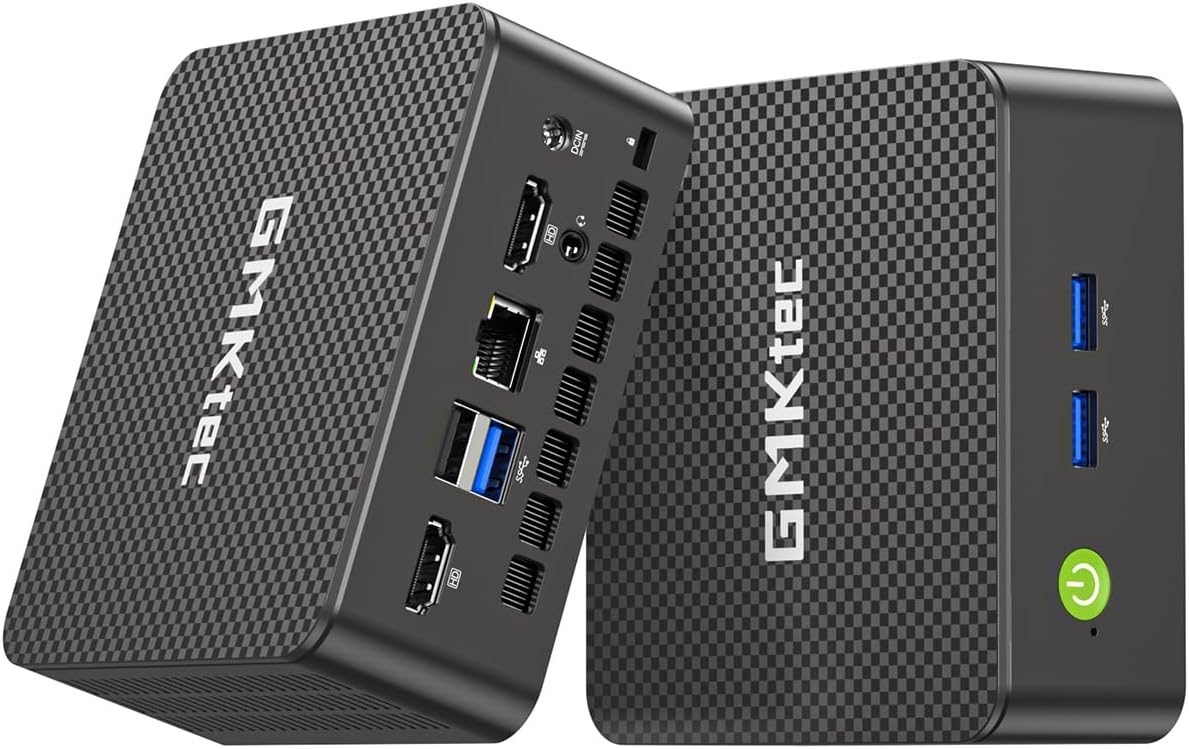
The GMKtec G11 Mini PC is designed with networking enthusiasts and professionals in mind. It features dual 2.5GbE Ethernet ports, allowing it to function as a high-speed router or firewall appliance. This makes it perfect for running software like pfSense or creating a robust home lab environment.
We may earn a commission when you buy through this link, at no additional cost to you.
Performance is enhanced by dual-channel 16GB RAM, which doubles the data pathway compared to single-channel designs. This results in better application responsiveness and smoother video playback. The AMD Radeon GPU outperforms many competitors in graphical tasks, supporting triple 4K displays without adapters.
Built for continuous operation, the device manages heat efficiently and maintains stability under load. WiFi 6E ensures fast wireless connectivity for devices on the network. The professional-grade support and solid build quality make it a reliable choice for serious users.
We recommend the GMKtec G11 for IT professionals and network enthusiasts. Its dual Ethernet ports and strong processing power make it a specialized tool for managing complex network setups or virtualization projects effectively.
Dual 2.5GbE ports allow for high-throughput routing and switching, transforming the mini PC into a powerful networking node.
The dual-channel memory architecture ensures that the GPU and CPU have sufficient bandwidth, reducing bottlenecks during heavy tasks.
We may earn a commission when you buy through this link, at no additional cost to you.
The CyberGeek Mini PC Gaming brings significant power to the mini PC market with its 11th Gen Intel Core i9 processor. This device offers 8 cores and 16 threads, capable of handling demanding software and gaming tasks efficiently. It is preloaded with Ubuntu Linux, catering to users who prefer an open-source environment for their high-performance needs.
We may earn a commission when you buy through this link, at no additional cost to you.
With 32GB of DDR4 RAM, the system handles multitasking effortlessly. Users can run multiple virtual machines or heavy applications without lag. The triple display support via DP, HDMI, and Type-C ports allows for immersive setups. Six USB ports provide ample connectivity for all peripherals.
While the high performance is impressive, it can generate more heat than lower-tier models. The advanced cooling system helps manage this, but users should ensure proper ventilation. This device is suited for those who need desktop-level power in a compact space.
We recommend this device for gamers and power users who value performance. Its high specs and triple display capabilities make it a strong contender for those who need a portable yet powerful computing solution.
The Core i9 processor delivers desktop-grade performance, allowing users to play modern games on a small form factor system.
Ubuntu Linux provides a flexible and customizable platform, enabling users to optimize the system for specific development workflows.
We may earn a commission when you buy through this link, at no additional cost to you.
The BOSGAME E5 Mini PC is built with networking in mind, featuring dual 2.5GbE LAN ports. This hardware foundation makes it ideal for building secure home servers or firewall appliances. The Ryzen 3 5300U processor ensures stable performance for daily workflows and network applications.
We may earn a commission when you buy through this link, at no additional cost to you.
It includes 16GB of DDR4 memory and dual SODIMM slots, allowing for memory upgrades up to 64GB. Storage flexibility is also high with dual NVMe slots. The Type-C port supports Power Delivery, making it convenient to power the device with compatible chargers.
The cooling system uses copper heat pipes to keep the device whisper-quiet even under load. It drives three 4K monitors via HDMI, DisplayPort, and USB-C, making it a versatile productivity tool. Its compact footprint saves space on any desk.
We recommend the BOSGAME E5 for IT enthusiasts and professionals needing reliable networking hardware. Its combination of dual LAN ports, storage flexibility, and quiet operation makes it a powerful choice for home server setups.
Dual 2.5GbE ports allow for high-speed data transfer between network segments, perfect for virtualization and firewall tasks.
Dual M.2 slots provide the ability to install multiple fast drives for RAID configurations or extensive data storage.
We may earn a commission when you buy through this link, at no additional cost to you.
The GMKtec G3S Mini PC is a compact solution for entertainment and basic office tasks. Powered by the Intel N95 processor, it offers improved performance over previous models. It is perfect for streaming content, browsing the web, and handling light document editing.
We may earn a commission when you buy through this link, at no additional cost to you.
The Intel UHD Graphics support AV1 decoding, ensuring smooth playback of modern video formats. Dual HDMI 2.0 ports allow for dual 4K displays, enhancing the visual experience. WiFi 5 and Bluetooth 5.0 provide solid connectivity options for peripherals and networks.
While 8GB of RAM is standard, the system remains responsive for typical usage. The design is versatile, fitting well in home entertainment setups or small workspaces. It is a cost-effective way to upgrade to a modern, compact computing device.
We recommend the GMKtec G3S for casual users and families looking for a reliable media hub. Its strong video capabilities and compact form factor make it an excellent choice for living room setups.
The N95 processor supports AV1 decoding, ensuring compatibility with the latest video streaming formats without stuttering.
Dual HDMI outputs enable users to connect two 4K screens for extended workspace or mirrored media playback.
We may earn a commission when you buy through this link, at no additional cost to you.
Selecting the right Linux Mini PC requires careful consideration of several technical factors to ensure the device meets your specific needs. This guide breaks down the essential components to evaluate before making a purchase.
Not all mini PCs support Linux out of the box. Some models come with pre-installed distributions like Zorin or Mint, while others require manual installation. Check the hardware list for Linux support, particularly for graphics drivers and Wi-Fi chips.
Pre-installed options save time and ensure hardware compatibility, but installing your own distribution offers more flexibility. Always verify the specific model has a history of successful Linux adoption.
The processor determines how well the system handles multitasking and compute-intensive tasks. For basic office work, an Intel N100 or AMD Ryzen 3 is sufficient. For development, AI, or heavy virtualization, look for Core i5/i7 or Ryzen 5/7 models.
Match the processor cores to your workload. More cores allow for better parallel processing which is vital for developers running virtual machines or containers.
RAM is critical for smooth performance. 8GB is acceptable for basic use, but 16GB or more is recommended for professional workloads. Look for expandable slots to future-proof your system as software requirements grow.
Storage type impacts boot times and application load speeds. NVMe SSDs are significantly faster than SATA drives. Dual storage slots provide redundancy and expandability without replacing the main drive.
Many Linux users prefer multi-monitor setups for productivity. Check the number and type of video ports available. HDMI, DisplayPort, and USB-C with DP Alt Mode are standard. Ensure the graphics card supports the resolution and refresh rates you need.
Triple display support is rare in mini PCs but highly valuable. Verify if the system can drive three independent 4K screens simultaneously for a complete workstation experience.
Modern connectivity includes Wi-Fi 6E and Bluetooth 5.2 for stable wireless links. Ethernet ports are essential for local servers. Look for USB 3.2 ports for fast data transfer. Dual LAN ports are useful for networking enthusiasts.
Ensure the ports match your existing peripherals. Having enough USB-A and Type-C ports prevents the need for multiple dongles which can clutter the workspace.
Mini PCs have limited airflow so cooling is vital. Models with copper heat pipes and silent fans are preferred for offices. Ensure the device can handle sustained loads without throttling or overheating.
A silent cooling system is crucial for home environments. Active fans should not be audible during normal use to maintain a quiet workspace.
Many Linux Mini PCs run 24/7 for servers or automation. Look for low power CPUs like the Intel N series or AMD Ryzen embedded. Low TDP reduces electricity bills and heat output.
Energy efficiency is a major factor for continuous operation. A device that consumes less power during idle is more sustainable and cost-effective over time.
Hardware failures can happen. Check the warranty duration and whether support is local or remote. US-based assembly often indicates higher quality control. A reliable support team helps resolve issues quickly.
Lifetime technical support or long warranties are significant benefits. They reduce risk and ensure you have help if the device encounters problems after purchase.
Once you receive your device, update the operating system immediately to ensure you have the latest security patches. If it comes without Linux, install your preferred distribution using a USB drive and follow the official installation guide.
Maintain physical cleanliness by keeping vents dust-free. Regularly clean the exterior with a microfiber cloth. Ensure there is adequate space around the device for airflow to prevent overheating.
Regular software maintenance such as disk cleanup and kernel updates keeps the system running smoothly. Use tools like Timeshift or standard Linux package managers to maintain system stability.
Not all mini PCs have official Linux support. While most modern hardware works well, some Wi-Fi or graphics chips may lack drivers. Always check compatibility lists or buy models known for Linux support like those with pre-installed OS.
Many mini PCs have SO-DIMM slots that allow RAM upgrades. However, some compact models have soldered memory. Always check the specifications to see if the RAM is expandable before purchasing.
Zorin OS and Linux Mint are top choices for general users due to their user-friendly interface. Developers often prefer Ubuntu or Fedora for extensive package support and community resources.
Download the ISO of your chosen distribution and use a tool like BalenaEtcher to write it to a USB drive. Insert the USB into the mini PC, boot from it, and follow the on-screen installation prompts.
Entry-level mini PCs handle casual games well but may struggle with AAA titles. Models with dedicated GPUs or strong integrated graphics like Ryzen are better suited for gaming.
Yes, mini PCs are excellent for home servers due to their low power usage and small footprint. They can run Docker containers, NAS software, or virtualization platforms like Proxmox.
Ensure the mini PC has enough physical ports and supports the resolution you need. Triple display support is rare so check the specs carefully before buying if you plan to use multiple screens.
Thermal throttling can occur if the cooling is insufficient for the processor. Look for models with good cooling solutions like heat pipes and efficient fans to avoid performance drops under load.
The landscape of Linux Mini Pcs offers diverse options for every need from the affordable BOSGAME E4 Air to the powerhouse ASUS NUC 14 Pro. Each model in this list brings unique strengths tailored to different professional and personal requirements.
Prioritize factors like RAM capacity and display support if you need a dedicated workstation. For server tasks, look for network features and power efficiency. Choosing the right balance ensures your device remains useful for years.
Verify current availability and specifications before purchasing as hardware and software support can change. Selecting the right tool for your workflow will maximize productivity and ensure a smooth computing experience.