
WWZMDiB 6 Pcs 5MM LDR Light Sensor
4.4Editor score
Integrated LM393 comparator
Adjustable threshold potentiometer
Wide voltage range
This guide compares the top 10 light sensor for Arduino modules including LDR and digital types to help you choose the right option for your project.
Light sensors are essential components for any Arduino project that needs to react to environmental changes. Whether you are building a smart home device or an automated garden system, choosing the right sensor ensures accurate readings and reliable performance.
We have evaluated ten highly rated modules based on accuracy, ease of use, and compatibility. Our comparison includes both analog photoresistors and digital modules to give you a comprehensive overview of what is available on the market today.
Each pick highlights specific strengths like budget friendliness or professional grade precision to match your needs. Please note that prices and availability change frequently so always check the current listing before making your final purchase decision.
4.4Editor score

4.9Editor score
5.0Editor score
The following table provides a quick side-by-side comparison of all ten products featured in this guide. You can see the key specifications and ratings to help you narrow down your options quickly.


This WWZMDiB module offers a fantastic entry point for anyone needing a light sensor for Arduino. With a high rating of 4.4 stars it stands out for its cost effectiveness and included features that simplify wiring.
We may earn a commission when you buy through this link, at no additional cost to you.
The integration of the LM393 voltage comparator ensures you get a clean digital signal alongside the analog output. This dual output capability means you can use a digital pin to trigger actions like turning on a relay without complex coding.
One trade-off is that the sensor is exposed and requires careful handling to avoid dust interference which can skew readings. However this is common for most small LDR modules and can be managed with a simple protective cover.
If you need a reliable way to detect ambient light for a budget project this pack of six modules is an excellent choice that delivers consistent performance for the price.
Having both analog and digital pins allows you to choose between precise light measurement or simple threshold detection without needing extra components.
The broad 3.3 to 5V range means this module works seamlessly with both traditional Arduino boards and modern 3.3V microcontrollers like the ESP8266.
We may earn a commission when you buy through this link, at no additional cost to you.
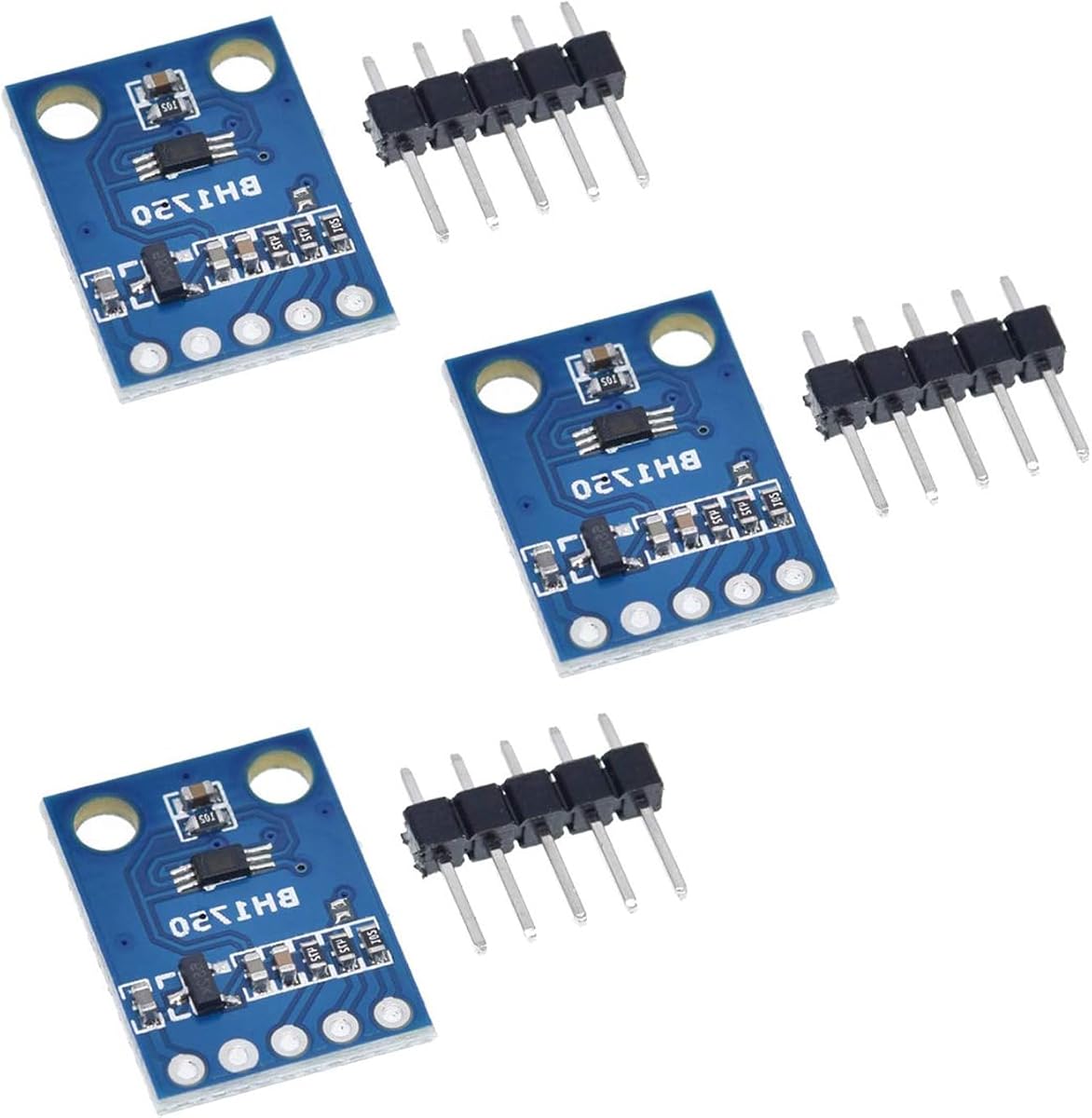
The GY-302 module is a favorite among hobbyists for its digital precision. With a 4.7 rating it offers a significant upgrade in accuracy over basic photoresistors making it ideal for projects needing exact lux values.
We may earn a commission when you buy through this link, at no additional cost to you.
This module uses the BH1750FVI chip which communicates via I2C simplifying your wiring to just four pins. You get a direct digital reading of light intensity which removes the need for analog to digital conversion code.
While it is a bit more expensive than raw resistors the ease of use and accuracy justify the cost for most serious projects. The compact size also helps it fit into tight enclosures without adding bulk.
If you want a professional looking result with minimal coding overhead this 3-pack provides great value and reliable performance for your Arduino light sensing needs.
The BH1750 chip provides digital lux readings that are far more accurate than voltage division circuits used with analog sensors.
Measuring just 13.9mm by 18.5mm this module is small enough to fit into wearable devices or small IoT nodes easily.
We may earn a commission when you buy through this link, at no additional cost to you.
HiLetgo is a trusted brand in the electronics community and this module lives up to that reputation. With a solid 4.5 rating it ensures you are getting the original BH1750FVI chip which guarantees consistent performance.
We may earn a commission when you buy through this link, at no additional cost to you.
The module is designed for easy integration with any microcontroller supporting I2C. The use of the original ROHM chip means you avoid the inconsistency sometimes found in counterfeit parts which can ruin your project.
One consideration is that I2C requires pull-up resistors if your board does not have them built-in though many Arduino boards do. This small setup step ensures stable communication between the sensor and the processor.
For those who prioritize build quality and reliable data this pack of three offers a professional solution for precise light intensity monitoring in your Arduino applications.
Using the original ROHM chip ensures that the sensor readings are stable and accurate across different environmental conditions.
HiLetgo is known for quality components so you can trust that your modules will work as expected without needing calibration.
We may earn a commission when you buy through this link, at no additional cost to you.
This photodiode module is unique because it senses light from a specific direction. With a 4.5 rating it is perfect for projects where you need to detect a light beam rather than general ambient light.
We may earn a commission when you buy through this link, at no additional cost to you.
The sensitivity can be adjusted using the blue digital potentiometer which gives you control over when the digital output triggers. This makes it highly versatile for security systems or light seeking robots.
Because it is directional you may need to mount it carefully to ensure it faces the light source correctly. This is a minor trade-off for the precision it offers in focused detection scenarios.
If you need to track a specific light source or detect shadows passing over a sensor this 10-piece pack provides excellent value and functionality for your robotic or security projects.
The directional nature allows you to detect specific light beams or shadows which is useful for line following or security applications.
The built-in potentiometer lets you tune the trigger point so the sensor reacts exactly to the light conditions you require.
We may earn a commission when you buy through this link, at no additional cost to you.
If you need a large supply of raw components this 30-piece pack is unbeatable. With a 4.6 rating it offers the best price per unit for those building multiple projects or needing spares.
We may earn a commission when you buy through this link, at no additional cost to you.
These 5mm resistors have a high voltage rating and a spectral peak of 540nm which makes them sensitive to visible light similar to the human eye. This makes them ideal for daylight harvesting applications.
Keep in mind that these are bare components so you will need to build your own voltage divider circuit to read them with an Arduino. This adds a bit of complexity but gives you full control over the circuit.
For students or makers building many prototypes this bulk pack ensures you never run out of sensors and provides a low cost way to experiment with different light circuits.
Thirty resistors are perfect for classrooms or workshops where multiple users need components for their individual projects simultaneously.
The 540nm peak matches human eye sensitivity making these resistors ideal for applications that mimic human light perception.
We may earn a commission when you buy through this link, at no additional cost to you.
This module is designed to interface directly with higher power devices. With a 4.6 rating it is popular for projects where you want the sensor to turn on a light or fan without using a microcontroller.
We may earn a commission when you buy through this link, at no additional cost to you.
The output can drive a relay module directly which simplifies automation tasks. This is very useful for simple light controlled switches that do not need a computer brain to make decisions.
The 10-piece pack means you have plenty of spares if you damage one during soldering. The LM393 comparator ensures that the signal is clean and the transition from light to dark is sharp.
For automation enthusiasts looking to build self-contained light switches or alarms this pack offers robust performance and ease of wiring for your DIY electronics needs.
The digital output has enough current to trigger small relays which lets you control mains devices safely with a low voltage sensor.
The LM393 comparator provides a crisp signal that avoids flickering when the light level is near the threshold point.
We may earn a commission when you buy through this link, at no additional cost to you.
Designed with modern microcontrollers in mind this module works great with the ESP32 and ESP8266. With a 4.6 rating it is tailored for IoT projects where you need to monitor light remotely.
We may earn a commission when you buy through this link, at no additional cost to you.
The package includes tutorials which helps beginners get started quickly without searching for code online. This is a significant plus for those who are new to electronics and need guidance on wiring.
The dual output pins mean you can read analog values for detailed data while also using a digital pin for simple threshold alerts. This flexibility makes it a strong choice for diverse applications.
If you are building a smart home sensor that sends light data to the cloud this module provides the connectivity and ease of use required for successful IoT development.
The support for 3.3V logic ensures you can connect directly to WiFi enabled boards without needing a voltage divider.
Included tutorials save you time by providing ready to use code examples for the most common microcontroller platforms.
We may earn a commission when you buy through this link, at no additional cost to you.
This is the best value for money if you need a massive quantity of sensors. With a 4.9 rating it is one of the highest rated products in this category and offers fifty GL5516 resistors.
We may earn a commission when you buy through this link, at no additional cost to you.
The dark resistance of 0.2MOhm and bright resistance of 5 to 10KOhm provide a good range for distinguishing between light and dark conditions. This ratio is sufficient for most DIY projects.
Since these are bare resistors you will need to solder them onto a breadboard or PCB. This adds a bit of work but ensures you have full control over how the sensors are installed.
For large scale projects or school labs where many students need sensors this pack is an incredible deal that provides high quality components at a low price point.
The high resistance in the dark makes it easy to detect even low levels of light with simple voltage divider circuits.
Fifty resistors ensure you have plenty for experiments prototypes and replacements so you never have to reorder frequently.
We may earn a commission when you buy through this link, at no additional cost to you.
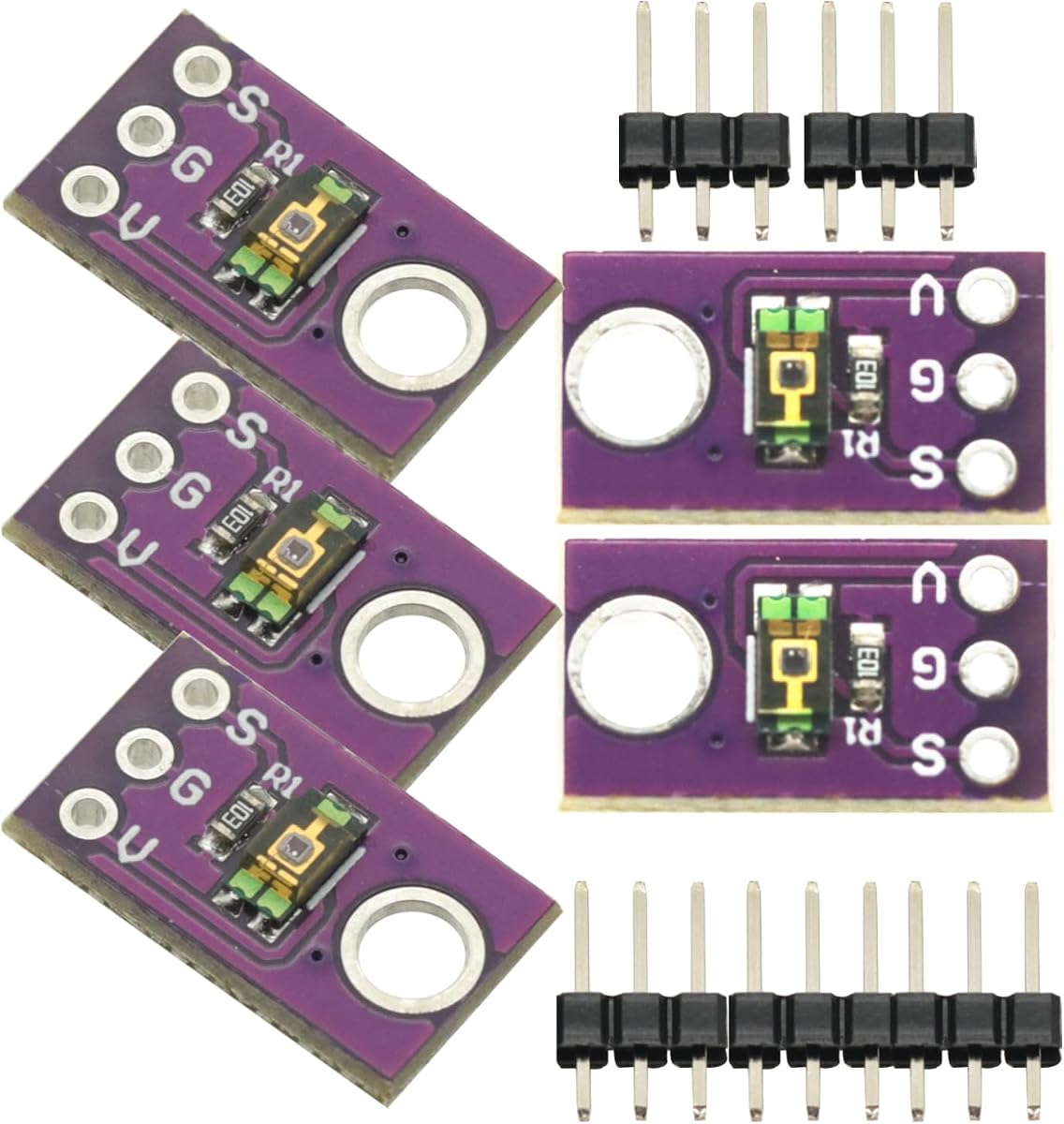
This is a professional grade sensor designed for precise ambient light measurement. With a perfect 5.0 rating it stands out for its accuracy and reliability in demanding environments.
We may earn a commission when you buy through this link, at no additional cost to you.
The TEMT6000 is specifically designed for display backlight dimming and keypad lighting which means it mimics the human eye response very closely. This makes it ideal for user interfaces that need to adapt to the room.
While it is more expensive than basic resistors the precision and build quality justify the cost for commercial or serious hobbyist applications. It provides a linear output that is easier to calibrate.
If you are building a device that requires exact light levels to function properly this sensor is the top choice for high accuracy and professional performance.
The spectral sensitivity is tuned to match how humans perceive light making it perfect for adjusting screen brightness accurately.
Industrial grade construction ensures that the sensor will perform consistently over time without drift or degradation.
We may earn a commission when you buy through this link, at no additional cost to you.
This module is well suited for automotive applications. With a 4.6 rating it is robust enough to handle the vibration and voltage fluctuations found in smart car projects.
We may earn a commission when you buy through this link, at no additional cost to you.
The LM393 comparator ensures a stable signal even when the power supply fluctuates which is common in vehicles. The dual output gives you the flexibility to log data or trigger alarms.
It is compact and easy to integrate into existing car electronics without taking up too much space. The wide voltage range ensures compatibility with various automotive systems.
If you are working on a light controlled dashboard or a smart car sensor array this module provides the stability and flexibility you need for safe operation.
The comparator chip filters out noise from the power supply so your readings remain clean even in a noisy environment.
The small PCB footprint allows you to mount the sensor in tight spaces like inside a car dashboard or behind a panel.
We may earn a commission when you buy through this link, at no additional cost to you.
Choosing the right light sensor involves understanding your project requirements and the type of data you need. This guide covers the most important factors to consider.
The first decision is between analog and digital sensors. Analog photoresistors provide a voltage that changes with light which is simple to read but less precise. Digital modules like the BH1750 provide a direct lux value which is more accurate but requires specific protocols.
For simple on off lighting choose analog. For precise measurements choose digital.
Some projects like simple night lights do not need high accuracy. However if you are building a greenhouse or a scientific instrument you need a sensor with a high resolution and linear output.
Always check the datasheet for resolution and linearity.
Ensure the sensor matches your Arduino model. Most sensors work with both 5V and 3.3V but some digital sensors require specific pins like I2C. Check if your board supports the required protocol.
Verify voltage and pin compatibility before buying.
Modules vary in size from raw components to large boards with comparators. If you are building a wearable device you need the smallest footprint possible. Larger boards are easier to wire for beginners.
Consider your enclosure size when selecting.
Some sensors like the photodiode have a narrow field of view which is good for directed light. Others are omnidirectional and measure ambient light. Decide if you need to sense a beam or the whole room.
Choose directional or ambient based on use.
Buying a pack of ten or fifty is often cheaper per unit than buying one. If you plan to experiment with multiple prototypes a larger pack saves money in the long run.
Look for bulk deals to save cash.
Modules from reputable brands often have better quality control and more stable chips. Cheap no name modules might have inconsistent readings or fail quickly under stress.
Prioritize brands with good reviews.
Some modules come with libraries or example code which speeds up development. Others require you to write your own drivers. For beginners pick a module with easy documentation.
Check if code support is included.
When installing your sensor make sure it is exposed to the light source you want to measure. Avoid placing it inside a closed box unless you are measuring the light inside that box.
If you are using an analog sensor build a voltage divider circuit using a fixed resistor and the photoresistor. Connect the center point to an analog input pin on your Arduino to read the signal.
Keep the sensor clean and free of dust which can block light and skew your readings. If you are using the sensor outdoors consider adding a simple protective cover to shield it from rain.
A photoresistor changes its resistance based on light which requires a voltage divider to read. A photodiode produces a current when exposed to light which is more linear and faster but harder to read directly.
Yes you can use them together if the sensor supports a wide voltage range like 3.3 to 5V. However if the sensor is strictly 3.3V you must use a logic level shifter for digital signals.
For a simple dark room light switch a basic analog photoresistor module with a comparator is ideal. It is cheap and easy to wire to trigger a relay when the room gets dark.
Yes the BH1750 sensor communicates via I2C so you should use a library like the Adafruit BH1750 library to simplify reading the data values accurately.
To calibrate you place the sensor in known light conditions and record the output values. You then use these values to map your sensor output to actual lux levels in your code.
Photoresistors have a very long lifespan and typically do not wear out from use. However they can be damaged by moisture or physical impact so protection is necessary.
Yes these sensors are perfect for a smart garden to monitor sunlight for plants. You can use them to trigger watering or adjust grow lights based on the time of day.
This usually means there is a wiring issue with the I2C pins or the library is not installed correctly. Check your connections and ensure you are using the right code.
In this guide we reviewed ten excellent light sensors ranging from budget bulk packs to professional grade modules. The best choice depends on whether you need simple threshold detection or precise lux values.
If you are on a budget the WWZMDiB module or the EBOOT bulk pack provide fantastic value. For high accuracy and professional results the TEMT6000 and GY-302 modules are the top contenders.
Remember to always check the current price and availability before purchasing as these values change frequently. Select the sensor that best fits your specific project needs for the best results.