
KARDIAMOBILEKardiaMobile
4.4Editor score
Simple finger placement use
No Bluetooth or cords
Affordable entry-level option
Discover the top heart rate monitor for arrhythmia. This guide compares medical-grade EKG devices, wearable chest straps, and smart tools to help you track
Managing heart health requires reliable tools that can detect irregular rhythms quickly. A heart rate monitor for arrhythmia helps individuals track their cardiac activity and share data with healthcare providers for better care and peace of mind at home.
We evaluated ten leading devices based on accuracy, ease of use, and clinical validation. Each product offers unique features ranging from single-lead EKGs to continuous wearable monitors designed to capture data during daily activities or exercise sessions.
Each pick highlights key strengths and limitations to guide your decision. Prices and availability change frequently, so please verify current details on the retailer site before purchasing to ensure you get the best value for your specific health needs.
4.4Editor score

4.4Editor score

3.6Editor score
This table provides a side-by-side comparison of all ten products reviewed in this guide. Look at the key specifications and features to understand how each device performs for monitoring arrhythmia and heart rate effectively.





The KardiaMobile 6L EKG stands out as a leading choice for tracking heart rhythms at home. With a rating of 4.4, it delivers medical-grade six-lead EKG results in under thirty seconds. This device is FDA-cleared and provides detailed determinations of your heart rhythm without needing a subscription.
We may earn a commission when you buy through this link, at no additional cost to you.
Its standout quality is the ability to detect AFib, Bradycardia, Tachycardia, and Normal Sinus Rhythm directly on your smartphone. The six-lead system offers six times the data compared to standard single-lead devices, giving you a more detailed view of your heart health to share with your physician.
One trade-off is that the device requires you to place fingers on specific electrodes, which can be tricky if your hands are unsteady. Additionally, it is not recommended for those with pacemakers or ICDs. These limitations are acceptable given the high accuracy and portability for general users.
Anyone seeking reliable, doctor-recommended monitoring should consider this device. It empowers you to capture data whenever symptoms occur and share it with your care team. For those prioritizing clinical accuracy without ongoing costs, this is a top recommendation in this category.
The six-lead EKG provides more comprehensive insights than standard two-lead monitors, helping doctors make better-informed decisions about your heart health.
You can record unlimited EKGs and store them in the app without being forced into a paid membership plan, saving money over time.
We may earn a commission when you buy through this link, at no additional cost to you.
This device offers an accessible entry point for individuals needing basic rhythm checks. With a strong rating of 4.4, it is simple to use without a subscription, requiring no Bluetooth or Wi-Fi connections. You just place your fingers on the silver sensors to get results in thirty seconds.
We may earn a commission when you buy through this link, at no additional cost to you.
The key strength lies in its simplicity and low cost. It strips away complex features to focus on core functionality, making it ideal for quick checks when you are unsure about your rhythm. It is perfect for those who want a no-fuss tool without extra connectivity requirements.
However, it lacks the multi-lead capability of more advanced models, meaning it provides less data for doctors to analyze. It is also not as versatile for tracking other metrics. For a budget-friendly spot-check tool, these trade-offs are reasonable and expected.
This monitor is best for users who need occasional checks without breaking the bank. If you want a straightforward device that works anywhere without connectivity issues, this is an excellent low-cost option to keep on hand.
The design focuses on ease of use, allowing you to check your heart rhythm instantly without pairing with a phone or computer.
With a lower price point than many competitors, it offers a reliable way to monitor heart health without high upfront investment.
We may earn a commission when you buy through this link, at no additional cost to you.
The KardiaMobile 6L Max combines hardware with a full year of KardiaCare membership, offering enhanced support. It carries a 3.9 rating and provides six-lead EKG results with FDA-cleared determinations. Users get access to board-certified cardiologist reviews and automated email sharing of their data.
We may earn a commission when you buy through this link, at no additional cost to you.
The premium features include personalized insights that help you tag EKGs with context like exercise or dizziness. This allows for trend analysis and proactive management of your heart health. The membership also enables telehealth appointments with cardiologists if needed.
The main drawback is the dependency on the subscription, which renews after one year. If you choose not to continue, you may lose access to certain review features. However, the included year provides substantial value and peace of mind for users seeking expert guidance.
For those who want professional oversight alongside their device, this is a top choice. It bridges the gap between personal monitoring and clinical care, making it ideal for anyone needing extra reassurance and detailed trend tracking over time.
The included membership offers direct access to board-certified cardiologists for EKG reviews, giving you professional peace of mind.
Tagging EKGs with daily activities helps identify patterns that you can discuss with your doctor for better treatment plans.
We may earn a commission when you buy through this link, at no additional cost to you.
This monitor from EMAY offers six-channel recording capabilities with a strong 4.6 rating. It allows you to record and store ECG signals for home health care use without any subscription or hidden costs. The device connects to PCs via USB or mobile phones via Bluetooth for easy data management.
We may earn a commission when you buy through this link, at no additional cost to you.
Its main strength is versatility in connectivity. You can use the mobile app for quick checks or PC software for detailed case reviews. The built-in rechargeable lithium battery ensures you are not constantly replacing cells, making it a sustainable option for frequent use.
It is important to note that while it offers OTC use, it is not intended as a substitute for hospital diagnostics. Also, implanted pacemakers are not recommended for use with this device. These points are standard for home monitors but warrant attention for users with implants.
For those needing flexible data options and high accuracy without fees, this device is worth considering. It suits users who want to share data across multiple platforms and value a rechargeable design over single-use batteries.
Support for both USB and Bluetooth connections lets you choose the best way to transfer data based on your setup.
All features are available without a recurring fee, ensuring that you own your data and have full access forever.
We may earn a commission when you buy through this link, at no additional cost to you.
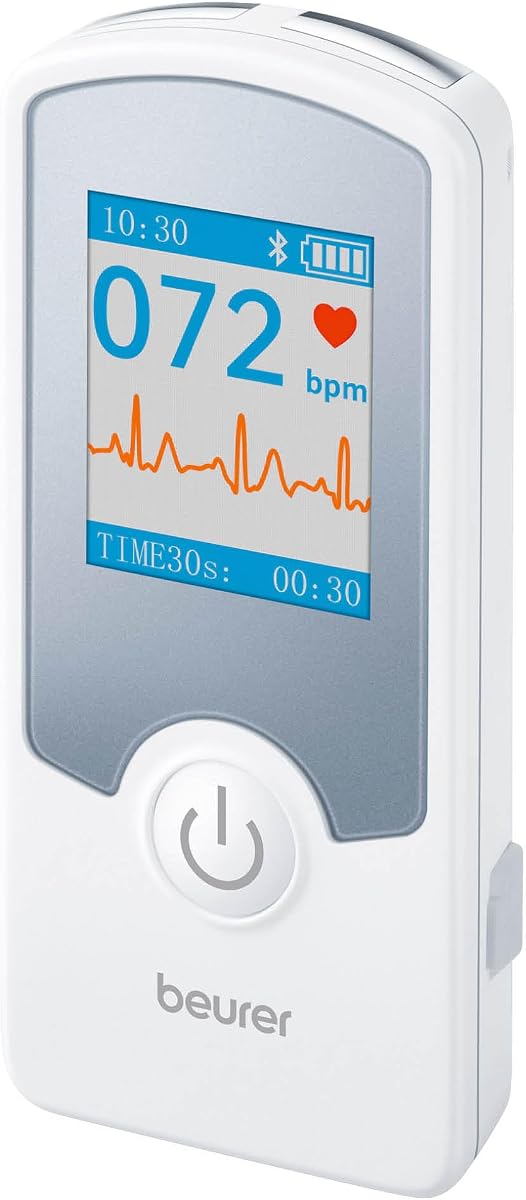
The Beurer Cardio Companion EKG Monitor is a reliable 3-lead device known for its German engineering and FDA clearance. With a 4.2 rating, it provides real-time results on a bright color display in under thirty seconds. It is designed to detect irregular heart rhythms effectively for home monitoring.
We may earn a commission when you buy through this link, at no additional cost to you.
This device offers four ways to measure including hand-to-hand, hand-to-wrist, leg, or chest. This flexibility allows users to find a comfortable position for checking their heart. The optional app enables unlimited storage of readings locally on the device if you do not want to use the app.
Users must ensure no skin-to-skin contact occurs while measuring to maintain accuracy, which might take practice. Also, it is not suitable for those with pacemakers or metal implants. These constraints are typical for consumer EKG devices and are manageable with careful use.
For those wanting a reputable brand with clear visual feedback, this device is a great choice. It balances portability with precision and is suitable for users who prefer local storage options alongside cloud-based app features.
You can choose from hand-to-hand, hand-to-wrist, leg, or chest positions, adding versatility to your daily heart checks.
The free app is optional, allowing you to store readings locally on the device for privacy and convenience.
We may earn a commission when you buy through this link, at no additional cost to you.
This wearable monitor stands out by offering continuous 24/7 heart monitoring instead of spot checks. It has a 3.6 rating and is trusted by over 2500 cardiologists for precise rhythm analysis. You do not need a prescription to access professional-grade heart rate monitoring from home.
We may earn a commission when you buy through this link, at no additional cost to you.
The device is designed for daily life with a breathable, washable fabric strap that ensures comfort during sleep or exercise. It uses AI-driven insights to provide real-time summaries and allows you to share comprehensive PDF reports with your physician for informed discussions.
While the continuous monitoring is powerful, it comes with a subscription model that starts after a one-month included period. This can be a cost consideration over time. However, for users needing complete data on arrhythmia episodes, the continuous tracking outweighs this cost.
If you need to catch irregular rhythms that happen at night or during exercise, this is the ideal tool. It bridges the gap between clinical holter monitors and consumer wearables, providing medical-grade insights without a doctor visit.
Unlike spot-check devices, this monitor captures every heartbeat anytime and anywhere, giving you a complete picture of your rhythm.
You can effortlessly share comprehensive PDF reports with your physician to ensure they have the full data for diagnosis.
We may earn a commission when you buy through this link, at no additional cost to you.
This device records professional ECG data to help you monitor your heart health in real time. It offers a 4.0 rating and features a convenient LCD screen with storage capabilities. You can get medical-grade ECG data and professional analysis in just thirty seconds by placing your hands on the monitor.
We may earn a commission when you buy through this link, at no additional cost to you.
It supports multiple monitoring modes including hand-to-hand, hand-to-chest, and hand-to-leg, allowing you to get a full picture of the situation. The data can be transferred to cell phones via Bluetooth or to computers via cable, making it easy to share with doctors or family members.
The device is compact and lightweight at only 60g, making it easy to take on the go. It does not require a subscription, which simplifies the user experience. However, the screen interface is basic compared to app-driven devices, which might limit detailed historical viewing.
For those needing a portable and straightforward tool without app dependency, this device is useful. It allows for quick checks and data sharing with minimal setup, serving well for daily monitoring needs and travel.
The LCD screen provides immediate feedback on your heart rhythm, so you do not need a phone to get a reading.
Flexible placement options like hand-to-leg or hand-to-chest help you find the most comfortable position for accurate results.
We may earn a commission when you buy through this link, at no additional cost to you.
This heart rate monitor transmits accurate real-time heart rate and heart rate variability data to compatible Garmin smartwatches. With a 4.3 rating, it features a comfortable strap and up to one year of battery life with a user-replaceable battery. It is durable with a 3 ATM water rating and machine washable.
We may earn a commission when you buy through this link, at no additional cost to you.
The key strength is its reliability for fitness tracking and HRV monitoring, which is crucial for understanding recovery and stress. It connects seamlessly with cycling computers and fitness equipment, making it ideal for athletes who need consistent data during workouts.
However, it is not a standalone EKG device and requires compatible Garmin hardware to function. It focuses on HR and HRV rather than rhythm diagnosis. For athletes needing accurate performance metrics, this limitation is acceptable given its durability and ease of use.
If you are active and own compatible Garmin gear, this is a solid addition to your kit. It provides dependable data for fitness routines and tracks variability over time to support better training decisions.
Tracking heart rate variability helps you understand your recovery status and avoid overtraining during intense physical activity.
With a 3 ATM water rating and washable strap, this device is built to withstand sweat and rain during tough workouts.
We may earn a commission when you buy through this link, at no additional cost to you.
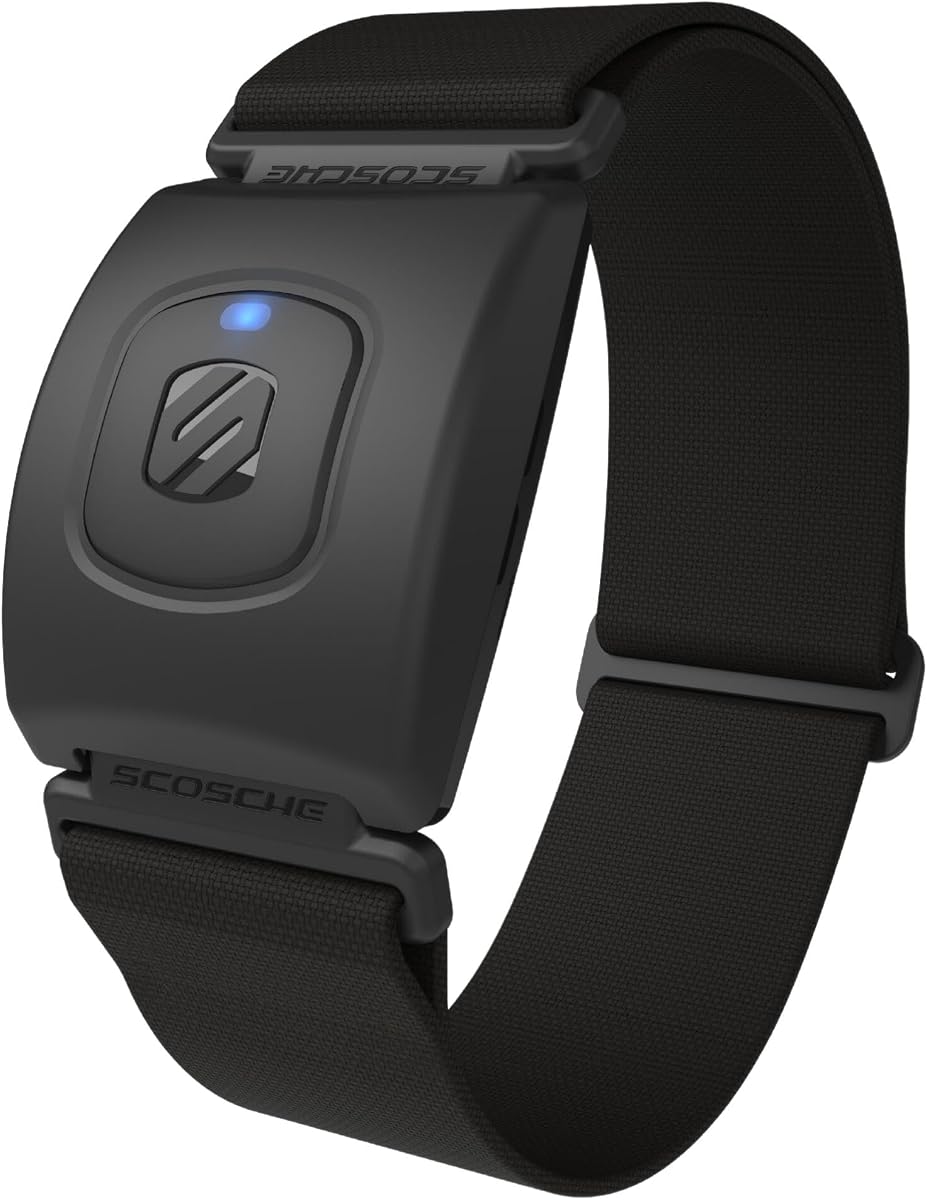
This optical armband delivers accurate real-time tracking for various workouts and daily activities. With a 4.1 rating, it offers HRV mode to capture precise RR interval data. It pairs via Bluetooth or ANT+ to sports watches and apps for tracking workout intensity and performance.
We may earn a commission when you buy through this link, at no additional cost to you.
It features a lightweight, breathable strap that adjusts securely to your forearm or bicep, making it a comfortable alternative to restrictive chest straps. The IP68 waterproof rating ensures it handles sweat and rain, and you get up to 24 hours of battery life per charge.
Optical sensors can sometimes lag during cold weather or rapid movement compared to chest straps, but the convenience of an armband often outweighs this. It also lacks EKG capabilities, so it is for fitness tracking rather than rhythm analysis.
For gym-goers and cyclists who want a comfortable wearable for HRV tracking, this is a great option. It provides steady data for performance insights and supports various HRV apps for deeper analysis.
This strap sits on your forearm or bicep, offering a more comfortable fit than chest straps for long sessions.
With up to 24 hours of continuous use, you can track multiple workouts or a full day of stress without recharging.
We may earn a commission when you buy through this link, at no additional cost to you.
The Polar FT1 shows heart rate on a large easy-to-read display, making it simple to monitor fitness. With a 4.0 rating, it helps improve fitness with manual heart rate target zones and displays summaries of workouts. It features simple one-button start and coded heart rate transmission to avoid cross-talk.
We may earn a commission when you buy through this link, at no additional cost to you.
It is designed for safely exercising within your target zone, providing feedback to ensure you are training at the right intensity. The watch includes a Polar T31 coded transmitter chest strap and user guide for easy setup. It is straightforward to use for general fitness needs.
The device is somewhat basic compared to modern smartwatches, with limited features beyond heart rate. It focuses purely on training zones and heart rate feedback. For those who value simplicity and a large display, these older specs are acceptable and functional.
For individuals seeking a no-nonsense tool for tracking heart rate zones, this monitor is effective. It offers clear feedback without complex interfaces, making it suitable for users who prefer traditional training aids.
The large display ensures you can read your heart rate at a glance during workouts, helping you adjust effort instantly.
Coded signals prevent interference from other heart rate monitors, ensuring accurate readings even in busy gym settings.
We may earn a commission when you buy through this link, at no additional cost to you.
Choosing the right device depends on your specific health needs and lifestyle. We break down the key factors to consider when selecting a heart rate monitor.
Look for devices that are FDA-cleared or clinically validated to ensure the data you collect is reliable. Accuracy is crucial when detecting arrhythmias because false positives can lead to unnecessary worry while false negatives might miss important health signals.
Prioritize models with clear FDA clearance or doctor endorsements. This ensures the measurements you take at home can be trusted by your healthcare provider for diagnosis and monitoring purposes.
EKG devices vary from single-lead to multi-lead systems. Multi-lead EKGs like six-lead models provide more data points for your doctor, helping them understand your heart's electrical activity from different angles.
Choose a device with enough leads to give your doctor the data they need. A single-lead device is good for basic checks, but a six-lead device offers more comprehensive information for arrhythmia analysis.
Some devices require monthly subscriptions to access full features like cloud storage or doctor reviews. This can add up over time. Others offer unlimited recordings without any recurring fees.
Evaluate your budget and preferences. If you want to avoid ongoing costs, choose a device with no mandatory subscription plan for long-term savings.
Comfort matters if you plan to wear the device for long periods. Consider devices that are lightweight, breathable, or easy to set up. Some require steady hands, while others offer more flexible placement options.
Select a device that fits your daily life. If you are active, a wearable strap might be better than a handheld device. For spot checks, a simple finger sensor is usually easiest.
Check if the device works with your smartphone operating system. Some monitors need iOS or Android, while others connect to PC software. Compatibility ensures you can view and share your data easily.
Ensure the app or software works on your phone or computer. This prevents frustration and makes it easy to track your progress over time.
Continuous monitors need long battery life, while handheld ones may use replaceable cells. Look for rechargeable options if you want to reduce waste and frequent battery changes.
Choose a power option that matches your usage. For continuous wear, a long-lasting battery is essential. For quick checks, simple batteries are usually sufficient.
The ability to email or share reports directly with your doctor is a valuable feature. Look for tools that generate PDF summaries or allow direct cloud syncing to healthcare portals.
Prioritize devices that make sharing data effortless. This ensures your provider has access to your health info when you need it.
If you have a pacemaker or ICD, check device warnings carefully. Some monitors are not recommended for use with implanted devices due to potential interference.
Always consult your doctor if you have implants. Avoid devices that warn against use with pacemakers to ensure your safety during monitoring.
To start using your monitor, ensure your skin is clean and dry. This helps the sensors get a good reading. For handheld devices, place fingers firmly on the electrodes and stay still until the app shows results.
If you are using a wearable strap, make sure it fits snugly but not too tight. It should stay in place during movement. For continuous monitors, wear the device as instructed to capture data during sleep or activity.
Clean the device regularly according to the manual. Wash straps with mild soap and water to remove sweat and bacteria. Store the monitor in a dry place to protect the electronics from humidity and damage.
Home monitors can be quite accurate when they are FDA-cleared and used correctly. They are designed to detect irregular rhythms like AFib. However, they should not replace professional medical advice or diagnosis from a doctor.
Not always. Some devices offer unlimited recordings without any subscription fees. Others provide advanced features like doctor reviews only with a membership. Check the product details before buying to avoid unexpected costs.
The frequency depends on your symptoms and doctor's advice. If you feel dizziness or palpitations, check immediately. For routine monitoring, your doctor may suggest checking daily or weekly based on your condition.
Many devices advise against use with pacemakers or ICDs due to electrical interference. Always check the manufacturer's guidelines and consult your physician before using any electronic monitoring device if you have implants.
Most apps allow you to email or share PDF reports directly. Some devices connect to cloud portals used by healthcare providers. Check your monitor's features to find the best sharing method for your needs.
Heart rate monitoring tracks your beats per minute while EKG analyzes the electrical activity of your heart. EKGs are better for detecting arrhythmias whereas basic HR monitors focus on fitness and exercise intensity.
No, these devices do not detect heart attacks. They are designed to monitor heart rhythm and rate. If you experience chest pain or other heart attack symptoms, seek emergency medical attention immediately.
Battery life varies by device type. Continuous monitors may last hours to days, while handheld EKGs often run on rechargeable or AA batteries. Check product specs to know how long a charge or set of batteries lasts.
Selecting a heart rate monitor for arrhythmia depends on your need for accuracy, comfort, and data sharing. The KardiaMobile 6L EKG stands out as an editor's choice for those who need clinical-grade monitoring without a subscription.
Prioritize devices that match your lifestyle and budget. If you want continuous insights, a wearable monitor like Bioheart offers uninterrupted tracking. For quick spot checks, handheld devices like KardiaMobile provide reliable and affordable options.
Always verify the latest product specifications and current prices on the retailer website before purchasing. Heart health is a priority, and the right device can help you manage it more confidently and proactively.