
DAE DDM730 KIT 120/240V kWh Meter
5.0Editor score
Internal CT pass through design
Ready for cloud metering gateway
Meets international safety standards
This guide compares the top ten electric sub meter models for landlords, solar users, and workshops to help you choose the right energy monitoring solution.
Finding the right electric sub meter can help you track energy usage accurately across multiple circuits or tenants. These devices allow for fair billing and detailed consumption insights without replacing your main utility meter.
We evaluated ten top-rated models based on accuracy, installation ease, communication features, and compatibility with standard electrical systems. Our comparison covers single-phase and three-phase options suitable for residential and light commercial applications.
Each pick shows specific strengths like Modbus support, cloud metering, or plug-in designs. Please note that product availability and pricing may change frequently, so verify details before purchasing your chosen unit.
5.0Editor score
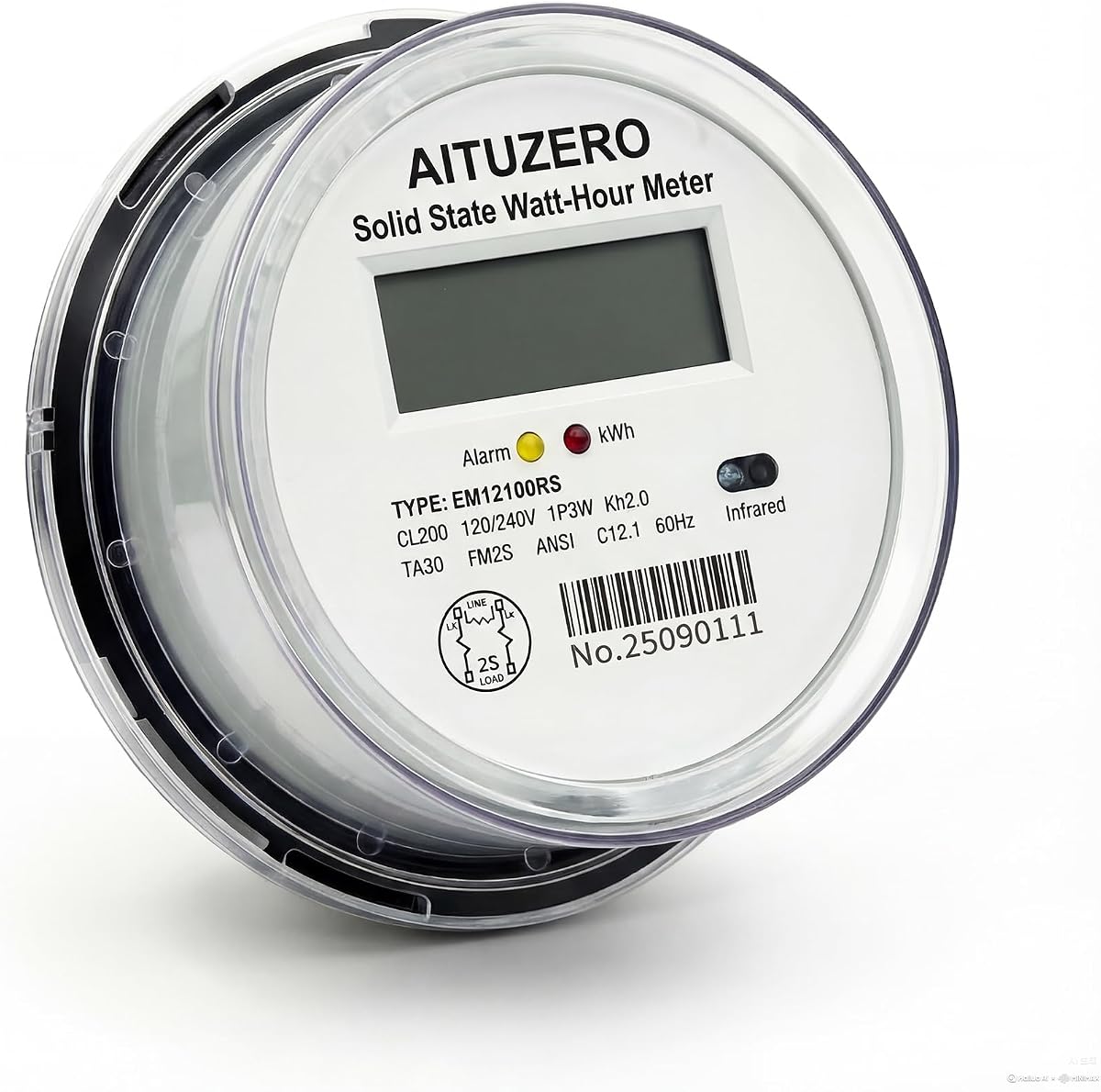
4.5Editor score
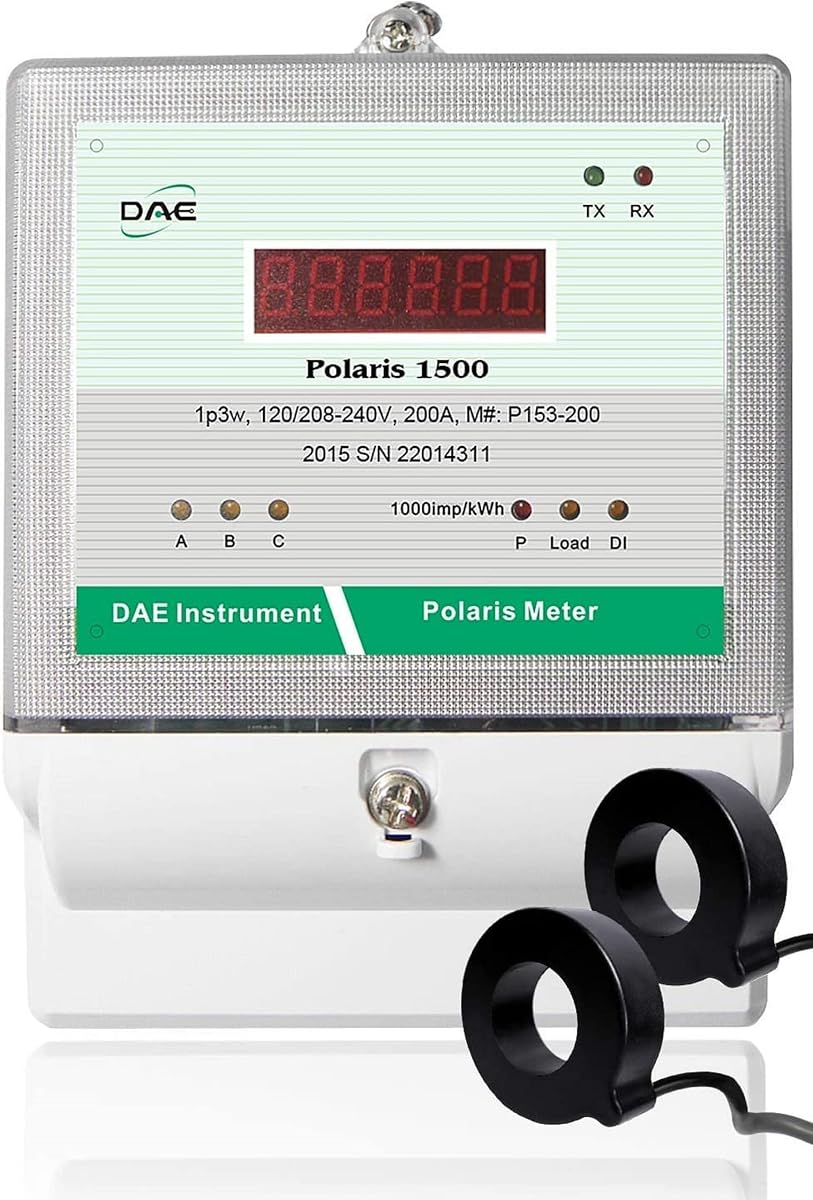
4.5Editor score
The following table provides a side-by-side overview of the key specifications for each model we reviewed to help you quickly identify the right fit.


This digital sub meter stands out for its versatility across residential rental and solar setups with a solid 4.5 star rating from verified buyers. Its ANSI Form 2S compatibility makes it a plug-in upgrade for many standard meter bases without complex rewiring.
We may earn a commission when you buy through this link, at no additional cost to you.
The bright LCD display cycles through key metrics like voltage current and power while the reverse LED helps detect solar backfeed issues quickly. Users appreciate the pulse and Modbus outputs for connecting to external logging or monitoring systems.
While the device is not weatherproof for direct outdoor exposure it performs well in protected panels. The lack of a built-in cloud gateway means you may need additional hardware for remote access though local data is robust.
Ideal for landlords and RV owners needing fair billing or solar tracking this meter balances cost with advanced features. The combination of accuracy ease of installation and data retention makes it a top choice for diverse electrical needs.
The Form 2S socket base allows a quick snap-in replacement for old analog meters without special tools or major panel changes.
The reverse LED and kWh readings let users monitor both power draw from the grid and energy sent back during solar production.
We may earn a commission when you buy through this link, at no additional cost to you.
With a flawless 5.0 rating this meter offers exceptional value for users seeking accurate tracking without breaking the bank. The internal current transformer eliminates the need for separate CTs making installation faster and cleaner.
We may earn a commission when you buy through this link, at no additional cost to you.
The pass through neutral design allows the meter to monitor both 120V and 240V circuits while keeping the neutral path uninterrupted for safety. Users can link it to a DAE gateway for cloud access if needed without complex IT setup.
It is designed for indoor panels so outdoor installations require a separate watertight enclosure. The meter itself does not store cloud data natively which may limit remote access without extra hardware purchases.
Best for small workshops or rental units where simplicity matters this meter delivers precision and ease of use. Its high rating reflects reliable performance and straightforward setup for DIY and professional users alike.
Built-in current transformers remove the need to buy separate CTs reducing installation time and potential wiring errors.
While local readings are clear the unit can connect to a cloud gateway for remote billing and usage tracking.
We may earn a commission when you buy through this link, at no additional cost to you.
This premium kit meets rigorous national accuracy standards making it ideal for landlords or businesses needing revenue-grade billing data. It arrives with external current transformers and fuses so you have all essentials for a complete installation.
We may earn a commission when you buy through this link, at no additional cost to you.
The integrated cloud gateway option lets you access real-time kWh and time-of-use billing reports via a simple app. You can even add wireless converters if running cables between the panel and router is difficult.
While the price is higher than basic models the included accessories and certification justify the investment. Wireless connectivity requires extra RF adapters which adds complexity but offers flexibility in existing buildings.
Best for professional property management or solar farms this meter ensures trust in energy data. The combination of accuracy certification and remote access features makes it a top-tier choice for serious monitoring needs.
Meeting ANSI standards with 0.5 percent accuracy ensures the meter can be used for official billing and settlement purposes.
A companion gateway sends data to the cloud for easy access to tenant billing reports without manual readings.
We may earn a commission when you buy through this link, at no additional cost to you.
This model is a favorite for technical users needing deep data integration with existing building management systems. The RS485 Modbus port allows seamless connection to gateways and data loggers for centralized monitoring.
We may earn a commission when you buy through this link, at no additional cost to you.
The display cycles through voltage current power factor and reactive power offering far more detail than standard kWh-only meters. Users value the pulse output for linking to third-party counters and the IR port for secure local config.
While powerful the meter requires some technical knowledge to configure properly on a network. It lacks native cloud support so you will need to pair it with external hardware for remote viewing capabilities.
Ideal for commercial workshops or solar installations with smart infrastructure this meter delivers professional-grade features. Its high rating reflects robust performance and flexibility for those who need more than basic usage data.
The RS485 port allows multiple meters to join a single network for efficient data collection and system management.
Beyond simple kWh it tracks power factor and reactive power helping optimize electrical efficiency.
We may earn a commission when you buy through this link, at no additional cost to you.
This unit focuses on robust construction and wide voltage compatibility for outdoor or rough environments. The durable enclosure handles weather better than standard indoor-only meters making it a practical pick for exposed panels.
We may earn a commission when you buy through this link, at no additional cost to you.
Its support for 120V 208V and 240V systems gives installers flexibility across various building codes. The compact size fits well in tight spaces while clear labeling simplifies wiring tasks even under pressure.
Some users report mixed experiences regarding long-term consistency compared to digital rivals. The feature set is more basic which may not satisfy tech-driven users but remains suitable for straightforward monitoring needs.
Best for outdoor garages or remote sheds this meter prioritizes durability over high-tech options. If your priority is a rugged meter that tolerates varied voltages this model offers reliable basic performance.
The housing is rated for outdoor exposure allowing installation in weather-prone locations without extra protection.
Compatible with multiple voltage systems so it adapts easily to residential or light commercial panels.
We may earn a commission when you buy through this link, at no additional cost to you.
Designed for indoor panels this meter balances accuracy with ease of use thanks to its internal current transformer. It is perfect for small commercial spaces where space is limited but accurate billing remains a priority.
We may earn a commission when you buy through this link, at no additional cost to you.
The RS485 port allows you to integrate this unit into a larger network using a DAE gateway for cloud reports. IEC standards ensure it meets international safety and performance expectations for commercial deployments.
Its 50A rating limits use to smaller circuits compared to heavy-duty 200A units. Indoor-only use means you cannot install it outdoors without a separate enclosure which might add to total project cost.
Best for tenant metering in small apartment buildings this meter provides consistent data tracking. The combination of internal CT and network readiness offers a clean efficient solution for commercial landlords.
Meeting IEC standards gives confidence in reliability and safety for commercial indoor installations.
The RS485 port supports connection to gateways for remote monitoring and billing reporting.
We may earn a commission when you buy through this link, at no additional cost to you.
For users needing to monitor three-phase power this kit is a complete solution with all necessary hardware included. It meets revenue-grade standards making it suitable for commercial billing where accuracy is critical.
We may earn a commission when you buy through this link, at no additional cost to you.
It handles both three-wire and four-wire configurations providing flexibility for different industrial setups. The RS485 port and gateway options allow you to scale up to monitoring multiple panels remotely.
The wiring process is more involved than single-phase models requiring careful alignment of CTs. Three CTs are needed for full phase tracking which increases component count and installation time slightly.
Best for small industrial shops or larger commercial tenants this meter handles heavy load monitoring with precision. Its certification and flexibility make it a trustworthy choice for complex power environments.
Monitors all three phases accurately which is essential for balanced load management in commercial facilities.
Includes all CTs and fuses so you have everything needed for a compliant installation out of the box.
We may earn a commission when you buy through this link, at no additional cost to you.
This pass-through design simplifies wiring by allowing wires to go directly through the meter housing. It supports both two and three-wire systems which makes it versatile for many residential panels.
We may earn a commission when you buy through this link, at no additional cost to you.
You can read usage locally or connect via pulse output for remote tracking. It handles up to 100 Amps which covers most standard service sizes without needing external current transformers.
The design is straightforward which means fewer features compared to smart meters. Outdoor use requires a protective box because the unit itself is not weatherproof for direct exposure to elements.
Best for garages or small rental units needing basic billing this meter offers reliability. Its simplicity and solid rating make it a safe choice for users who want accurate tracking without extra complexity.
Pass-through terminals mean you can run conductors directly through the meter for faster installation.
Works with both 2-wire and 3-wire systems giving flexibility across different panel configurations.
We may earn a commission when you buy through this link, at no additional cost to you.
This universal meter adapts to different wiring types making it handy for mixed installations. It offers local readings or remote pulse output options so you can choose how you prefer to track usage.
We may earn a commission when you buy through this link, at no additional cost to you.
Supporting both 120V and 240V systems it works well for homes with varying loads. The LCD provides clear data while the design handles up to 100 Amps without external CTs.
It lacks advanced communication like Modbus which limits integration into complex systems. Outdoor exposure requires a separate weatherproof box since the housing is not rated for direct outdoor use.
Best for users needing a flexible standard meter this device balances value with function. Its universal wiring options make it a good backup or upgrade for diverse household panels.
Accommodates both 2-wire and 3-wire setups to fit different panel wiring styles.
Choose between direct local reading or remote pulse connection for tailored monitoring.
We may earn a commission when you buy through this link, at no additional cost to you.
This meter carries a Class 1000 rating which ensures it performs accurately under varied load conditions. It handles both single and two-phase setups allowing flexibility for different panel configurations.
We may earn a commission when you buy through this link, at no additional cost to you.
The voltage range covers standard residential 120V through 240V systems making it broadly applicable. Its build quality supports reliable tracking over long periods which is important for consistent billing.
Connectivity options are more limited than newer smart models so you may rely on local readings. The price is higher than some budget options which may matter for smaller projects.
Best for traditional panels needing stable monitoring this meter delivers consistent accuracy. Its solid build and class rating make it a dependable choice for standard residential or light commercial use.
The Class 1000 rating ensures consistent accuracy across a range of electrical conditions.
Accommodates both single and two-phase systems for wider compatibility across different panels.
We may earn a commission when you buy through this link, at no additional cost to you.
Choosing the right electric sub meter depends on several technical factors that affect accuracy installation and cost.
Ensure the meter supports your panel's voltage and phase setup such as 120/240V single-phase or three-phase 480V. Mismatched voltage can lead to inaccurate readings or damage to the unit.
Always verify your panel's label before buying to match the meter's voltage range and wire configuration.
Plug-in meters fit standard ANSI Form 2S sockets while pass-through models require wiring through the device. Choose based on your panel's existing setup and available space.
Socket designs are easier to replace while pass-through units save space in tight panels.
Pick a meter with an amp rating that matches or exceeds your main breaker. Common sizes are 100A or 200A. Higher loads need higher ratings to avoid overheating.
Check your service size before buying to ensure the meter can safely handle peak loads.
Some meters offer RS485 Modbus or pulse outputs for remote tracking while others show only local data. Decide if you need integration with building systems or cloud apps.
If you plan to bill tenants remotely look for Modbus or cloud-ready units.
Most meters are indoor-only and need a weatherproof enclosure for outside use. Outdoor-rated models have stronger housing for harsh conditions.
For outdoor pedestals choose a meter with an outdoor enclosure or buy a separate weatherproof box.
Revenue-grade meters meet strict accuracy standards like ANSI or IEC for billing. For general use standard accuracy is often enough.
If you plan to bill tenants look for ANSI C12 or IEC61036 certification.
Internal CTs simplify wiring but external CTs offer flexibility for retrofitting. Some kits include CTs while others do not.
Choose internal CT for new panels and external CT for retrofits.
Clear LCD screens with backlight help you read data in dim panels. Look for models that cycle through voltage and power not just kWh.
For quick checks pick a meter with a bright auto-cycling display.
Always turn off the main breaker before wiring the meter to avoid shock. Double check voltage and polarity before restoring power.
For outdoor use mount the meter inside a weatherproof enclosure to protect it from rain and heat.
Regularly check the LCD for error codes and clean dust from the display to ensure clear readings.
Yes but you must select a three-phase meter like the P254-200-S KIT. Single-phase meters will not track all phases correctly on a three-phase panel.
Some do but others like the DDM730 have internal CTs. Check the product specs before buying to avoid extra parts.
Only revenue-grade meters meeting ANSI standards are approved for billing. Look for CTEP or revenue-grade labels for this use.
You need a Modbus gateway to convert RS485 data to readable formats. Connect the meter to the gateway and use software to access the data.
Yes models with import export tracking like the Landlord Meter can monitor solar backfeed. Check for reverse flow indicators.
Most need a weatherproof enclosure for outdoor use. Outdoor-rated models exist but indoor units require a separate protective box.
Most meters maintain accuracy for years without calibration. Only calibrate if readings seem off or during annual compliance checks.
2-wire meters handle 120V circuits while 3-wire handle 240V split-phase. Choose based on your panel's wiring style.
Our top pick for versatility is the Digital Electric Sub Meters for Landlords which balances ease of use with solar and Modbus features.
For budget users the DAE DDM730 KIT offers solid accuracy and cloud readiness without a high cost.
Remember to verify voltage and enclosure needs before buying as prices and availability may change frequently.