
PILSAMAS WiFi Caregiver Pager
4.1Editor score
Wi-Fi Smart Global Access
2 Call Buttons and Wristband
App Alerts with Custom Tones
This comprehensive guide compares the top 10 elderly monitoring systems available in October 2026, evaluating features like fall detection, video monitoring
Elderly monitoring systems provide essential safety nets for seniors aging in place. These devices range from simple bed alarms to advanced video cameras with fall detection, ensuring caregivers stay informed without constant physical presence. Choosing the right system depends on specific needs, mobility levels, and privacy preferences.
We evaluated ten leading products based on reliability, ease of use, range, and feature sets. Our analysis covers wired and wireless options, Wi-Fi dependent and independent models, and systems with professional monitoring versus direct family alerts. Each product was assessed for real-world effectiveness in preventing falls and enabling quick response.
Each selection highlights unique strengths, from budget-friendly pagers to premium GPS-enabled pendants. While prices and availability fluctuate, the core functionalities remain consistent benchmarks for quality. Reviewing these options helps families match technology with individual care requirements, ensuring dignified support tailored to varying health conditions and living environments.
4.1Editor score

4.4Editor score

4.1Editor score
This comparison table outlines the core specifications of each system to facilitate direct evaluation. Users can quickly identify which models support fall detection, offer video capabilities, or require subscription services. Understanding these distinctions ensures alignment with care goals and technical comfort levels.





The Lunderg Wireless Early Alert Bed Alarm system stands out as a top-tier solution for preventing falls before they happen. With a 4.4 rating, it balances simplicity and advanced technology effectively. The system uses a pressure-sensitive pad placed under the hip rather than the shoulder, which significantly reduces false alarms caused by minor movements.
We may earn a commission when you buy through this link, at no additional cost to you.
Its core strength lies in the PreRise early-alert mechanism. By sensing weight shifts at hip level, it notifies caregivers before the individual leaves the bed entirely. This proactive approach allows for intervention that maintains dignity and avoids the physical and emotional distress associated with falls. The wireless pager ensures alerts reach caregivers regardless of location within the home.
Trade-offs include reliance on the pressure pad, which might not suit those with limited mobility to adjust bedding, and the need to charge the pager regularly. However, the long battery life and portable design mitigate these issues. Caregivers appreciate the absence of complex setup, as no Wi-Fi or apps are needed to establish reliable monitoring.
This system is ideal for families prioritizing dignity and proactive prevention over reactive alerts. It fits well in environments where minimizing restraint-like devices is crucial. The inclusion of FSA eligibility further adds value, making it accessible for various financial situations. Overall, it offers a balanced blend of safety and compassion.
The hip-level sensor placement allows detection of movement patterns that typically precede a fall, ensuring alerts are sent before danger occurs.
Without wires or bedside alarms, the device preserves the user's independence while providing caregivers with peace of mind through reliable wireless alerts.
We may earn a commission when you buy through this link, at no additional cost to you.
The Nomo Medical Alert System offers a comprehensive safety net with professional monitoring capabilities that extend beyond family alerts. Featuring a smart hub and satellite extenders, it ensures robust coverage across large homes without relying on traditional landlines. Its fall detection tags provide automated alerts, making it suitable for seniors who may be unable to summon help manually.
We may earn a commission when you buy through this link, at no additional cost to you.
Key strengths include seamless integration with modern smart home setups and rapid connection to emergency services through the RapidSOS network. The two-way voice communication via the hub enables real-time assessment of emergencies, reducing response times. The setup process is plug-and-play, requiring no specialized tools or technician visits, which appeals to non-tech-savvy users.
However, the necessity of a monthly subscription for full monitoring services increases the long-term cost compared to standalone devices. Additionally, dependence on Wi-Fi means connectivity outages could impact functionality unless backup cellular is used. Caregivers should weigh the value of professional oversight against ongoing expenses when selecting this system.
This system is best for households seeking a full-service medical alert solution with minimal user intervention. It suits seniors who need reliable detection and emergency coordination. Families valuing peace of mind through verified professional support will find this a worthwhile investment despite the subscription model.
By connecting directly to RapidSOS services, Nomo ensures that emergency responders are notified promptly when automated alerts trigger.
Satellite range extenders maintain signal strength throughout large properties, ensuring no blind spots compromise safety coverage.
We may earn a commission when you buy through this link, at no additional cost to you.
The PILSAMAS WiFi Caregiver Pager delivers an accessible entry point into elderly monitoring systems without sacrificing core functionality. Priced affordably, it combines call buttons with a wearable wristband panic button, offering flexibility for different needs. The integration with a smartphone app allows caregivers to receive alerts remotely, extending monitoring beyond physical proximity.
We may earn a commission when you buy through this link, at no additional cost to you.
Features such as customizable ringtone, volume control, and device naming make it adaptable to various household layouts. The multi-channel alert system ensures that pressing any button triggers immediate notifications, helping caregivers respond quickly. Its compact design and ease of mounting on walls or tables enhance usability in diverse environments like bedrooms or bathrooms.
Limitations include reliance on Wi-Fi connectivity, which could limit use in areas with poor internet signals. The build quality, while functional, may not match higher-end devices in terms of durability. For users comfortable with smart home technology and seeking a low-cost solution, this pager remains a strong option for basic monitoring needs.
Ideal for budget-conscious families needing remote awareness of movement or call requests. It suits households already equipped with reliable Wi-Fi and smartphone access. The absence of subscription fees keeps ongoing costs low, making it a practical choice for short-term or supplementary monitoring setups.
The app connectivity ensures caregivers can receive notifications even when away from the home, facilitating responsive care arrangements.
Naming each button and customizing tones helps differentiate alerts for various rooms or users, improving clarity during emergencies.
We may earn a commission when you buy through this link, at no additional cost to you.
This Elderly Monitor with Camera and Audio provides a practical balance of visual monitoring and direct communication features. Designed for seniors requiring constant visual check-ins, it includes a portable screen with night vision and a range of SOS buttons tailored to different needs like calling for help or indicating medical needs.
We may earn a commission when you buy through this link, at no additional cost to you.
Its standout features include medication reminders and temperature alerts, which add layers of proactive health management beyond simple presence detection. The system operates independently of Wi-Fi, using secure FHSS technology to ensure privacy and stability. This makes it a reliable choice for households concerned about internet security or connectivity stability.
The trade-off is the lack of automatic fall detection; alerts rely on manual activation by the senior. While the screen is portable, its size may limit detail viewing. Despite these limitations, the device offers robust functionality for families prioritizing visual confirmation and communication over automated intervention systems.
Best suited for caregivers who want frequent visual contact without subscription costs. It fits well with seniors who can operate simple buttons and appreciate features like soothing melodies. The independence from Wi-Fi enhances privacy, appealing to users prioritizing data security in their monitoring setups.
FHSS technology ensures signals remain private and interference-free, offering a reliable alternative to internet-dependent devices.
Beyond calls, temperature monitoring and medication reminders help prevent health issues triggered by environmental changes or medication lapses.
We may earn a commission when you buy through this link, at no additional cost to you.
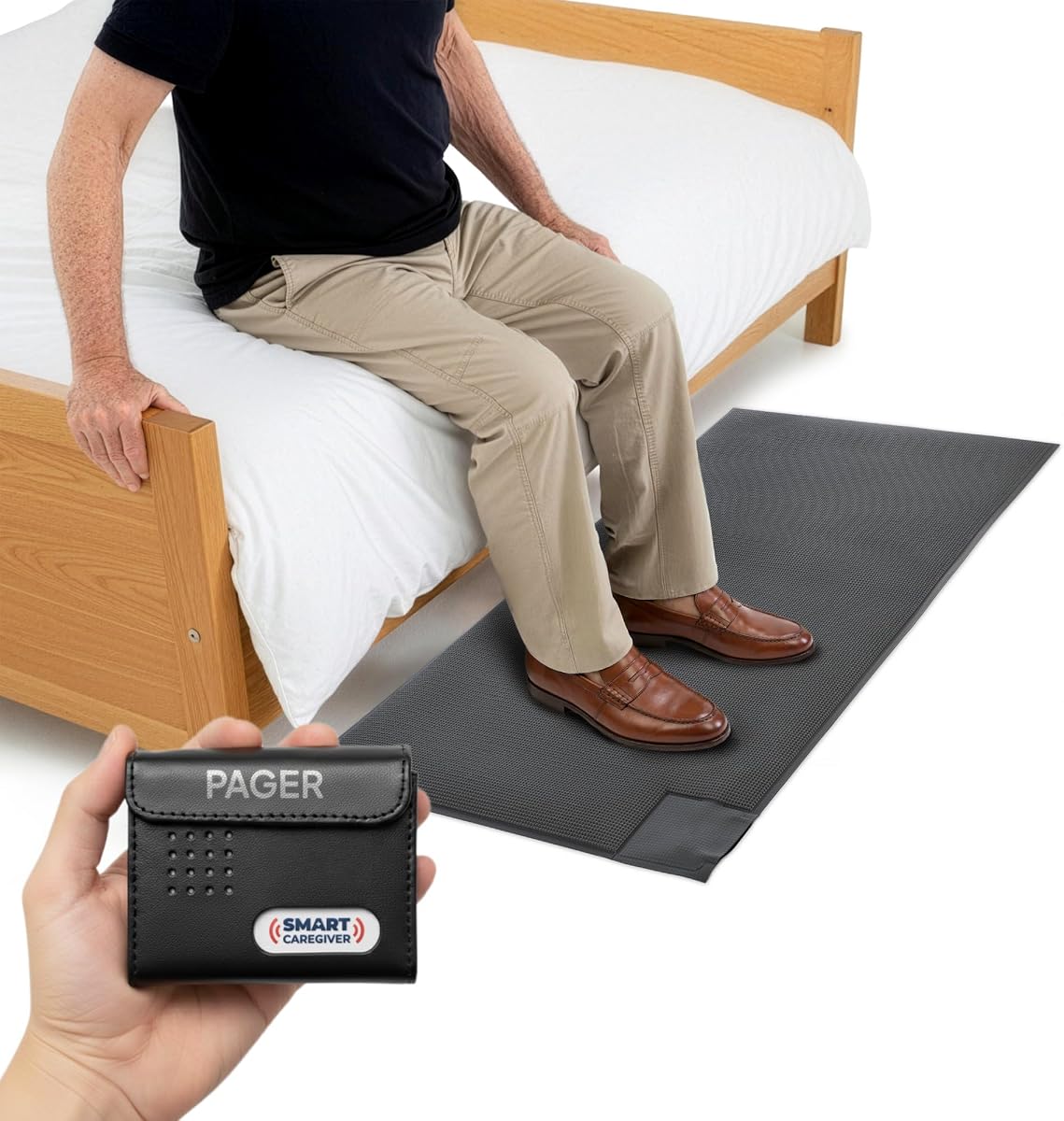
The Smart Caregiver Floor Mat Alarm focuses on immediate notification when a patient leaves their bed or approaches an exit. With a large 24×48 inch mat, it provides reliable weight detection to prevent falls and wandering. The accompanying pager alerts caregivers up to 300 feet away, ensuring they can attend to other tasks safely.
We may earn a commission when you buy through this link, at no additional cost to you.
Strengths include its robust construction and silent alerts for the patient's room, minimizing disturbance. The system is easily installed without wiring, making it a quick solution for immediate safety needs. The range allows caregivers flexibility within large homes, promoting independence for both seniors and family members caring for them.
Drawbacks involve the need to place the mat precisely, which could limit furniture arrangement. Batteries for the pager and mat must be replaced periodically, adding maintenance. However, for households needing dependable floor-based detection, this device offers proven effectiveness and straightforward operation that integrates well with existing care routines.
Ideal for seniors at high risk of nocturnal wandering or falls. It suits caregivers who want to monitor exits without constant visual checks. The balance of range and silent alerts makes it a strong option for maintaining dignity while ensuring safety.
The reinforced mat withstands regular use, providing long-term reliability without frequent replacement needs.
Silent pager notifications ensure caregivers are alerted without startling the senior, supporting calm care interactions.
We may earn a commission when you buy through this link, at no additional cost to you.
The SecuLife Medical Alert Pendant emphasizes mobility and direct family communication over central monitoring centers. Featuring automatic fall detection and real-time GPS, it enables immediate location tracking and notifications. The pendant is waterproof, making it suitable for wear in various daily activities, and supports hands-free two-way calling for urgent assistance.
We may earn a commission when you buy through this link, at no additional cost to you.
Key benefits include the absence of long-term contracts and the ability to set custom safe zones for geofencing. This flexibility appeals to families wanting control over emergency contacts and boundaries. The simple interface with a clear display ensures ease of use for seniors with limited tech experience.
However, a monthly subscription is necessary for GPS and fall alert features, adding recurring costs. Battery life, while decent, requires regular charging, which could be missed by forgetful users. Despite these, the pendant offers a personal and portable safety solution for active seniors needing constant connection with family.
Best for seniors who move outside the home regularly and need reliable tracking. It suits families preferring direct alerts over third-party services. The waterproof and hands-free design enhances practicality for active lifestyles, providing peace of mind through continuous connectivity.
GPS tracking ensures caregivers always know the wearer's location, providing an essential safety net for those prone to wandering.
Notifications go straight to preselected family members, enabling quicker personalized response compared to centralized call centers.
We may earn a commission when you buy through this link, at no additional cost to you.
The Smart Caregiver Video Monitor offers secure visual monitoring without internet dependency, using infrared night vision for clear nighttime checks. Its rechargeable battery allows the camera to move freely during the day, while the portable monitor enables caregivers to check on seniors from different rooms easily.
We may earn a commission when you buy through this link, at no additional cost to you.
Strengths include simplicity and privacy, as it operates independently of internet networks. The call button adds a layer of communication, allowing seniors to request help directly. This device serves well for basic visual verification and communication, especially in households prioritizing privacy over advanced features.
Limitations involve a smaller screen and fewer automation options compared to smart home devices. The range may not cover very large properties effectively. Nevertheless, for those seeking a straightforward, privacy-focused visual monitor without recurring fees, this device provides reliable performance for essential daily checks.
Best for caregivers needing frequent visual contact without Wi-Fi setup. It suits seniors who benefit from simple communication tools. The rechargeable and portable nature enhances flexibility, making it suitable for various living arrangements where privacy and simplicity are paramount.
Secure connection without Wi-Fi ensures video feeds remain private and protected from external breaches or hacking.
Rechargeable components allow users to position the camera where needed, supporting dynamic care routines without wiring constraints.
We may earn a commission when you buy through this link, at no additional cost to you.
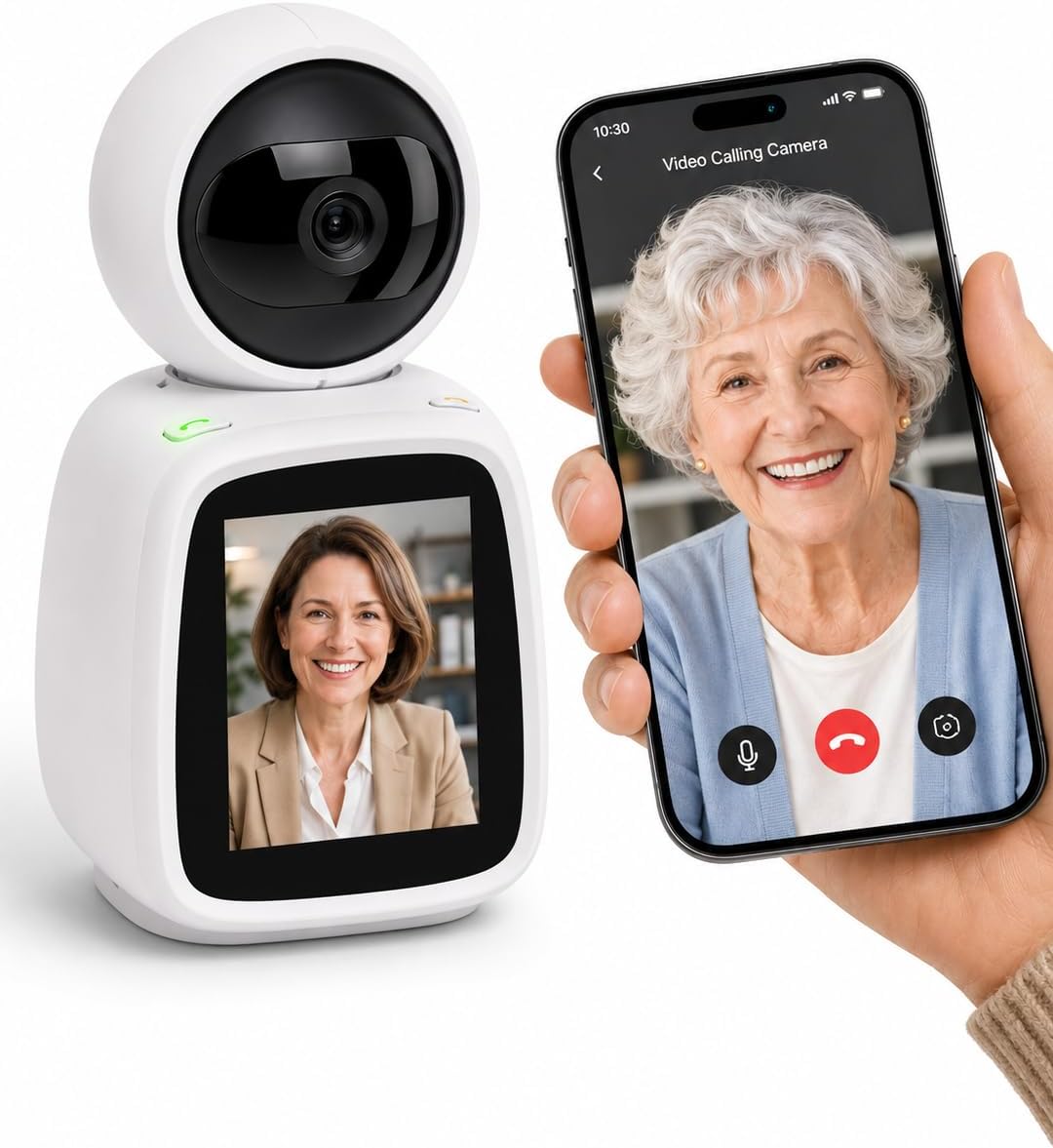
The SYMYNELEC Elderly Monitoring Camera focuses on maintaining emotional connections through instant video calls with a simple button press. It eliminates the need for smartphones or apps on the senior's end, making technology accessible. Features like fall and sound alerts add a layer of physical safety to its social benefits.
We may earn a commission when you buy through this link, at no additional cost to you.
Its unique selling points include a physical privacy mode that rotates the lens, giving seniors control over monitoring. Local recording on a memory card ensures footage is available without cloud costs. The photo screen feature keeps family images visible, fostering warmth and connection for isolated seniors.
Drawbacks include continuous plug-in power requirements, limiting camera placement options. The need to purchase memory cards separately adds to setup costs. Despite these, the device excels in combining safety with emotional support, making it valuable for families prioritizing closeness alongside monitoring.
Best for seniors who benefit from regular face-to-face interactions. It suits families wanting easy, subscription-free monitoring. The combination of visual comfort and practical alerts supports holistic care approaches that address both emotional and physical well-being.
One-touch video calling allows seniors to see loved ones without complex setup, reducing feelings of loneliness.
Storing footage locally ensures privacy and removes dependency on cloud services, providing control over personal data.
We may earn a commission when you buy through this link, at no additional cost to you.
The CallToU 2-Way Talk Monitor provides a comprehensive visual and audio solution for seniors needing regular check-ins. Operating without Wi-Fi ensures private and secure monitoring. Its temperature sensors and SOS buttons add functional depth, catering to seniors with dementia or specific health needs requiring constant assistance.
We may earn a commission when you buy through this link, at no additional cost to you.
Features such as 4x zoom and infrared night vision enable detailed visual checks even in low light. The portable receiver allows caregivers to monitor from various locations, supporting flexible care routines. Two-way talk facilitates direct communication, making it easier to guide seniors through daily tasks or emergency situations.
Limitations include basic night vision clarity and potential setup complexity for non-tech users. Despite these, it offers a versatile range of features at a competitive price point. For families prioritizing privacy and detailed visual capabilities, this monitor provides practical support without external dependencies.
Best suited for seniors requiring both visual monitoring and assistive alerts. It fits households needing secure communication without internet risks. The combination of temperature alerts and zoom makes it a robust tool for comprehensive care and situational awareness.
Temperature and SOS alerts provide layered protection, helping prevent issues related to environment or mobility.
Private signals ensure data safety, appealing to families concerned about digital privacy and network vulnerabilities.
We may earn a commission when you buy through this link, at no additional cost to you.
The Smart Caregiver Wireless Motion Sensor offers a cost-effective solution for detecting movement in specific zones like beds or exits. Its mountable design allows flexible placement, while the pager ensures alerts reach caregivers within 300 feet. This simplicity makes it a reliable companion for basic fall and wandering prevention.
We may earn a commission when you buy through this link, at no additional cost to you.
Key strengths include ease of installation without wiring and the ability to place it in high-risk areas discreetly. The system alerts caregivers promptly, allowing them to attend to tasks while monitoring movement indirectly. Its portability means it can be repositioned as needs change.
Drawbacks include the lack of video or audio verification; alerts are based solely on motion. While effective for basic monitoring, it may not suit those needing detailed situational awareness. Nevertheless, for households looking for affordable, straightforward movement detection, this device delivers reliable performance.
Best for caregivers needing a simple, non-intrusive alert system. It suits seniors requiring periodic movement checks. The mountable and range features ensure flexibility, supporting dynamic home environments where easy monitoring is essential.
Motion detection alerts provide awareness without constant visual presence, respecting privacy while ensuring safety.
Wireless operation simplifies setup, enabling quick placement in key areas without renovation or professional help.
We may earn a commission when you buy through this link, at no additional cost to you.
Selecting the right monitoring system requires evaluating specific needs, technical capabilities, and lifestyle factors. This section outlines critical considerations to help caregivers make informed decisions tailored to their loved ones' safety and comfort.
Fall detection technology automatically identifies sudden movements indicative of a fall and sends alerts without user input. This is vital for individuals at high risk of falling or those with cognitive impairments. However, manual buttons offer control and simplicity for users who can communicate emergencies themselves.
Caregivers should prioritize automatic detection for high-risk seniors to ensure timely help. For those capable of pressing buttons, manual systems suffice and may reduce false alarms caused by sudden movements.
Systems relying on Wi-Fi enable remote access and app integration but depend on stable internet. Non-Wi-Fi models using radio frequencies offer privacy and independence from network outages but lack remote control features. Assess the home's internet reliability before committing to connected devices.
Choose Wi-Fi systems for remote monitoring convenience, but ensure backups exist. Non-Wi-Fi options suit households prioritizing privacy or lacking consistent internet access.
Effective monitoring requires devices that cover the entire living space without dead zones. Consider the physical layout of the home when selecting devices with range limits. Pagers and extenders can enhance coverage but may increase cost and complexity.
Evaluate the system's range against your home size. Supplement with extenders if necessary to ensure full coverage without gaps that compromise safety.
User-friendly interfaces and quick setup processes reduce barriers to adoption. Devices requiring minimal technical knowledge are preferable for seniors and families without tech expertise. Look for plug-and-play options to streamline installation.
Prioritize systems with clear instructions and intuitive controls. Avoid complex configurations that may lead to frustration or incorrect use during emergencies.
Reliable devices should feature long battery life or continuous power options to prevent monitoring interruptions. Rechargeable components add convenience but require regular charging habits. Consider backup power solutions for critical systems.
Assess battery durability and charging needs. Ensure the system maintains uptime through power failures or missed charges to maintain safety.
Many advanced monitoring systems require monthly subscriptions for services like emergency response or GPS tracking. Factor these costs into your budget to ensure sustainability. Some devices offer full functionality without subscriptions, providing cost-effective alternatives.
Compare subscription-dependent versus standalone options based on your financial capacity and need for professional assistance. Choose models aligning with long-term budget goals.
Data privacy is paramount when using monitoring devices with internet connectivity. Secure encryption and local storage options protect personal information from unauthorized access. Review manufacturer policies on data handling and retention.
Opt for systems with robust security features. Prioritize models that allow local storage or private networks to minimize digital risks.
Monitoring equipment should withstand regular use without frequent failures. Durable materials and easy maintenance procedures extend device lifespan. Consider warranties and customer support availability for repairs.
Select devices built for longevity. Regularly inspect equipment to ensure components remain functional and replace parts as needed to maintain reliability.
Begin by positioning sensors and cameras in high-risk areas such as near beds, exits, or bathrooms. Ensure coverage areas align with movement patterns and emergency needs. Test each component to confirm alerts trigger correctly before relying on them for daily care.
Regularly charge rechargeable devices and replace batteries in wireless components to prevent disruptions. Check connection signals frequently, especially if relocating sensors or moving within the home. Clear any obstacles that could interfere with signal strength or camera visibility to maintain consistent performance.
Train caregivers and seniors on how to use buttons, pagers, and communication features effectively. Practice emergency scenarios to build confidence and familiarity. Periodically review and update system settings to reflect changes in health conditions or living arrangements for optimal functionality.
Not all systems require Wi-Fi. Many devices use radio frequencies or cellular connections to send alerts independently. Non-Wi-Fi options are ideal for households seeking privacy or dealing with unstable internet. Check product specifications to confirm connectivity requirements.
Automatic fall detection is effective for identifying sudden impacts but may occasionally produce false alarms. Modern systems use advanced algorithms to minimize errors. Combining fall detection with manual buttons offers a balanced approach to ensure alerts are sent accurately.
GPS-enabled systems allow tracking seniors outside the home through mobile apps. Devices without GPS typically function within limited indoor ranges. For travel or outdoor activities, choose pendants with GPS and cellular capabilities to maintain safety beyond the residence.
Yes, many systems include features like wander detection, temperature alerts, and SOS buttons tailored for dementia care. Simplified interfaces and non-intrusive designs reduce confusion. Select models with features addressing specific cognitive needs for better support.
Most wireless devices operate on batteries and continue functioning during outages. However, Wi-Fi-dependent systems may lose connectivity if routers rely on electricity. Consider battery backups for routers or cellular models to ensure uninterrupted monitoring.
Some modern systems integrate with smart home hubs for unified control. Compatibility varies by brand and protocol, so verify connections before purchasing. Integration enhances automation and centralized management, improving overall home safety.
Choosing an elderly monitoring system depends on balancing safety features, ease of use, and budget. Options like the Lunderg Wireless Early Alert provide proactive protection, while systems such as the Nomo Medical Alert offer comprehensive emergency support. Evaluate individual needs to find the most effective solution.
Prioritize systems that align with your loved one's lifestyle and health conditions. Devices offering fall detection, remote alerts, and privacy features enhance care quality. Flexibility and reliability are key factors in ensuring consistent monitoring and peace of mind.
Always verify current availability and pricing before purchase, as market conditions can change. Regular maintenance and user training will extend the lifespan of any system. Investing in a thoughtful monitoring solution supports independence and safety for seniors at home.