
Dissolved Oxygen Meter with ATC
4.3Editor score
Extended 0-40 mg/L range
Automatic Temperature Compensation
Clear digital LCD display
Compare the top 10 dissolved oxygen sensors for aquaculture, labs, and IoT. We review galvanic, optical, and polarographic models for accuracy and durability.
Dissolved oxygen sensors are critical tools for monitoring water quality in aquaculture, environmental science, and industrial processes. Selecting the right device ensures aquatic health and process efficiency while preventing costly losses due to oxygen depletion in sensitive water systems.
We evaluated ten leading models based on accuracy, response time, maintenance requirements, and ease of integration. Our analysis covers galvanic, polarographic, and optical technologies to help you find the best fit for your specific monitoring needs and budget constraints.
Each pick highlights key strengths, limitations, and ideal use cases to guide your decision. Note that prices and availability change frequently, so verify current details before purchasing to ensure you get the best value for your specific application requirements today.
4.3Editor score
4.4Editor score

4.8Editor score
This side-by-side comparison highlights the key specifications and features of the top ten dissolved oxygen sensors available today. Use this table to quickly identify which model offers the best range, calibration options, and durability for your specific water quality monitoring needs.



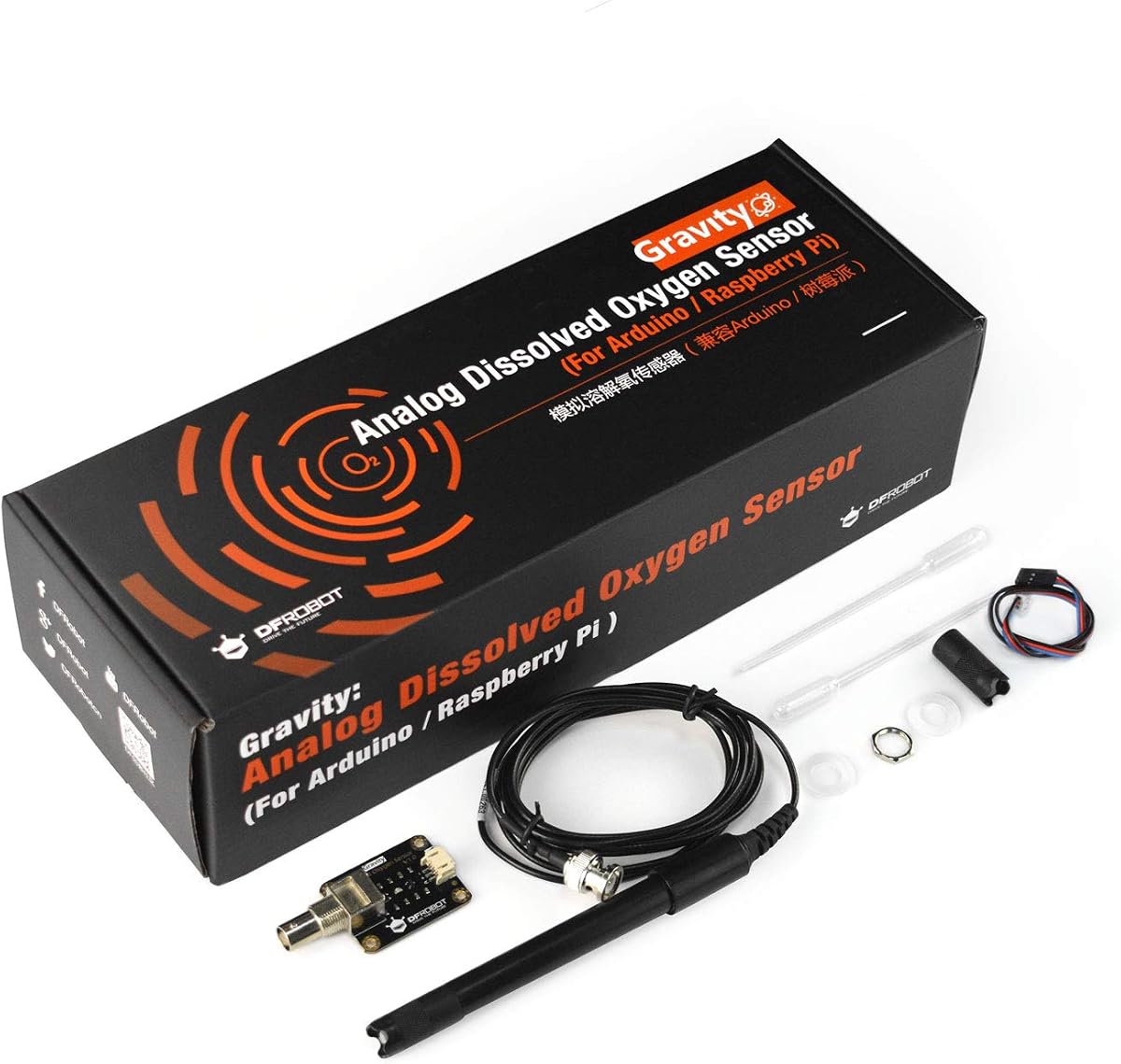
The Gravity Analog Dissolved Oxygen Sensor Kit stands out as a top choice for developers and hobbyists building IoT water quality systems. With a 4.4-star rating, it offers galvanic probe technology that requires no polarization, allowing instant measurements right out of the box.
We may earn a commission when you buy through this link, at no additional cost to you.
Its hardware filtering ensures stable analog signals without complex software processing. The wide voltage range makes it compatible with Arduino, ESP32, and Raspberry Pi setups. Comprehensive documentation and open-source code simplify deployment for aquaculture or lab environments.
While the kit includes a spare membrane cap to reduce long-term costs, note that the NaOH filling solution is not included due to shipping restrictions. You must prepare this locally, which adds a small step to initial setup but remains straightforward with provided instructions.
This kit is ideal for those needing low-power, intermittent monitoring in smart water systems. Its ease of integration and fast response make it a reliable partner for projects where quick data access and low maintenance are priorities for success.
The galvanic probe eliminates the need for pre-heating or polarization, ensuring you can measure dissolved oxygen levels immediately whenever needed without waiting periods.
Comprehensive open-source code and wiring diagrams allow you to customize calibration algorithms and integrate seamlessly with existing microcontroller projects for tailored monitoring solutions.
We may earn a commission when you buy through this link, at no additional cost to you.
This Dissolved Oxygen Meter offers exceptional value with an extended 0-40 mg/L range that surpasses standard 0-20 mg/L meters. Its 4.3-star rating reflects reliability for aquariums, ponds, and hydroponics without demanding advanced technical skills.
We may earn a commission when you buy through this link, at no additional cost to you.
Automatic Temperature Compensation ensures precise results across 0-50℃, adapting to changing conditions effortlessly. The package includes electrode filling fluid and anaerobic water calibration powder, making initial setup straightforward for new users needing immediate accuracy.
The digital display is clear and easy to read, though it lacks a backlight for dim environments. However, the auto power-off function conserves battery life effectively, ensuring the device remains ready for use whenever monitoring is required.
For budget-conscious buyers needing accurate readings in diverse settings like fish tanks or industrial pools, this meter delivers consistent performance. Its complete package and user-friendly operation make it an excellent starting point for regular water quality checks.
The 0-40 mg/L range supports a wider variety of applications, from typical aquariums to more demanding industrial uses, providing flexibility for varied water quality needs.
Included calibration powder and filling fluid remove the need for separate purchases, allowing you to start measuring accurately right away with minimal additional investment.
We may earn a commission when you buy through this link, at no additional cost to you.
The Apera Instruments AI480 DO850 Optical Dissolved Oxygen Meter Kit represents the premium choice for professionals seeking effortless, high-accuracy testing. With a 4.8-star rating, its optical sensor eliminates the need for electrolyte refills, reducing maintenance significantly.
We may earn a commission when you buy through this link, at no additional cost to you.
Its IP67 waterproof structure ensures durability in harsh environments like field research or industrial monitoring. The easy auto calibration for saturated air and zero-oxygen simplifies the workflow, ensuring consistent results without complex manual adjustments during daily operations.
While the higher price reflects the optical technology, the included 10 ft optical probe and rugged case justify the investment for users needing reliability. The lack of solution refills saves time and cost over the long term compared to traditional polarographic models.
This kit is best for labs, industrial plants, or field teams prioritizing minimal maintenance and robust performance. If you need dependable, hassle-free dissolved oxygen readings without frequent sensor servicing, this optical system delivers superior value and accuracy for critical applications.
Optical technology measures dissolved oxygen reliably without electrolyte refills or frequent membrane changes, ensuring stable performance and reduced operational downtime for professional settings.
IP67 waterproof and dust-proof construction protects the meter during outdoor use, making it ideal for harsh environments where standard devices might fail under challenging conditions.
We may earn a commission when you buy through this link, at no additional cost to you.
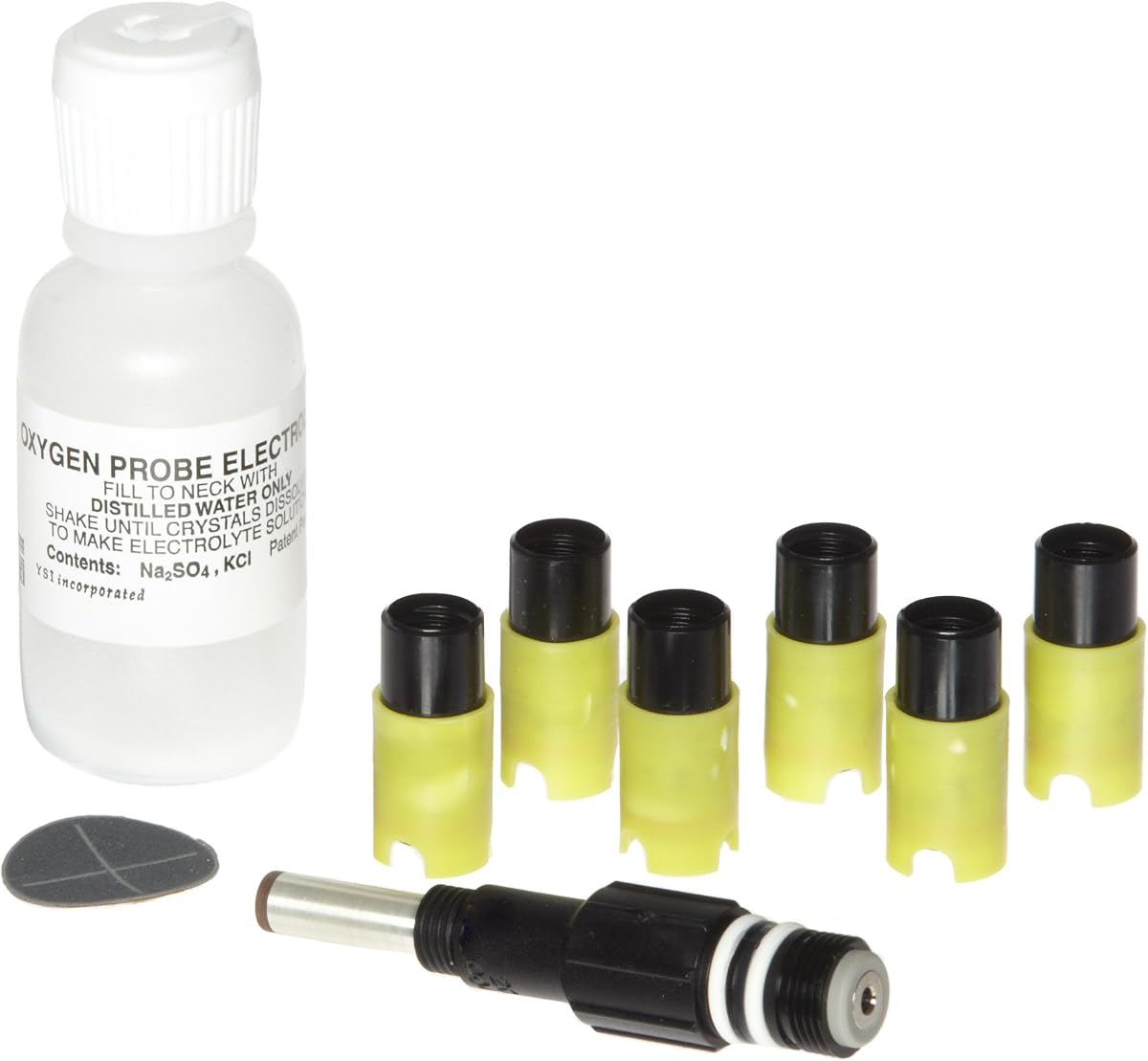
The YSI-605202 Pro Series sensor earns a 4.8-star rating for its user-friendly design focused on quick replacements without specialized tools. Its galvanic technology ensures stable readings while the screw-on cap membranes make maintenance remarkably simple for technicians.
We may earn a commission when you buy through this link, at no additional cost to you.
The package includes six membrane caps and a solution bottle, ensuring you can perform changes efficiently during regular service. This focus on ease of use reduces downtime in critical aquaculture or water analysis settings where continuous monitoring is essential.
While it does not include a meter, its compatibility with YSI systems ensures seamless integration. The trade-off is that you must already own a compatible handheld or system to utilize this sensor, which may require additional upfront investment.
This sensor is ideal for facilities using YSI equipment needing reliable, low-effort maintenance. If quick access and tool-free membrane changes are priorities for operational efficiency, this model provides professional-grade performance with minimal interruption to monitoring schedules.
The screw-on cap design allows for easy membrane changes without tools, streamlining maintenance processes and reducing downtime during critical water quality monitoring operations.
Six membrane caps and a solution bottle are included, providing immediate readiness for regular maintenance tasks without needing to order separate parts after purchase.
We may earn a commission when you buy through this link, at no additional cost to you.
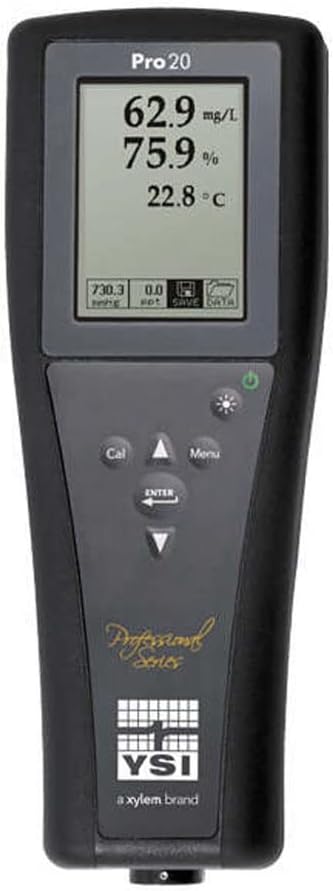
This YSI handheld meter prioritizes speed and data management, offering a One Touch Cal feature that completes DO calibration in just three seconds. With a 4.4-star rating, it is ideal for professionals needing quick, accurate readings during field surveys.
We may earn a commission when you buy through this link, at no additional cost to you.
Automatic barometric pressure compensation ensures high accuracy across varying altitudes. The ability to store 50 data sets eliminates the need to manually write down results, streamlining workflows for environmental monitoring and aquaculture inspection tasks.
The graphic backlit display and glow-in-the-dark keypad make reading easy even in low-light conditions. However, as a meter-only package, you must purchase a compatible sensor separately, which adds to the initial setup cost for full functionality.
Choose this meter if you already own a YSI sensor or need rapid data logging capabilities. Its quick calibration and memory features make it a reliable companion for frequent field work where efficiency and clear visibility are essential for success.
Calibrate in just three seconds with a single button press, saving valuable time during field inspections and ensuring your device is always ready for accurate measurements.
Stores up to 50 data sets internally, reducing the risk of lost data and making it easy to review historical readings during post-survey analysis without external tools.
We may earn a commission when you buy through this link, at no additional cost to you.
This YSI optical sensor is designed specifically for the ProDSS platform, offering advanced dissolved oxygen sensing for complex multi-parameter analysis. While a specific rating is not listed, its design focuses on reliability for demanding environmental and industrial applications.
We may earn a commission when you buy through this link, at no additional cost to you.
Optical technology ensures minimal drift and reduced maintenance compared to polarographic alternatives. The robust build supports continuous monitoring in challenging water bodies, making it suitable for long-term research or high-demand aquaculture operations requiring consistent data.
Because it is a standalone sensor, you must own a compatible YSI ProDSS system to use it. This restricts flexibility for those without existing infrastructure, but ensures seamless integration for users invested in the YSI ecosystem for water analysis.
Ideal for research institutions or industrial facilities using ProDSS units, this sensor provides a high-performance upgrade path. If you need optical precision with minimal maintenance within an existing system, this model aligns well with professional monitoring requirements.
Designed to integrate seamlessly with YSI ProDSS systems, this sensor ensures compatibility for advanced multi-parameter water quality monitoring without additional adapters or complications.
Advanced optical technology minimizes drift and reduces maintenance, providing stable, accurate readings over extended periods for critical environmental or industrial water monitoring needs.
We may earn a commission when you buy through this link, at no additional cost to you.
This Dissolved Oxygen Meter for Pond is tailored for small aquatic environments like fish tanks, koi ponds, and hydroponic systems. Its 3.6-star rating suggests basic functionality for hobbyists needing to check oxygen levels regularly without complex features.
We may earn a commission when you buy through this link, at no additional cost to you.
The 3.6-foot electrode cable allows easy access in small ponds and tanks. Two-point calibration ensures accuracy for maintaining healthy oxygen levels for aquatic life, supported by included zero-oxygen calibration solution and extra membranes for maintenance.
While the range is standard, the unit provides both mg/L and percentage readings for flexible monitoring. However, the build quality may not withstand professional use, making it more suitable for occasional hobbyist checks than continuous commercial applications.
For home aquarium and pond owners needing an affordable tool to monitor oxygen levels, this meter offers straightforward operation. It is a practical choice for ensuring basic water health in non-critical settings where cost is a primary concern.
Designed specifically for aquariums and small ponds, the cable length and calibration options suit hobbyists ensuring sufficient oxygen for fish and plant health without complex setup.
Display readings in both mg/L and percentage saturation, offering flexibility to track oxygen levels using the units most familiar to your monitoring preferences and needs.
We may earn a commission when you buy through this link, at no additional cost to you.
This Dissolved Oxygen Tester features an impressive 11.48-foot cable, allowing measurements in deep tanks or difficult-to-reach water bodies. With a 4.0-star rating, it offers basic multi-parameter functionality including temperature, salinity, and barometric pressure alongside dissolved oxygen.
We may earn a commission when you buy through this link, at no additional cost to you.
The 99-data memory allows you to store readings for later review. Auto temperature compensation ensures accurate results across a 0-50°C range. Its high resolution of 0.01 ppm provides detailed insights for monitoring water quality in aquariums or small research setups.
However, the IRDA port and basic design suggest it may require careful handling. Users should note that manual documentation can be limited, requiring you to rely on the device's memory for tracking changes over time effectively.
For hobbyists needing deep tank access, this meter offers a practical solution. Its combination of cable length, memory storage, and multi-parameter capabilities makes it a versatile tool for home aquariums or educational setups requiring more than basic oxygen testing.
The 11.48 ft cable allows you to measure dissolved oxygen in deep tanks, ponds, or other water bodies without needing to move the main unit to the water surface.
Store up to 99 data points for later review, helping you track water quality trends over time without needing external recording tools or constant manual notes.
We may earn a commission when you buy through this link, at no additional cost to you.
The Milwaukee MW600 LED is a portable, economical choice designed for educational and basic environmental analysis. With a 4.2-star rating, it provides reliable 0.1 mg/L resolution for standard aquaculture or classroom settings requiring simple dissolved oxygen checks.
We may earn a commission when you buy through this link, at no additional cost to you.
Its polarographic probe comes with a 3-meter cable and screw-on cap, facilitating straightforward field use. Two-point manual calibration and automatic temperature compensation between 0 to 30°C ensure accuracy without needing advanced configuration steps.
While the range is standard at 0 to 19 mg/L, it suits most fresh water applications. The LED display is clear, though manual calibration may require patience for those unfamiliar with the process, making it less ideal for rapid professional workflows.
This meter is best for schools, field guides, or small labs on a budget. Its durability and ease of transport make it a solid tool for teaching water quality principles or conducting basic monitoring where high-end features are not essential.
Designed for educational environments, this meter balances affordability with accuracy, making it suitable for classrooms and field trips focused on teaching water quality analysis basics.
Compact and portable design with a 3-meter cable allows you to take the meter easily to field sites for immediate testing without bulky equipment or complex setup.
We may earn a commission when you buy through this link, at no additional cost to you.
The YSI-605203 Polarographic Sensor earns a 4.6-star rating as a professional-grade component for lab and industrial water analysis. Its polarographic technology ensures high precision for researchers requiring stable and accurate dissolved oxygen measurements in controlled environments.
We may earn a commission when you buy through this link, at no additional cost to you.
Packaged as a lab supply, it fits seamlessly into existing polarographic systems. While detailed specifications like cable length are not listed, its compact dimensions and standard YSI quality suggest reliable integration for scientific or regulatory testing scenarios.
The trade-off is that it requires a compatible polarographic meter, limiting its use to those with established infrastructure. For users needing robust sensor performance without optical costs, this remains a trusted choice within professional water quality workflows.
Ideal for laboratories and industrial sites using YSI polarographic equipment, this sensor provides precision and durability. If you need a standard lab-grade component for accurate dissolved oxygen analysis, this model aligns with professional testing expectations.
Polarographic technology ensures the high precision required for scientific and regulatory testing, making it a reliable choice for professional water quality analysis and reporting needs.
Designed as a standard YSI lab component, this sensor integrates easily with existing polarographic systems used in professional facilities for consistent and reliable dissolved oxygen monitoring.
We may earn a commission when you buy through this link, at no additional cost to you.
Selecting the right dissolved oxygen sensor depends on your application, required accuracy, and maintenance capacity. This guide outlines key factors to consider to ensure you choose a model that delivers reliable data for your specific water quality monitoring needs.
Dissolved oxygen sensors generally fall into three technologies: galvanic, polarographic, and optical. Galvanic sensors do not require polarization and offer fast response, ideal for IoT or rapid checks. Polarographic sensors are robust but require more maintenance, while optical sensors offer minimal maintenance and high accuracy with no electrolyte refills.
Choose optical if you need low maintenance, polarographic for standard precision, or galvanic for fast, simple readings without warm-up time.
Most sensors cover 0-20 mg/L, which suffices for fresh water. However, industrial or saline environments may require extended ranges up to 40 mg/L. Ensure the sensor's range aligns with your water type to avoid accuracy loss at the edges of the scale.
Verify the maximum measurable mg/L value matches your application to ensure consistent accuracy across all expected water conditions.
Response time indicates how quickly the sensor reaches 98% stability after immersion. Faster response times like 90 seconds are critical for intermittent monitoring or dynamic systems where oxygen levels change quickly. Slower sensors may suffice for static lab samples.
Prioritize fast response times if you need quick decisions in moving water or automated monitoring systems.
Calibration methods range from manual two-point to one-touch auto calibration. Some sensors require specific solutions or powders. Check if calibration reagents are included or sold separately. Simple auto calibration saves time for field work while complex manual methods may offer tighter control for research.
Look for units with simple auto calibration options to save time and ensure consistent accuracy across regular monitoring intervals.
For outdoor or industrial use, check the Ingress Protection (IP) rating. IP67 or higher ensures waterproof and dust-proof performance in harsh environments. Durable casing protects against accidental drops or exposure to splashes during field measurements.
Select a high IP-rated unit if you plan to use the sensor outdoors or in rugged conditions frequently.
Maintenance includes membrane changes, electrolyte refills, or cleaning. Optical sensors typically need the least maintenance. Traditional polarographic or galvanic sensors require regular membrane caps and filling solutions. Evaluate long-term costs and time availability before purchasing.
Opt for sensors with low maintenance needs if you want consistent operation without frequent servicing or parts replacement.
Consider whether you need to log data. Models with memory slots, USB ports, or IRDA support allow you to track changes over time without manual recording. Some sensors integrate with IoT platforms for remote monitoring.
Choose a unit with data storage or connectivity features if you need to track trends or analyze historical water quality data.
Prices vary from under $100 to over $1,000. Entry-level models suit hobbyists while professional units cost more but offer better accuracy and durability. Balance initial cost with long-term maintenance expenses like membrane kits or calibration solutions.
Invest in a higher-end sensor if reliability and reduced maintenance costs justify the initial investment over time.
Before first use, prepare the sensor by installing the membrane cap and filling it with electrolyte solution if required. For optical sensors, ensure the optical window is clean. Always allow the sensor to stabilize in air before measuring water for accurate readings.
During measurement, immerse the probe fully without touching the container sides. Stir gently to ensure uniform oxygen distribution around the sensor tip. Wait until the reading stabilizes or follows the device's suggested time before recording values.
After use, rinse the probe with distilled water and store in a moist environment or storage solution to prevent drying. Replace membranes regularly according to manufacturer guidelines. Store the sensor in a dry case away from direct sunlight to prolong its life.
Galvanic sensors produce current through a chemical reaction and require no external voltage but may need membrane changes. Optical sensors use fluorescence quenching and require no electrolytes, offering lower maintenance. Optical sensors are generally more accurate with less drift, while galvanic ones are more affordable and simpler for basic use.
Yes, regular calibration ensures accurate readings. Most sensors need calibration every few weeks or before critical field work. Check your manual for frequency, but a two-point calibration using zero-oxygen and air-saturated water is common. Skipping calibration leads to unreliable data and potential water quality issues.
Signs include slow response times, drifting readings, or visible wear on the cap. Membranes typically last a few months depending on use. If calibration fails repeatedly or readings are inconsistent, replace the membrane to restore performance. Regular visual inspection helps identify wear early.
Many models support saltwater with salinity compensation features. Check the specifications for salt tolerance; some require manual salinity input or specific probes. Ensure the device compensates for dissolved oxygen changes due to salinity for accurate readings in marine or brackish water.
Slow stabilization often results from dirty membranes, lack of calibration, or temperature differences between the probe and water. Clean the membrane cap and recalibrate before retesting. If the issue persists, replace the electrolyte or check for sensor damage.
Lifespan varies by type. Optical sensors can last years with minimal maintenance. Galvanic and polarographic sensors may last 1-2 years depending on usage. Proper storage, regular membrane changes, and calibration extend the life significantly for all sensor types.
Our top picks highlight excellent options for varied needs: the Gravity Kit for IoT integration, the Dissolved Oxygen Meter with ATC for budget-friendly versatility, and the Apera Optical kit for premium durability. Each model delivers reliable performance within its intended environment for effective water quality monitoring.
When choosing, prioritize the sensor technology that matches your maintenance capacity and required accuracy. For professional labs, optical or high-end galvanic sensors offer long-term reliability. For hobbyists and educational use, affordable models with simple calibration provide sufficient precision.
Prices and availability fluctuate regularly, so verify current deals and specs before purchasing. Regular maintenance and correct calibration remain key to consistent results regardless of model. With the right choice, your sensor will support healthy water systems and informed monitoring decisions.