
Lenovo ThinkPad P16s
4.0Editor score
Portable workstation design
Intel Core Ultra 7
ISV certified software support
Choosing the right laptop for electrical engineering requires balancing powerful processing, reliable graphics, and durable build quality. You need a machine that handles simulation software, CAD tools, and coding environments without lag during critical design phases.
This guide compares ten top-rated models selected for their performance in engineering workflows. We evaluate processors, memory, display accuracy, and connectivity options to help you find the perfect tool for your academic or professional needs.
Each pick highlights key strengths and ideal use cases so you can decide quickly. Keep in mind that pricing fluctuates often so check current deals before purchasing to ensure you get the best value for your investment today.
4.0Editor score

4.4Editor score

5.0Editor score
As an Amazon Associate we earn from qualifying purchases.
The following table provides a side-by-side comparison of all ten models to help you quickly identify which device matches your specific engineering requirements and budget constraints.




The Dell Precision 7680 stands out as a top-tier workstation designed for the most demanding engineering tasks. With a rating of 4.4 stars users appreciate its robust performance and reliability in professional settings.
We may earn a commission when you buy through this link, at no additional cost to you.
This model features an Intel Core i9-13950HX processor that delivers exceptional speed for complex simulations and CAD design. The 32GB of DDR5 RAM ensures smooth multitasking even when running heavy software like MATLAB or AutoCAD.
While it is a powerful machine it does come with a higher price tag and is heavier than ultrabooks. These trade-offs are acceptable given the workstation-grade durability and ISV certifications that guarantee software compatibility.
You should buy this if you need a reliable desktop replacement for engineering work. It is ideal for students and professionals who prioritize raw performance and multi-monitor support over portability.
The i9 processor and DDR5 RAM provide the power needed for intensive engineering applications without lag.
Support for up to three external monitors allows for efficient workspace expansion during complex projects.
We may earn a commission when you buy through this link, at no additional cost to you.
This version of the Precision 7680 offers a dedicated NVIDIA RTX 1000 Ada GPU which is essential for 3D rendering and visual simulations. It holds a 4.3 star rating reflecting its solid performance for engineering professionals.
We may earn a commission when you buy through this link, at no additional cost to you.
The Intel Core i5-13600HX processor provides efficient speed for most engineering software while the 32GB RAM handles multitasking with ease. The inclusion of a dedicated GPU sets it apart from integrated graphics models.
However the i5 processor may struggle with the most intensive computational tasks compared to the i9 variant. It is a good middle ground but might not be the best choice for heavy rendering workloads.
Consider this laptop if you need dedicated graphics for visualization but do not need the absolute top-tier CPU. It balances performance and cost well for students who need graphical capabilities.
The NVIDIA RTX 1000 Ada GPU accelerates rendering and visualization tasks significantly better than integrated graphics.
Support for four external monitors offers extensive screen real estate for managing complex engineering data.
We may earn a commission when you buy through this link, at no additional cost to you.
The Lenovo ThinkPad P16s combines a 16-inch workspace with a more portable design than heavier workstations. It earns a 4.0 rating for its balanced mix of mobility and professional capability ideal for engineering students.
We may earn a commission when you buy through this link, at no additional cost to you.
Powered by the Intel Core Ultra 7 255H processor it handles multitasking and professional applications smoothly. The 32GB DDR5 RAM ensures you can run multiple engineering tools without slowing down your workflow.
While it lacks a discrete GPU it is still ISV certified for professional apps and supports three external monitors. The trade-off is slightly less graphical power but significantly better portability for daily campus or office use.
Buy this if you need a reliable machine that you can carry easily between classes or sites. It is perfect for engineers who value mobility and strong CPU performance over heavy 3D rendering.
The slim profile allows you to take your engineering workspace anywhere without the weight of a tower.
Certification ensures professional engineering software runs reliably on this system for academic projects.
We may earn a commission when you buy through this link, at no additional cost to you.
This model earns a perfect 5.0 rating due to its exceptional configuration tailored for high-end engineering work. It features a massive 64GB of DDR5 RAM and a powerful RTX 2000 Ada GPU for intensive rendering.
We may earn a commission when you buy through this link, at no additional cost to you.
The Intel Core i7-13850HX processor delivers superior efficiency and speed for complex data analysis and simulations. With 2TB of storage you have ample space for large engineering datasets and project files without external drives.
The only downside is the high cost which makes it less accessible for students on a tight budget. It is a premium choice best suited for professionals who need the absolute best performance available.
Invest in this if you are working on large scale projects that require significant memory and graphical power. It is a powerhouse that will handle any engineering task you throw at it effortlessly.
64GB RAM allows you to run multiple virtual machines and heavy engineering software simultaneously.
The RTX 2000 Ada GPU accelerates CAD and simulation tasks for faster design iterations.
We may earn a commission when you buy through this link, at no additional cost to you.
This configuration focuses on balancing strong CPU performance with high-end graphics for visual work. It features the RTX 2000 Ada GPU which is excellent for 3D modeling and complex engineering simulations.
We may earn a commission when you buy through this link, at no additional cost to you.
The Intel Core i7-13850HX processor ensures efficient operation during long rendering sessions. With 32GB of RAM you can handle most professional engineering workflows without bottlenecks.
While it offers powerful specs the rating is slightly lower than other Precision models possibly due to price concerns. It is a solid choice if you specifically need the RTX 2000 Ada for your software requirements.
Choose this if you require dedicated graphics for visualization but prefer a slightly lower RAM amount. It offers a great balance for engineers who need reliable performance for design and rendering.
The RTX 2000 Ada GPU provides the visual power needed for high-fidelity engineering models.
2TB SSD storage ensures you can keep all your project files and datasets local and fast.
We may earn a commission when you buy through this link, at no additional cost to you.
The HP ZBook Firefly 14 is a true mobile workstation that combines professional performance with extreme portability. It has earned a 5.0 rating for its ability to handle engineering tasks on the go.
We may earn a commission when you buy through this link, at no additional cost to you.
Powered by the Intel Core Ultra 7 165U processor it delivers excellent AI performance and efficiency. The 32GB DDR5 RAM ensures smooth multitasking for engineering software and large datasets.
Its compact 14-inch design makes it easy to carry but limits screen space for complex diagrams. However the ISV certification guarantees that critical apps like AutoCAD and SolidWorks will run smoothly.
Buy this if you travel frequently and need a reliable machine for fieldwork or meetings. It is ideal for engineers who value mobility without sacrificing professional-grade capabilities.
Weighing only 3.13 lbs it is one of the lightest workstations available for daily carrying.
Built-in fingerprint reader and IR webcam enhance security for sensitive engineering projects.
We may earn a commission when you buy through this link, at no additional cost to you.
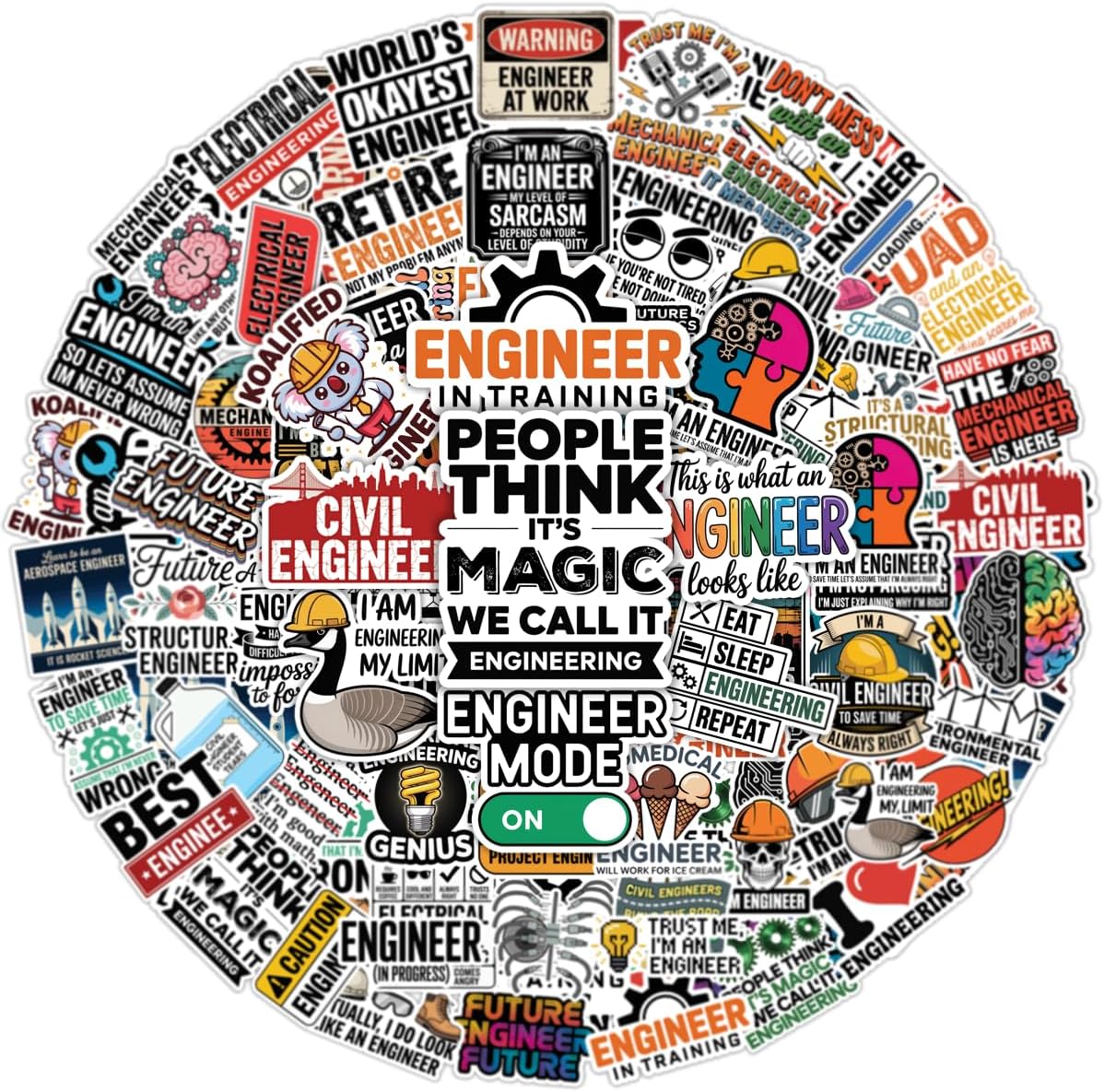
While not a laptop these stickers are a fun accessory for engineering students and professionals. They add a personal touch to your tech gear with themes covering electrical mechanical and civil engineering.
We may earn a commission when you buy through this link, at no additional cost to you.
Made from premium waterproof vinyl they stick firmly to laptops and water bottles without peeling. The designs include technical graphics and quotes that celebrate the engineering profession.
They are not a technical tool but serve as a great gift to brighten up your workspace. They are perfect for adding character to your equipment while showcasing your engineering pride.
Consider these as a small addition to your engineering setup. They are best for students who want to personalize their laptops and show off their major.
Use these to customize your laptop and identify it easily in shared engineering spaces.
An affordable and thoughtful gift for engineering students or colleagues starting a new project.
We may earn a commission when you buy through this link, at no additional cost to you.
The Dell Precision 7780 offers a massive 17.3-inch screen that is perfect for viewing detailed engineering schematics. It combines this display with top-tier performance hardware for demanding technical workflows.
We may earn a commission when you buy through this link, at no additional cost to you.
Powered by the Intel Core i9-13950HX processor it delivers superior efficiency and speed for complex calculations. The RTX 2000 Ada GPU ensures smooth performance for 3D modeling and simulations.
Its large size makes it heavy and less portable compared to 15 or 16-inch laptops. It is designed more as a desktop replacement for fixed workspaces where screen real estate is critical.
Choose this if you work from a desk and need the largest possible screen for detailed design work. It is ideal for professionals who prioritize visual space over portability.
The 17.3 inch screen provides ample space to view complex diagrams and multiple windows.
Designed for stationary use it replaces a desktop PC for high-performance engineering tasks.
We may earn a commission when you buy through this link, at no additional cost to you.
These stickers are a humorous way to show off your electrical engineering knowledge on your gear. They feature funny quotes about volts amps and ohms that appeal to teachers and students.
We may earn a commission when you buy through this link, at no additional cost to you.
Made from high-quality waterproof vinyl they withstand tough conditions and remain bright. They are easy to apply to laptops helmets and toolboxes without leaving residue behind.
While not a technical tool they add personality to your work items. They are great for adding a touch of humor to your daily engineering tasks.
Buy these if you want a fun way to celebrate your trade. They are perfect gifts for students and professionals who enjoy a bit of humor in their work.
Enjoy a laugh with clever engineering jokes that resonate with your peers and classmates.
Waterproof and scratch-resistant materials ensure the stickers last long on your gear.
We may earn a commission when you buy through this link, at no additional cost to you.
The HP OmniBook 3 is an affordable laptop with a large screen suitable for basic tasks. It earns a 4.5 rating for its value and battery life for students with lighter needs.
We may earn a commission when you buy through this link, at no additional cost to you.
It features an AMD Ryzen 3 30 processor and 8GB of RAM which is enough for web browsing and document editing. The 512GB SSD provides fast storage for your basic files.
However it lacks the power required for heavy engineering simulations or professional CAD software. It is best used for general coursework or media consumption rather than intensive engineering tasks.
Consider this if you need a budget-friendly machine for basic schoolwork. It is a good option for non-core engineering tasks or as a secondary laptop for travel.
A budget-friendly option that covers basic computing needs without straining your finances.
Long battery life allows you to work through classes without needing a power outlet.
We may earn a commission when you buy through this link, at no additional cost to you.
Selecting the right laptop involves understanding your specific engineering software needs and how you plan to use the device daily.
For electrical engineering tasks simulations and CAD software require powerful processors. Look for Intel Core i7 or i9 series or AMD Ryzen 7 and 9 processors to ensure smooth operation without slowdowns.
A strong CPU ensures your simulations run faster and your system remains responsive during multitasking.
Engineering software often consumes large amounts of memory. 16GB is a minimum for general work but 32GB is recommended for heavy multitasking and large datasets.
More RAM prevents bottlenecks when running virtual machines or multiple engineering tools simultaneously.
If you work with 3D models or complex visualizations a dedicated GPU is essential. Look for NVIDIA RTX workstation cards like the RTX 1000 or 2000 series for professional certification.
Dedicated graphics accelerate rendering and ensure compatibility with specialized engineering software.
Fast storage is critical for loading software and accessing large project files quickly. Aim for at least 512GB of PCIe NVMe SSD storage to keep your system agile.
SSD storage reduces load times and improves overall system responsiveness for daily engineering work.
Engineering work requires viewing detailed schematics and precise designs. Look for a high-resolution display with anti-glare coating to reduce eye strain during long sessions.
A quality screen ensures accuracy and comfort when working on detailed technical documents.
If you carry your laptop to classes or field sites consider the weight and battery life. Lighter models like 14-inch workstations are better for mobility while 17-inch models suit desktop replacement.
Balancing power with portability ensures your laptop fits your daily workflow needs effectively.
ISV certification ensures your laptop works reliably with specific engineering software like AutoCAD and SolidWorks. This is crucial for avoiding software crashes or compatibility issues.
Certified laptops guarantee stable performance with the professional tools you rely on daily.
Engineering often involves connecting to multiple monitors or specialized hardware. Ensure your laptop has Thunderbolt 4 ports HDMI and Ethernet for flexible connection options.
Versatile connectivity allows you to expand your workspace and interface with engineering equipment easily.
Keep your laptop in a cool environment to prevent overheating during intensive simulations. Use a cooling pad if you work for extended periods with high-performance software.
Regularly update your operating system and drivers to maintain compatibility with engineering tools. Software updates often include security patches and performance improvements.
Use a good quality case for transport to protect your device from physical damage. Proper care extends the lifespan of your investment and ensures reliability on field visits.
High-end processors like Intel Core i7 or i9 are recommended for engineering software. They provide the speed needed for simulations and CAD tools to run efficiently without lag.
If you use 3D modeling or heavy visualizations a dedicated GPU is necessary. For basic coding and data analysis integrated graphics may suffice but dedicated cards are safer for future-proofing.
At least 16GB of RAM is recommended for AutoCAD. For complex projects or running multiple programs simultaneously 32GB provides a smoother experience.
Yes a larger screen helps view detailed schematics and multiple windows comfortably. A 15-inch or larger display with good resolution is ideal for detailed technical work.
ISV certifications ensure the laptop is tested to work reliably with professional software. This is important for avoiding crashes when using specialized engineering applications.
A good engineering laptop should last through your degree typically four to five years. Investing in quality components ensures the machine remains viable for future software requirements.
This guide highlights the top options for engineering professionals and students. The Dell Precision 7680 leads the list for raw power and the HP ZBook Firefly is best for portability.
Prioritize performance features like processor and RAM based on your specific software needs. A machine that handles your current workload will also serve you well as your skills grow.
Prices change frequently so verify current deals before making a final decision. Choosing the right tool sets you up for success in your engineering career.