
CRESSI Leonardo 2.0
4.2Editor score
Air Nitrox and Gauge modes
Single-button interface control
USB and infrared data transfer
This guide compares the top Dive Computer for Scuba Diving models based on display quality, battery life, gas support, and connectivity to help divers choose
Choosing the right Dive Computer for Scuba Diving is essential for safety and enjoyment underwater. Modern units offer critical data like depth, time, and decompression limits directly on your wrist. Whether you are a beginner or a technical diver, finding a reliable model ensures you stay informed throughout your dive.
We evaluated ten leading models based on display clarity, battery performance, algorithm accuracy, and connectivity features. Each product was assessed for durability, ease of use, and versatility across different diving environments. Our goal is to provide a clear overview of what each device offers to help you make an informed decision.
Each pick below highlights specific strengths such as touchscreen interfaces, wireless charging, or advanced gas mixing capabilities. Prices and availability can change frequently so please verify current details before purchasing. Use this guide to find the perfect match for your diving style and budget needs.
4.2Editor score

4.8Editor score

4.6Editor score
This table provides a side-by-side overview of all ten models ranked by their overall performance and features. It highlights key specifications such as display type, button layout, and unique capabilities to help you quickly identify the right fit for your needs.




The Mares Puck Pro EZ Wrist Dive Computer stands out with its high-contrast screen and reliable decompression calculations. It holds an excellent 4.8 rating from users who appreciate its straightforward design and performance. This model is ideal for divers who want essential data without complex menus.
We may earn a commission when you buy through this link, at no additional cost to you.
Its use of the Buhlmann ZH-L16C algorithm with dual gradient factors ensures accurate safety limits for various dives. The single-button interface makes it easy to navigate settings even with gloves on. Bluetooth connectivity allows you to upload logs directly to your smart device for easy tracking.
While it lacks some advanced features found in higher-end models, its simplicity is a strength for recreational divers. The replaceable power source means you are not dependent on charging cycles which is convenient for travel. Most users find the battery life sufficient for extended diving trips.
If you prioritize readability and reliable calculations over smart features, this computer is a strong choice. It offers a balance of affordability and performance that suits most recreational scuba divers well. We recommend it for those seeking a dependable wrist unit for regular dives.
The algorithm ensures precise calculations for safe ascents and limits.
Bluetooth integration lets you sync dive logs to your phone instantly.
We may earn a commission when you buy through this link, at no additional cost to you.
The CRESSI Leonardo 2.0 offers a cost-effective entry into digital diving with essential features. It supports Air Nitrox and Gauge modes making it versatile for different setups. With a solid rating of 4.2 it is popular among new divers looking for reliability.
We may earn a commission when you buy through this link, at no additional cost to you.
Its single-button interface simplifies menu navigation underwater which reduces distraction during dives. Visual and audible alarms ensure you never miss critical data like time or depth limits. You can pair it with iOS and Android devices for comprehensive dive tracking and analysis.
The main trade-off is the simplicity of the display and controls compared to premium models. It may take more time to navigate settings during a dive. However for recreational use it provides all the necessary safety information without overwhelming the user.
This watch is perfect for beginners or those who need a backup computer without breaking the bank. The Italian craftsmanship ensures durability in challenging conditions. We suggest it for divers who value function over advanced connectivity features.
Air Nitrox and Gauge modes cover most recreational diving needs.
USB and infrared transfer make log analysis simple and fast.
We may earn a commission when you buy through this link, at no additional cost to you.
The Garmin Descent™ X50i represents the pinnacle of dive computer technology with advanced features. It features a vibrant 3-inch color touchscreen that makes data like profiles and ascent plans easy to read. Its robust build with a sapphire lens ensures it withstands deep dives.
We may earn a commission when you buy through this link, at no additional cost to you.
Integrated air integration and SubWave sonar technology allow you to monitor tank pressures and exchange messages with dive buddies. The built-in backup dive light provides peace of mind during night dives or low visibility. You can also access DiveView maps for bathymetric contours.
While the price is high and it is heavier than wrist units these features justify the cost for tech divers. The device supports complex tasks that would be difficult with basic models. It is a powerhouse for those who want a smartwatch and dive computer in one.
We recommend this for technical divers who need maximum data integration and connectivity. If you value having light and communication tools on your wrist this is the top choice. It is an investment in safety and convenience for serious underwater explorers.
SubWave sonar enables diver-to-diver messaging without radios.
Integrated backup light ensures visibility when primary fails.
We may earn a commission when you buy through this link, at no additional cost to you.
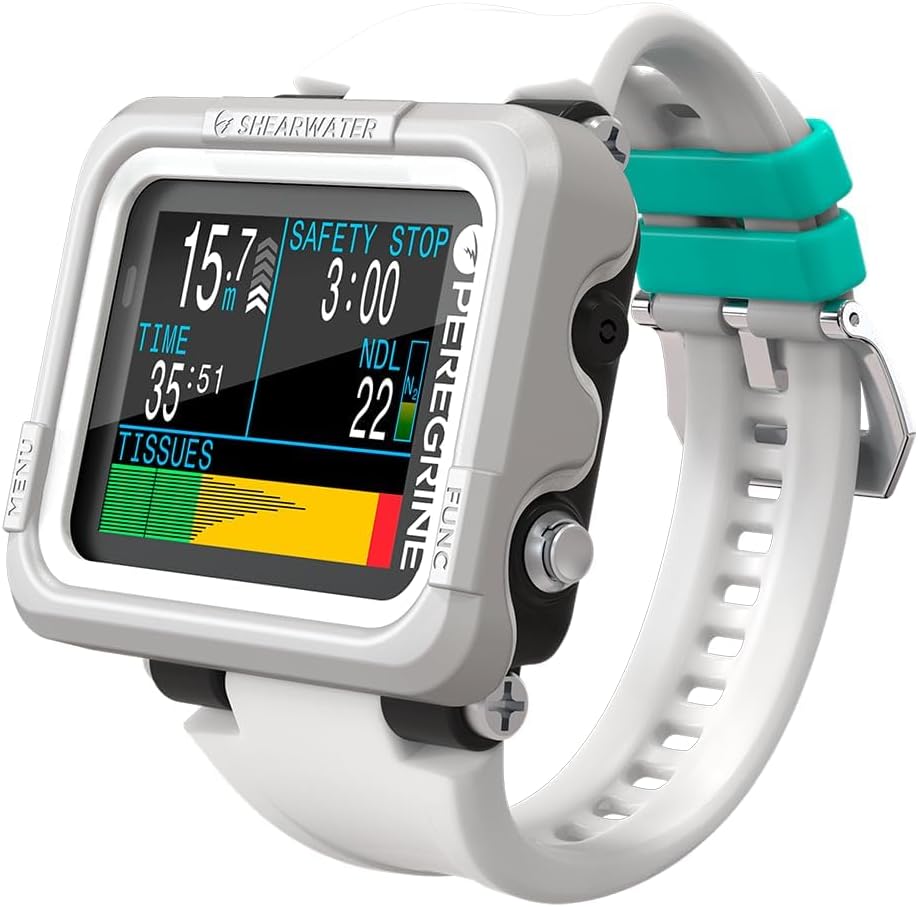
The Shearwater Research Peregrine Dive Computer is known for its reliable operation and simple interface. It features a two-button design that makes navigating menus straightforward even underwater. With a high 4.7 rating it is favored by divers who prioritize function.
We may earn a commission when you buy through this link, at no additional cost to you.
Battery life is impressive reaching up to 30 hours on medium brightness. The included USB wireless charging station makes recharging easy when you return home. The menu structure is state-aware which means it shows relevant info for the current dive phase.
While it lacks a touchscreen which might be a drawback for some users the reliability is unmatched. The stainless steel buttons are durable and resistant to corrosion. It is a solid choice for those who want a straightforward tool that works every time.
This model is best for divers who do not need advanced graphics but want consistent performance. The battery life ensures you can dive for days without worrying about power. We suggest it for anyone seeking a no-nonsense computer for frequent diving.
Two-button interface simplifies underwater navigation significantly.
USB wireless charging makes power management simple and fast.
We may earn a commission when you buy through this link, at no additional cost to you.
The SUUNTO D5 features a color display that enhances visibility underwater. It is 100m water resistant making it suitable for most recreational dives. Users appreciate the wireless tank pressure monitoring which keeps them updated without extra gear.
We may earn a commission when you buy through this link, at no additional cost to you.
Vibration alarms provide an alert method that is effective even in noisy environments. The digital compass helps with navigation without needing a separate tool. Mobile connection allows you to sync data easily with your smartphone.
Some users report that battery life could be better requiring more frequent changes. It is also designed more for recreational use than technical diving. However the color screen and tank monitoring are valuable for safety.
This computer is a good fit for divers who want a clear display and tank info. It balances style and function well for casual underwater exploration. We recommend it for those prioritizing readability and wireless features.
Color display ensures data is readable in various light.
Wireless pressure keeps you informed without extra hoses.
We may earn a commission when you buy through this link, at no additional cost to you.
The Shearwater Research Peregrine Adventures Edition offers multiple diving modes including 3 Gas Nitrox. It features a vivid 2.2 inch LED LCD display with enhanced color. The algorithm never locks out even if you deviate from your dive plan.
We may earn a commission when you buy through this link, at no additional cost to you.
Wireless charging is included making power management convenient for travelers. The two-button interface is simple and uses stainless steel buttons for durability. It supports Air Nitrox and Gauge modes which cover a wide range of activities.
While it lacks some advanced features found in top tier models it offers great value. The display clarity is excellent for reading data underwater. It is a solid choice for divers who need flexibility and reliability.
We recommend this for divers looking for a reliable unit with wireless charging. It balances cost and features well for frequent recreational use. It is a strong contender for those needing multi-gas support without complexity.
3 Gas Nitrox allows for tailored safety on different dives.
Enhanced color LCD ensures data is crisp underwater.
We may earn a commission when you buy through this link, at no additional cost to you.
The Garmin Descent X30 offers surface GPS navigation to mark entry and exit points. It features a 2.4 inch vibrant color display made with recycled materials. The NDL Aware depth metrics help you track decompression limits in real time.
We may earn a commission when you buy through this link, at no additional cost to you.
Customize your screens with up to three data fields per page for quick access. The flip-screen mode allows you to orient buttons for comfort during different activities. You can navigate underwater with a 3-axis digital compass.
GPS features are useful for finding sites but they consume more battery. The design is rugged and eco-friendly using ocean-bound plastics. It is a great option for active divers who like data control.
We suggest this for divers who want to track dive sites and surface routes. The metrics are great for optimizing your bottom time safely. It is a versatile choice for daily diving and fitness tracking.
Surface GPS ensures you know exactly where you started.
NDL Aware metrics help you dive longer safely.
We may earn a commission when you buy through this link, at no additional cost to you.
The Garmin Descent G1 combines diving with smartwatch features seamlessly. It has a sapphire lens display and supports over 30 sports apps. Dive mode lasts up to 25 hours while smartwatch mode provides daily insights.
We may earn a commission when you buy through this link, at no additional cost to you.
It stores up to 200 dives on your wrist and connects to the Garmin Dive app. You can view sleep scores and VO2 Max data to track your health. It works with compatible phones for smart notifications and contactless payments.
The monochrome display is less vibrant than color options but very readable. Battery life in smartwatch mode is 21 days which is useful. This device is ideal for divers who want full daily tracking.
We recommend it for tech users who want a unified wrist device. It balances health tracking and diving data effectively. It is a practical choice for active divers and fitness enthusiasts.
Sleep score and VO2 Max help track your daily wellness.
Syncs with smartphone for alerts and contactless payments.
We may earn a commission when you buy through this link, at no additional cost to you.
The SUUNTO Nautic features a bright AMOLED display that ensures excellent readability. It supports up to 120 hours of dive time on a single charge which is impressive. The integrated flashlight adds a layer of safety for low-light conditions.
We may earn a commission when you buy through this link, at no additional cost to you.
Glove-optimized buttons ensure comfort and confidence in all dives. It offers sidemount compatibility and customizable alarms for tailored settings. The compact leakproof construction is built for demanding environments.
While the price is higher it provides robust features for dedicated divers. The battery life supports multi-day dive trips without worries. It grows with you from beginner to advanced adventures seamlessly.
This model is a good choice for divers who need a bright screen and safety light. It balances performance and durability effectively for all dives. We suggest it for those who value long battery life.
Integrated flashlight provides light without extra gear.
Bright AMOLED ensures data is clear in all conditions.
We may earn a commission when you buy through this link, at no additional cost to you.
The Shearwater Perdix 3 features a 2.4 inch ultra-bright AMOLED display. It offers 4x higher resolution and 14 color options for personalization. The new Big layout allows users to switch font sizes easily.
We may earn a commission when you buy through this link, at no additional cost to you.
Bluetooth connectivity is 6x faster for quick dive log downloads and updates. Advanced features help monitor decompression stress effectively. It ensures your focus stays on the dive with enhanced clarity.
While a new model lacks reviews it is promising for those needing customization. The design focuses on visibility and security. It is a top pick for tech-savvy divers seeking modern features.
We recommend it for divers who want a custom display and fast sync. It brings high resolution and security to your wrist. It is a future-proof choice for advanced technical diving needs.
Thousands of combinations allow perfect viewing for conditions.
Faster Bluetooth means quicker log downloads and updates.
We may earn a commission when you buy through this link, at no additional cost to you.
Selecting the right dive computer requires understanding your specific needs and diving style. This section outlines key factors to consider when choosing a model.
Display quality is critical for reading data underwater. Monochrome displays are simple and readable in low light while color displays offer more detailed graphs. AMOLED and LCD screens vary in brightness so check reviews for underwater legibility.
Prioritize a display that is easy to read in your typical diving conditions.
Battery life affects how long you can dive without recharging. Some models use replaceable batteries while others use USB wireless charging. Long battery life is essential for multi-day trips or frequent diving.
Choose a battery system that fits your travel routine and dive frequency.
Determine which diving modes you need such as Air Nitrox or Gauge. Advanced divers may require trimix or sidemount compatibility. Ensure the device supports the gas mixtures you plan to use safely.
Select a model that matches your current and future diving goals.
Decompression algorithms vary in how they calculate safety limits. Some computers do not lock out on plan deviations. Alarms for ascent rate and depth are vital for preventing accidents.
Verify that the algorithm aligns with your safety standards and training.
Modern computers allow wireless data transfer to smartphones or PCs. Bluetooth is standard for easy log uploads. Some offer tank pressure monitoring or sonar messaging for group dives.
Ensure the connectivity features match your desire to track and share logs.
Build materials impact how well the unit resists corrosion and impact. Sapphire lenses and stainless steel buttons are signs of durability. Look for a rating that suits your depth requirements.
Choose a rugged build to withstand repeated use in saltwater.
Interface complexity affects how easily you can navigate settings. Two-button designs are simple while touchscreens offer more control. Consider if you need glove-optimized buttons for cold water diving.
Test the menu structure if possible to ensure it suits your style.
Price ranges vary from basic units to high-end technical models. A good warranty protects your investment against defects. Consider value over just cost when selecting your device.
Balance your budget with the features you truly need for safety.
Start by reading the manual to understand the menu structure and alarms. Test all functions in a pool before your first ocean dive to ensure familiarity. Set your personal preferences such as conservatism levels and units of measure.
Always check your battery level before heading out and keep spare batteries handy if applicable. After each dive rinse the unit with fresh water to remove salt and debris. Dry it thoroughly before storing it in a cool dry place.
Update firmware regularly through the connected app to access new features. Store your dive logs in the cloud or on your computer for backup. Inspect the unit for cracks or damage periodically to ensure integrity.
Yes having a personal dive computer is essential for safety even with a guide. It provides real-time data on your ascent and depth that guides may not monitor. It helps you avoid decompression sickness and manage your air supply independently.
Most dive computers are designed for scuba diving but can be used for snorkeling. They track depth and time which is useful for surface intervals. However some may be complex for simple snorkeling needs.
With proper care dive computers can last many years. Regular rinsing and battery replacement extend their life. Manufacturers often provide software updates for several years which keeps them relevant.
Air mode is for diving with standard air while Nitrox mode is for enriched air mixes. The computer calculates no-decompression limits based on oxygen percentages. Using the correct mode prevents oxygen toxicity and ensures accurate safety limits.
Buttons are generally more reliable underwater where gloves or water might interfere. Touchscreens offer a modern interface but can be harder to use with wet fingers. Choose based on your preference for ease of use.
Check for firmware updates every few months or when new versions are released. Updates often fix bugs or add new features to improve safety. Follow the manufacturer instructions to update via a smartphone or computer.
The Mares Puck Pro EZ and Shearwater Research models stand out for reliability and clarity. Whether you choose a budget option like CRESSI or a premium Garmin Descent X50i depends on your diving depth and features.
Prioritize factors such as battery life and display visibility to ensure safe dives. Advanced divers should look for multi-gas support and connectivity for seamless data tracking.
Always verify current prices and availability before purchasing to get the best deal. Your choice of computer impacts your safety so take the time to find the right fit for your needs.