
MAONO PS22 Lite
4.2Editor score
24-bit/192kHz high-resolution recording
Dedicated instrument input with impedance adjustment
Compact design with dynamic light ring indicator
This guide compares the top external sound cards for guitar in 2026, evaluating audio quality, connectivity, and software features to help musicians choose the
Finding the right external sound card for guitar is essential for musicians who want to capture professional-quality recordings at home. These devices convert analog signals from your instrument into digital audio that your computer can process, allowing you to record, mix, and produce tracks with precision and clarity.
To compile this list, we analyzed ten leading audio interfaces based on their preamp quality, conversion rates, latency performance, and included software ecosystems. We considered factors like portability, build durability, and compatibility with major operating systems to ensure each recommendation meets the diverse needs of guitarists and producers.
Each pick in this guide showcases specific strengths, from budget-friendly options for beginners to high-end units for studio professionals. Please note that product availability and pricing can change frequently, so we recommend verifying current details on the manufacturer or retailer website before making your final purchase decision.
4.2Editor score
4.6Editor score

4.9Editor score
This side-by-side comparison highlights the key specifications and features of the ten selected audio interfaces, allowing you to quickly identify which model best fits your recording requirements and budget constraints.


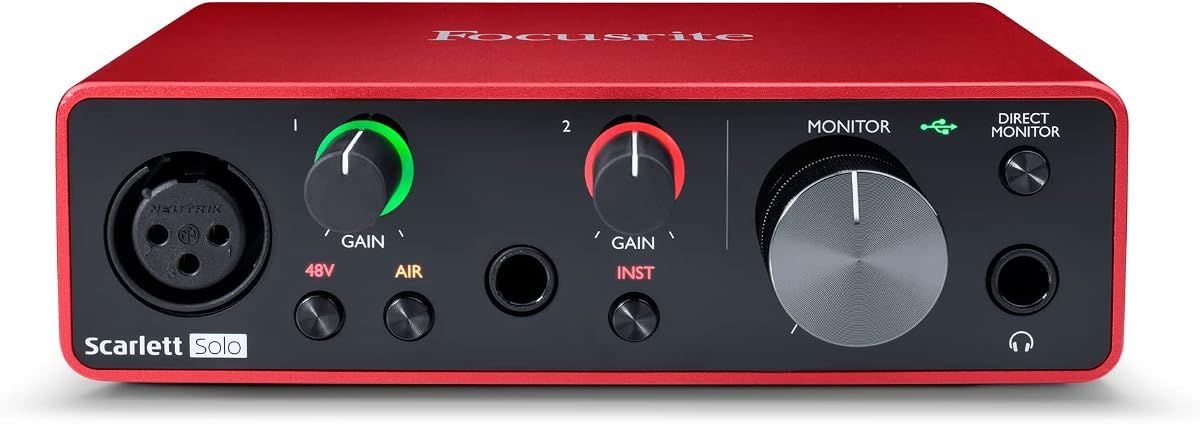
The Focusrite Scarlett Solo 3rd Gen stands out as the premier choice for guitarists seeking professional audio quality without overwhelming complexity. With a strong rating from users, it delivers clear, low-noise recordings that preserve the nuance of your instrument. Its high-headroom inputs ensure your guitar signals remain distortion-free even at high gain settings.
We may earn a commission when you buy through this link, at no additional cost to you.
This interface features high-performance converters that support recording up to 24-bit/192kHz, retaining all sonic qualities of your performance. The switchable Air mode adds extra clarity to acoustic guitars, making them shine in mixes. Additionally, the Gain Halos provide visual feedback to help you set perfect recording levels instantly without clipping.
While it lacks a second instrument input for simultaneous recording, this limitation is acceptable for solo artists focused on tracking vocals and guitar separately. The included software suite, including Pro Tools Intro+ and Ableton Live Lite, offers a complete toolkit for recording and mixing right out of the box without extra costs.
This unit is ideal for home studio musicians who value reliability and sound quality above all else. Whether you are recording demos or final tracks, the Scarlett Solo 3rd Gen provides the clarity and stability needed for professional results. We recommend it for anyone starting their recording journey or upgrading from basic onboard audio.
The high-performance mic pre-amps ensure your guitar tone remains crisp and detailed, while the Air mode enhances high frequencies for a polished sound.
Gain Halos ring green, yellow, or red to indicate input levels, helping you avoid distortion and ensure optimal recording levels instantly.
We may earn a commission when you buy through this link, at no additional cost to you.
The Fender Quantum HD 2 represents the pinnacle of audio interface design for guitarists who demand studio-grade performance. With a top-tier rating, it delivers pristine vocal and instrument capture using MAX-HD mic preamps. The front-facing instrument inputs are specifically optimized to ensure transparent recording for both guitar and bass.
We may earn a commission when you buy through this link, at no additional cost to you.
This unit features high-performance 32-bit/192 kHz converters that guarantee professional clarity for your productions. It includes ADAT expansion and S/PDIF I/O for hybrid studio growth, allowing you to add sixteen digital inputs as your needs evolve. The Auto Gain button sets perfect recording levels instantly, reducing session frustration.
The dual re-amp outputs let you explore new tones with external amps and pedals, offering significant flexibility for tone shaping. While the price is higher than average, the perpetual license for Fender Studio Pro and the complete FX pack justify the investment for serious musicians looking for long-term value.
Ideal for professional studios and advanced home producers, this interface offers the tools needed to craft inspiring guitar and bass tones. The integration with the Fender Studio app provides authentic amp models that are difficult to replicate elsewhere. We highly recommend this for those prioritizing top-tier audio quality and workflow efficiency.
Front-facing inputs are tuned to preserve the dynamic range of your guitar, ensuring your tone comes through without coloration or noise.
ADAT and S/PDIF ports allow for easy expansion, making this interface future-proof as your recording setup grows in complexity.
We may earn a commission when you buy through this link, at no additional cost to you.
The MAONO PS22 Lite offers an affordable entry point into professional audio recording without compromising on essential features. With a solid user rating, this interface ensures your sound is captured as clear and realistic as the original performance. Its dedicated instrument input allows you to adjust impedance for the best guitar tone.
We may earn a commission when you buy through this link, at no additional cost to you.
Featuring high-resolution recording at 24-bit/192kHz and a dynamic range of 106dB, this USB audio interface handles dynamic signals effectively. The dynamic light ring indicates sound input status, making it easy to see when you are recording. It is compatible with major DAWs like Pro Tools and Ableton Live.
While the compact design fits in the palm of your hand, users should handle it with care to avoid wear over time. The included ProStudio Routing Software opens up possibilities for virtual channels and loopbacks, which is rare for this price range. Direct monitoring switches help save time during setup sessions.
This interface is perfect for beginners, streamers, and content creators who need quality sound without breaking the bank. Its intuitive modes for recording and live broadcast make switching between setups easy. We recommend it for those who want a versatile tool that grows with their skills.
With 106dB dynamic range, the PS22 Lite captures subtle nuances in your guitar playing, ensuring rich and detailed recordings every time.
Built-in routing software and ASIO support make it easy to integrate with streaming platforms for live performances or content creation.
We may earn a commission when you buy through this link, at no additional cost to you.
The Fender AudioBox GO is designed for musicians who need a reliable interface that fits in a backpack. With a decent rating, it offers pristine 24-bit/96 kHz converters suitable for music and podcasts on the go. The dedicated TS instrument input is optimized specifically for guitar and bass recording.
We may earn a commission when you buy through this link, at no additional cost to you.
Its bus-powered design ensures effortless portability and simple plug-and-play operation without needing external power sources. Zero-latency headphone monitoring with mix control allows you to track and hear your performance in real-time without delays. The Fender Studio app unlocks a full collection of authentic amp models.
While the converter resolution is lower than premium models, it remains sufficient for most demo and practice recording needs. The included Fender Studio Pro trial is a great entryway, though users may want to upgrade eventually. The balanced outputs provide clean connections to studio monitors or powered speakers.
This unit is ideal for traveling musicians and casual home recordists who prioritize convenience. The Fender Studio integration gives you access to iconic tones immediately. We suggest it for those who need a hassle-free setup that works well with both Mac and Windows systems.
The ultra-compact build and bus power make it the perfect companion for recording ideas anywhere without carrying extra gear.
Unlock authentic Fender amp models via the app, providing a massive library of tones to craft inspiring guitar sounds instantly.
We may earn a commission when you buy through this link, at no additional cost to you.
The M-AUDIO M-Track Duo covers all bases for podcasting, recording, and live streaming with two combo inputs. With a solid rating, its Crystal Preamps guarantee optimal sound from all microphones including condenser mics. It delivers pristine 48kHz audio resolution suitable for most professional recording needs.
We may earn a commission when you buy through this link, at no additional cost to you.
Designed for versatility, you can record guitar, vocals, or line input signals effortlessly. The USB/Direct switch enables zero latency monitoring so you never hear lag while playing. The included MPC Beats Software offers essential production tools from Akai Professional for creating beats and tracks.
While it operates at 48kHz, which is standard for streaming and most music production, it lacks the higher rates found in premium units. The 1/4 headphone output and stereo outputs offer total monitoring flexibility. This is a robust choice for those needing multiple inputs without spending too much.
Ideal for multi-instrumentalists and podcasters, this interface handles various sources cleanly. The transparent preamps ensure your guitar tone is captured without unwanted coloration. We recommend it for anyone seeking a balance between cost, features, and reliability for daily use.
With two combo XLR and instrument inputs, you can record a guitar and a microphone simultaneously without needing extra gear.
The USB/Direct switch ensures you hear your instrument instantly, which is crucial for keeping rhythm during recording sessions.
We may earn a commission when you buy through this link, at no additional cost to you.
The Sound Blaster Play! 3 is a straightforward USB audio adapter designed for easy connectivity without software hassles. With a high user rating, it works straight out of the box, making it accessible for casual users. It supports 24-bit/96kHz for decent quality playback and basic recording.
We may earn a commission when you buy through this link, at no additional cost to you.
Its easy headphone connectivity works with all analog headsets, from mobile earbuds to studio headphones. The downloadable control panel software gives powerful audio enhancements and unprecedented control over your output settings. This makes it great for enhancing sound quality on laptops with poor built-in audio.
While not specialized for professional instrument recording, it can serve as a basic tool for simple audio tasks. However, its preamps are not optimized for guitar instruments compared to dedicated interfaces. Users needing high-fidelity recording should look elsewhere, but for playback and casual use, it is efficient.
This adapter is ideal for travelers or office users who need better audio output quickly. It removes the need for driver installations and complex settings. We suggest it for those who want an upgrade in listening experience rather than a professional recording setup.
Works straight out of the box without needing drivers, ensuring your audio setup is ready in seconds.
Software control panels offer optimized profiles for multiple earphone brands, tailoring sound to your specific gear.
We may earn a commission when you buy through this link, at no additional cost to you.
The StarTech 7.1 USB Audio Adapter adds up to 7.1 channels of audio to your computer through a single USB port. With a good rating, it supports 7.1, 5.1, and 2 channel output using standard jacks. This makes it valuable for multi-channel playback and mixing monitoring.
We may earn a commission when you buy through this link, at no additional cost to you.
It supports analog and digital audio output, upgrading existing integrated audio on desktops and laptops. The SPDIF digital output supports 48KHz audio playback, while optical input passthrough supports up to two-channel audio. Easy-to-use volume controls and mute buttons make operation convenient.
While this is primarily designed for surround sound playback and general audio expansion, it is less suitable for professional instrument recording. The sample rates are standard and not high-resolution for critical guitar tracking. It is best used as a secondary audio solution for home theaters or listening.
Ideal for users needing to add surround sound capabilities to older systems, this adapter is easy to install. The included 1m USB cable simplifies setup. We recommend it for playback and monitoring needs rather than primary recording tasks.
Supports up to 7.1 channels for immersive audio experiences in games and movies with minimal setup required.
Offers flexibility with both analog and digital output, allowing connection to various audio systems and receivers.
We may earn a commission when you buy through this link, at no additional cost to you.
The Synido A10 delivers pristine 24-bit/48kHz resolution while offering unique wireless backing track functionality. With a high rating, it captures every nuance of your performance with professional clarity. Its advanced dual-core chip ensures zero-latency monitoring for guitars, bass, and keyboards.
We may earn a commission when you buy through this link, at no additional cost to you.
You can stream backing tracks directly from one phone to the recording phone without cables, which is ideal for practice. The secure buckle-design USB-C connector ensures a stable connection during critical recording sessions. Independent volume buttons let you precisely balance input signal and headphone monitoring levels.
While limited to 48kHz resolution, it remains suitable for most streaming and practice recording needs. The record while charging feature ensures you never interrupt a session due to battery life. This is a thoughtful design choice for modern mobile musicians who rely on smartphones.
Ideal for mobile creators and practicing musicians, this interface balances durability with smart features. The aluminum alloy body protects it during transport. We recommend it for those who value portability and wireless convenience over maximum studio fidelity.
Stream backing tracks wirelessly between phones, allowing you to focus entirely on your performance without cable clutter.
Compatible with iPhone, iPad, and Android, making it the perfect interface for recording music on your mobile devices.
We may earn a commission when you buy through this link, at no additional cost to you.
The Cubilux CB5 converts your laptop USB port into a versatile 5-in-1 audio hub for various recording needs. With a strong rating, it enables multi-track recording by assigning independent device names to each interface. The built-in advanced chip captures crisp and precise sound up to 96 KHz/24-bit.
We may earn a commission when you buy through this link, at no additional cost to you.
It integrates a powerful Hi-Res DAC to fully drive studio monitors up to 250 Ohm for clean and pristine sound. The compact portable design is perfect for on-the-go recording without an external power source. It includes stereo microphone input, line-in, line-out, and headphone jack connections.
While the line-out jack and audio output jack cannot be used simultaneously, this is a minor trade-off for such versatility. The ultra-low noise design ensures that your recordings are not tainted by hiss. It is an excellent option for those needing multiple inputs in a small space.
Ideal for podcasters and content creators, this interface connects microphones and instruments conveniently. The Hi-Res DAC ensures high-quality playback when you need to monitor tracks. We recommend it for users who want a simple, compact hub without complex setup.
Assign independent device names to record multiple tracks simultaneously, offering flexibility for complex recording scenarios.
The Hi-Res DAC delivers clean audio up to 192 KHz/32-bit, providing professional quality for your audio content.
We may earn a commission when you buy through this link, at no additional cost to you.
The Cubilux 7.1 Surround Sound Card immerses you in a rich audio experience with 7.1 and 5.1 USB surround sound. With a decent rating, it supports headphone output sampling rates from 44.1Khz/16-bit to 384Khz/24-bit for Hi-Res music. This is perfect for gaming, movies, and critical listening.
We may earn a commission when you buy through this link, at no additional cost to you.
Its full aluminum alloy housing enables full isolation of electronic interference, ensuring no-loss transmission without static or ground noise. It is a compact design that works seamlessly with PCs and MacBooks lacking a built-in 7.1 sound card. Input includes line-in and stereo mic in for basic connectivity.
While the sample rates are impressive, this unit is more focused on playback enhancement than instrument recording optimization. The absence of external power support is convenient for portability. It is designed for users who want better sound quality for media consumption rather than professional music production.
Ideal for gamers and movie enthusiasts, this card upgrades your audio system easily. The aluminum case ensures durability and better shielding against interference. We suggest it for those seeking high-fidelity playback rather than specialized instrument recording features.
Full aluminum housing ensures no electronic interference, delivering a clean and static-free audio signal consistently.
Supports sampling rates up to 384Khz, letting you enjoy your favorite Hi-Res music with exceptional clarity.
We may earn a commission when you buy through this link, at no additional cost to you.
Selecting the right audio interface depends on your specific recording needs, budget, and the features you prioritize for your workflow.
Look for interfaces that support high sample rates like 24-bit/192kHz to capture every nuance of your guitar performance. Higher rates ensure that your recordings retain all sonic qualities without digital artifacts or clipping during high-gain sessions.
Prioritize units with high-performance converters and low-noise outputs for crystal clear playback. This ensures your mixes sound professional and balanced across various playback systems.
Choose an interface with high-headroom instrument inputs specifically optimized for guitar and bass to ensure transparent recording. Look for dedicated TS inputs or combo jacks that allow impedance adjustment for the best tone capture.
High-quality preamps are essential to avoid unwanted clipping or distortion. Features like Gain Halos or auto-gain buttons help you set levels accurately without trial and error.
Zero-latency monitoring is crucial for real-time tracking so you can play and record without hearing delays. Look for DSP mixers or direct monitoring switches that allow you to hear your instrument instantly.
Ensure the interface supports ASIO drivers on PC for low-latency output. This is vital for recording complex tracks where timing precision is required for professional results.
Consider the included software bundle such as DAWs and amp simulators. Units that provide perpetual licenses or free trials for powerful software add significant value to your purchase.
Verify compatibility with your preferred audio apps and ensure drivers are stable. This integration helps you start recording right away without additional costs or compatibility issues.
Evaluate the inputs and outputs available, including USB-C connectivity for modern systems and expansion options like ADAT for hybrid studios. Ensure you have enough ports for your current setup.
Bus-powered designs are essential for portability and simple plug-and-play operation without needing external power bricks. This makes the interface easier to carry to different locations.
Select interfaces with sturdy construction such as aluminum alloy bodies to withstand travel and daily use. Durability ensures the device lasts longer and performs consistently in various environments.
Check for secure connectors and reliable volume controls that do not wear out quickly. A durable design reduces the need for frequent repairs or replacements.
Look for products that offer extended warranties such as three years to protect your investment. This peace of mind is valuable if any hardware needs repairing due to manufacturing faults.
Ensure the manufacturer provides reliable customer support and firmware updates. Regular updates help maintain compatibility and performance over the long term.
To set up your interface, connect it to your computer via USB and install any necessary drivers or software. Open your DAW and select the interface as the audio input and output device to start recording.
Calibrate your recording levels by adjusting the gain knobs until the LEDs show green without hitting red. Use headphones to monitor your signal and ensure you hear no noise or unwanted distortion during sessions.
Keep your interface in a dry and dust-free environment to prevent internal damage. Clean the ports regularly and avoid pulling cables forcefully to maintain a stable connection over time.
Most modern USB audio interfaces are bus-powered, meaning they draw power directly from your computer or mobile device. This design makes them portable and easy to use without extra power adapters. However, high-end models might need external power for additional features.
32-bit converters generally provide higher dynamic range and better signal processing capabilities than 24-bit units. This results in clearer audio with more detail, especially in complex mixes. For professional recording, 32-bit units offer superior flexibility.
Yes, most audio interfaces listed support both macOS and Windows systems. Check the product details for driver compatibility to ensure seamless integration with your operating system. Many are plug-and-play for immediate use.
Latency can occur if drivers are not optimized but is minimized with ASIO support and zero-latency monitoring features. Modern interfaces significantly reduce delay so you can record and play in real time effectively. Proper setup eliminates most latency problems.
Many interfaces support mobile devices via USB-C adapters, allowing recording on phones and tablets. Check specific compatibility details to ensure your mobile setup works with the interface. Wireless features also enhance mobile recording capabilities.
Most bundles include a DAW like Ableton Live Lite or Pro Tools Intro along with amp simulators. This provides a complete toolkit for recording and mixing right out of the box. Permanent licenses for some software are also common.
Use the Gain Halos or level indicators to set recording levels where green shows without turning red. Adjust the input gain knob until your loudest playing stays below the maximum threshold. Proper gain staging ensures clean and distortion-free audio.
Many interfaces are built with aluminum alloys and compact designs suitable for frequent travel. They withstand regular use and fit easily into backpacks for mobile recording. Choose models with sturdy connectors for extra durability on the road.
The Focusrite Scarlett Solo 3rd Gen, Fender Quantum HD 2, and MAONO PS22 Lite stand out as top choices depending on your budget and needs. Each offers distinct strengths in audio quality, software integration, and portability.
Prioritize interfaces with high-performance converters and proper instrument inputs to ensure your guitar sounds its best. Consider the included software ecosystem to maximize the value of your investment and streamline your workflow.
Prices and availability change frequently so always check current details before purchasing. Investing in a quality interface today will serve your creative goals for years to come.