
Odatay 1000X Digital Kids Microscope Kit
4.6Editor score
100X to 1000X zoom range
Includes 12 plastic slide specimens
Built-in storage for 500 photos
Lightweight portable design for kids
This guide compares the best Digital Microscope for Kids models based on magnification, screen size, battery life, and educational value to help parents choose.
Choosing the right Digital Microscope for Kids can transform everyday curiosity into profound scientific discovery. These handheld devices bring the microscopic world to life with clear screens and adjustable magnification. They are perfect for fostering STEM skills in young learners at home or school.
We evaluated ten top-rated models to find the best options for children aged three to twelve. Our analysis focused on image clarity, ease of use, durability, and included accessories like slides and storage. This ensures you find a reliable tool that grows with your child's interests.
Each pick below highlights unique strengths whether you need a budget-friendly starter or a feature-rich explorer. Note that availability and deals change frequently so check current listings before purchasing. We aim to provide a comprehensive resource for parents seeking quality educational toys.
4.6Editor score

4.5Editor score
4.6Editor score
The following table provides a side-by-side comparison of all ten featured models. It highlights key specifications like screen size, maximum magnification, and storage options to help you make an informed decision quickly.



This model stands out as our top choice for young explorers seeking serious scientific tools. It combines a robust magnification range with a reliable camera system that captures clear images. The manual focus mechanism allows children to learn precise observation techniques without frustration.
We may earn a commission when you buy through this link, at no additional cost to you.
The 2MP camera delivers exceptional detail for viewing plant cells and insect anatomy. Built-in LEDs provide adjustable brightness ensuring visibility in various lighting conditions. The battery life supports extended outdoor sessions making it perfect for backyard adventures.
While the screen is smaller than premium models it remains sharp and vibrant. The storage limit is adequate for casual use though heavy users might need frequent exports. These trade-offs are acceptable given the overall build quality and educational value provided.
Parents looking for a durable educational gift will find this microscope ideal. It balances ease of use with high performance encouraging independent learning. We recommend it for children aged three to twelve who are ready to explore science hands-on.
The 2MP sensor ensures that even fine details like leaf veins are visible and clear for study.
Made from eco-friendly ABS plastic with a shock-absorbent casing this unit withstands drops and rough handling.
We may earn a commission when you buy through this link, at no additional cost to you.
This kit excels in providing a complete scientific experience with a focus on prepared specimens. The inclusion of real glass slides offers an authentic biology introduction often missing in toy models. It supports extensive documentation thanks to the included memory card.
We may earn a commission when you buy through this link, at no additional cost to you.
The widened viewing slot makes handling glass slides much easier for small hands. The carrying case keeps all accessories organized and protected during travel. This design supports independent exploration with minimal setup required by parents or teachers.
The lack of an internal screen may limit immediate viewing enjoyment for some children. However it encourages reliance on external displays or printed results for broader sharing. This is a minor inconvenience compared to the rich educational content provided.
Educators and parents valuing formal lab activities will appreciate this set. It bridges the gap between play and serious science with high-quality materials. We suggest it for children ready to handle delicate specimens with care and focus.
Real glass prepared slides introduce children to genuine biological samples rather than simple plastic prints.
The 32GB card allows hours of video recording and thousands of photos without frequent deletion needs.
We may earn a commission when you buy through this link, at no additional cost to you.
This microscope offers advanced imaging capabilities with its 4K HD camera system. Children can capture high-resolution video and photos preserving their discoveries with exceptional detail. The long-distance viewing feature adds versatility for observing objects from afar.
We may earn a commission when you buy through this link, at no additional cost to you.
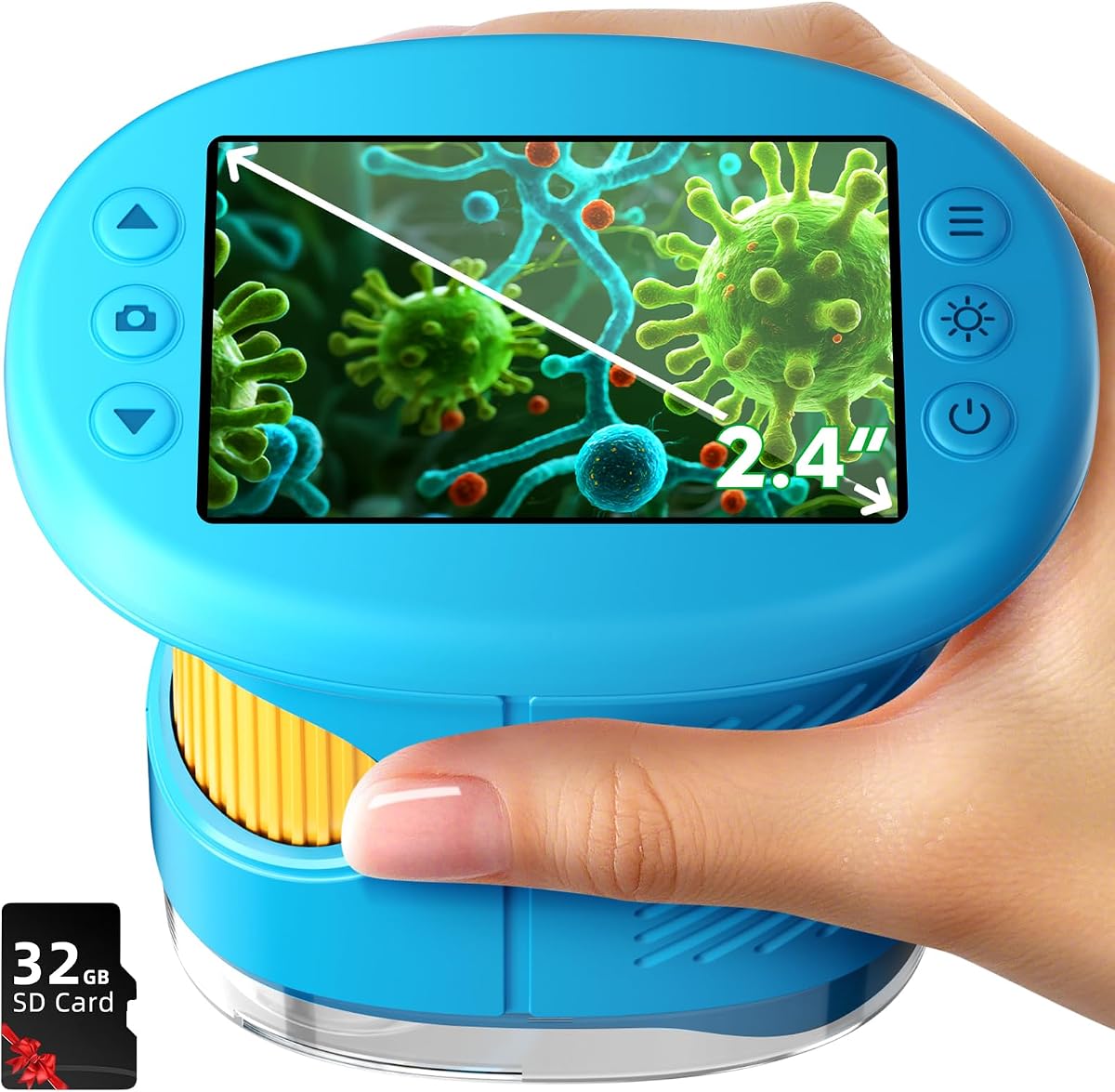
The 2.4 inch screen provides a comfortable viewing area for young eyes. Included accessories like slides and a protective case make this a ready-to-use gift. The tripod hole allows for stable mounting during detailed stationary observations.
The additional weight might be noticeable during long handheld sessions. Some children may find the protective case adds bulk to the carrying experience. These factors are minor compared to the high-quality imaging performance offered.
Tech-savvy families seeking high-resolution output will love this model. It supports creative projects like video journals and digital portfolios. We recommend it for children interested in photography and science combined.
4K HD recording captures smooth detailed videos of moving insects and flowing water for analysis.
The long-distance capability allows observation of objects without needing to be directly above them.
We may earn a commission when you buy through this link, at no additional cost to you.
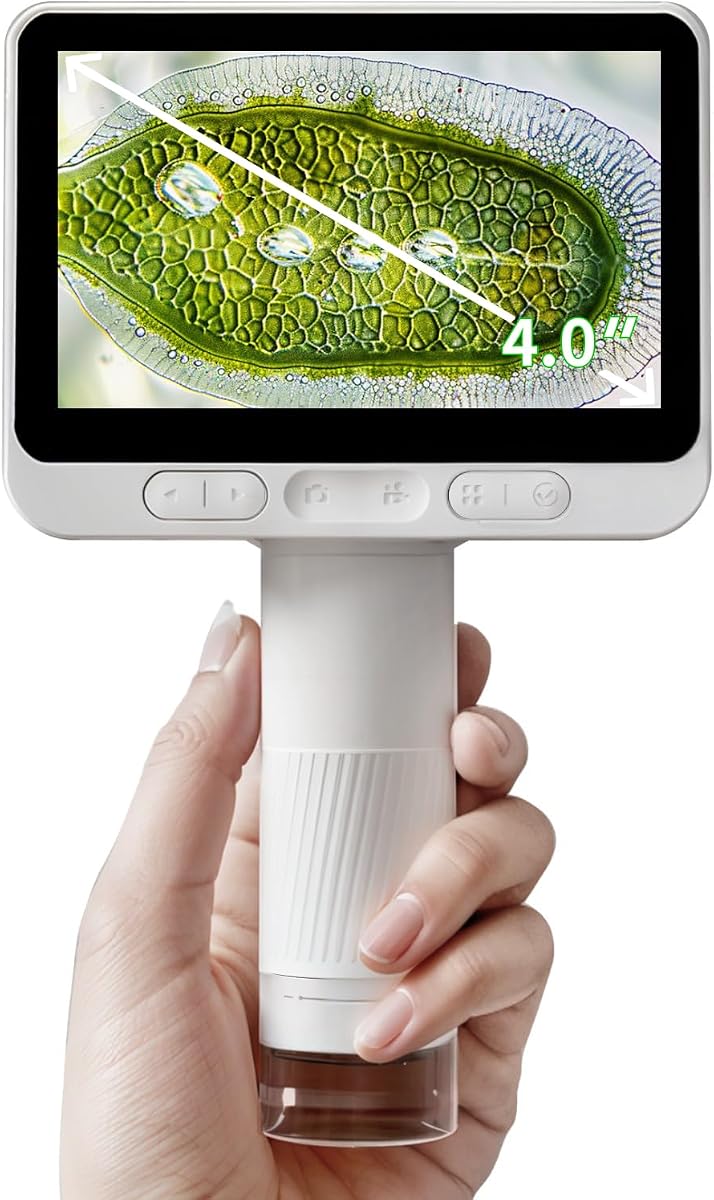
This unit features a massive 4.0 inch screen making it easy for groups to view findings together. The high magnification allows deep exploration into tiny structures like fibers and cells. Its wireless sharing capability simplifies sending photos to phones or tablets.
We may earn a commission when you buy through this link, at no additional cost to you.
The IPS display delivers vibrant colors and wide viewing angles for better immersion. Built-in lighting ensures visibility even in dark environments like a tent or cave. The 1080P video recording captures clear motion for later review.
The larger size may make it harder to carry in small pockets. Battery drain can be faster due to the bigger screen and processing power. However these drawbacks are balanced by the superior viewing experience it provides.
Families wanting a shared science experience will find this ideal. It turns exploration into a social activity rather than a solitary one. We recommend it for classrooms or groups of friends exploring together.
The large screen allows multiple children to view specimens simultaneously without squinting or crowding.
The built-in hotspot lets kids upload results to mobile devices instantly for quick sharing.
We may earn a commission when you buy through this link, at no additional cost to you.
This model captures imagination with its unique cat-shaped housing making it fun to hold. The larger display provides a clear view of specimens without eye strain. It offers multiple connection modes for flexible use with computers or standalone.
We may earn a commission when you buy through this link, at no additional cost to you.
The oversized focus wheel is easy for small fingers to operate independently. Safety certifications ensure the materials are safe for young children handling the device. The battery supports long exploration sessions without needing constant charging.
The specific design may limit appeal for children who prefer neutral styles. Internal storage transfer restrictions require a memory card for exports which adds steps. These are minor issues given the high engagement level it achieves.
Parents seeking a fun entry point into microscopy should consider this. It reduces anxiety for new users with its playful look and feel. We recommend it for younger children needing a friendly interface.
The custom cat design makes science feel like play encouraging kids to pick up the device often.
Multiple modes allow viewing on the device or on a computer for broader analysis.
We may earn a commission when you buy through this link, at no additional cost to you.
This is our top budget pick offering exceptional value for families on a tight budget. It includes a good variety of prepared slides for immediate use. The camera quality is surprisingly clear for the price point.
We may earn a commission when you buy through this link, at no additional cost to you.
The compact design fits comfortably in small hands for steady viewing. Button placement allows for easy operation without complex menus. It supports PC connection for sharing findings with teachers or family members.
The plastic slides are less durable than glass but sufficient for beginners. Storage options are limited without an external card though 500 photos is a decent start. These compromises are necessary to maintain such a low price.
First-time buyers looking for an entry-level tool will find this perfect. It provides all essentials without overwhelming complexity or cost. We recommend it for casual exploration and classroom introductions.
Includes 12 slides across four categories allowing immediate variety without extra purchases.
Delivers high-definition visuals and essential features at a price point accessible to most families.
We may earn a commission when you buy through this link, at no additional cost to you.
This microscope offers a versatile design that works well in both handheld and desktop settings. The high zoom power allows for deep investigation of tiny structures. It includes a substantial battery to support long study sessions.
We may earn a commission when you buy through this link, at no additional cost to you.
The large screen makes it easy to see small details clearly. Three adjustable brightness modes ensure visibility in various environments. PC connection supports detailed analysis and presentation preparation for older kids.
The detachable design adds some bulk making it slightly heavier to carry. Setup might take a bit more time than simpler models. These factors are acceptable given the enhanced functionality and stability provided.
Older kids needing more advanced tools will appreciate this model. It balances portability with stationary precision for detailed work. We recommend it for school projects and home lab activities.
Switching between desktop and handheld modes allows flexible use for different types of specimens.
Up to four hours of battery life ensures uninterrupted exploration during long field trips.
We may earn a commission when you buy through this link, at no additional cost to you.
This model focuses on high-quality imaging with its 4K HD camera system. It captures crisp photos and videos that highlight textures well. The lightweight design makes it easy for children to carry around comfortably.
We may earn a commission when you buy through this link, at no additional cost to you.
Adjustable brightness settings allow for better viewing in different light conditions. The included strap supports hands-free use while carrying the device. Software tools help manage files efficiently on computers.
The screen is smaller than some competitors which might strain eyes. Build quality is decent but not as robust as higher-end models. These are minor drawbacks given the excellent image capture capabilities.
Parents wanting high-quality visuals for school projects will like this. It supports detailed recording without needing expensive external gear. We recommend it for kids focused on documenting their findings.
4K HD recording ensures that captured footage looks sharp and detailed on modern screens.
Lightweight construction and a neck strap make it easy to carry during outdoor adventures.
We may earn a commission when you buy through this link, at no additional cost to you.
This microscope is designed for rugged outdoor adventures with strong build quality. It features an anti-glare diffuser for better viewing in bright sunlight. The LED lights offer multiple modes for flexible illumination conditions.
We may earn a commission when you buy through this link, at no additional cost to you.
The sturdy BPA-free plastic resists damage from drops and rough handling. USB-C charging ensures quick power-ups between field trips. It supports independent use with simplified controls for young explorers.
Internal storage is somewhat limited without external card support. It lacks glass slides which limits some advanced observation types. These are acceptable compromises for a device built primarily for outdoor use.
Parents seeking a durable outdoor companion should choose this model. It encourages active nature walks with reliable tools. We recommend it for active kids who explore frequently in the wild.
Built from BPA-free ABS plastic this unit withstands drops and rough handling during hikes.
Eight LEDs with adjustable brightness allow clear viewing from dark forest floors to bright fields.
We may earn a commission when you buy through this link, at no additional cost to you.
This microscope offers a straightforward experience for young children starting science. It provides sufficient zoom to see interesting details without complex settings. The wrist band helps prevent accidental drops during active play.
We may earn a commission when you buy through this link, at no additional cost to you.
The 400 photo capacity covers most casual recording needs. Bright LEDs ensure visibility even in dim indoor lighting. PC connectivity allows for sharing results with teachers or classmates.
Basic construction limits durability against heavy abuse. Lack of SD card support restricts long-term storage. These are acceptable given the device's simplicity and low complexity for beginners.
Families looking for a simple introduction to optics will find this suitable. It avoids technical overload focusing on immediate exploration. We recommend it for kids aged three to ten seeking a first microscope.
The included wrist band prevents accidental drops ensuring the device stays safe during movement.
Straightforward controls make it easy for young children to start exploring without setup help.
We may earn a commission when you buy through this link, at no additional cost to you.
Selecting the right microscope involves balancing technical specs with ease of use for young hands.
Most models offer between 100X and 1000X magnification which is ideal for biological samples. Higher numbers like 1600X exist but may require more stability to use effectively. Ensure the scope offers a range that suits your child's current skill level.
Look for adjustable magnification to allow gradual learning without overwhelming small users.
Larger screens like 4 inches make viewing easier for groups or detailed study. Smaller screens are more portable and battery efficient. High-resolution displays reduce eye strain during long observation sessions.
Aim for at least a 2-inch screen with clear IPS technology for best color accuracy.
Cameras range from 2MP to 4K HD enabling detailed photo and video capture. High-resolution recording helps document findings for school projects. Check for video capabilities as still photos alone may limit learning.
Opt for models with clear capture capabilities to preserve scientific observations effectively.
Typical battery life ranges from two to four hours of continuous use. Long sessions like field trips require models with extended runtime. Consider USB-C charging for faster power recovery.
Choose a model with at least three hours of usage for uninterrupted exploration.
Kid-friendly models should use BPA-free ABS plastic with shock-resistant casing. Safety certifications ensure safe materials for young children. Rubberized grips prevent slipping during active use.
Prioritize durable builds with certifications for safe handling by children.
Internal storage varies from 200 to 500 photos but external SD cards expand capacity. PC connectivity allows transfer of large files for presentations. Hotspot features simplify wireless sharing for mobile devices.
Ensure the scope supports file transfers to computers for broader sharing options.
Some kits include prepared slides lanyards or carrying cases. Accessories save money and provide immediate start options. Check if slides are glass or plastic as glass offers better durability.
Look for bundles with ready-to-use slides for immediate exploration.
Simplified controls and large focus knobs help children operate independently. Complex menus may frustrate younger users. Automatic focus or stabilization features can reduce manual effort required.
Select models designed specifically for independent operation by small hands.
Start by charging the device fully before the first use. Insert the memory card if supported to ensure you capture photos and videos. Adjust the LED lighting to the appropriate brightness for your environment to avoid glare.
Hold the microscope steady or use a neck strap for hands-free viewing. Move the focus wheel slowly until the image becomes clear. Adjust the distance between the lens and specimen for optimal focus.
Clean the lens with a soft cloth after each use to maintain clarity. Store the device in its case when not in use to prevent scratches. Regularly check the battery and update any included software for best performance.
Digital microscopes are generally designed for children aged 3 to 12. The simple controls and visual feedback make them accessible for toddlers with parental guidance. Older children can use more advanced models for deeper scientific study.
Most models support USB-C connectivity to transfer files to computers. This allows for larger screen viewing and sharing findings with teachers. Some even offer wireless hotspot features for direct mobile sharing.
While you can view everyday objects like coins and leaves without slides prepared ones are helpful. Many kits include plastic or glass slides to demonstrate cellular structures. Buying extras expands your exploration options significantly.
Battery life usually ranges from two to four hours depending on screen usage. High brightness and video recording drain power faster. Carrying a portable charger is recommended for long outdoor field trips.
Yes most are made from BPA-free safe plastic with rounded edges. They carry certifications like FCC and CPC ensuring safe materials. The lack of fragile glass parts reduces breakage risks.
Use a soft microfiber cloth to gently wipe the lens after use. Avoid using harsh chemicals or paper towels that could scratch the surface. Keeping the lens clean ensures clear images for your child.
Yes most models support video recording in HD or 4K resolution. This feature is great for documenting moving subjects like insects. Check storage limits as videos can fill space faster than photos.
Regularly update any connected software and check for firmware updates. Store the device in a dry place to prevent moisture damage. Use the carrying case to protect it from dust and scratches.
We reviewed ten top models ranging from budget-friendly kits to high-performance units. The Editor's Choice offers a balanced mix of clarity and durability for most families. Budget picks provide excellent value for first-time buyers.
Prioritize features like screen size and battery life based on your child's needs. Consider durability if the device will be used during outdoor adventures. Accessories like slides can enhance the initial learning experience.
Prices and deals change frequently so check current listings before purchasing. We hope this guide helps you find the perfect tool for young scientists. Happy exploring with your new digital microscope.