
Smart Caregiver Bed Alarm for Elderly Adults
4.2Editor score
Simple pressure sensitive sensor pad
Adjustable volume alert options
Durable vinyl construction for daily use
Finding the right bed alarm for elderly and dementia patients is crucial for ensuring safety and peace of mind during nighttime hours. These devices help caregivers monitor movement and respond quickly to potential falls or wandering incidents without constant physical supervision.
We evaluated ten leading systems based on sensor accuracy, wireless range, alert customization, and ease of setup. Our analysis covers both pressure-sensitive pads and motion-based detectors to provide a comprehensive view of current market offerings for home care environments.
Each pick highlights key strengths and potential trade-offs to help you choose the best fit for your specific care situation. Please note that product availability and pricing may change over time, so verify details before making your final purchase decision.
4.2Editor score
4.7Editor score
4.8Editor score
As an Amazon Associate we earn from qualifying purchases.
The following comparison table outlines the core specifications and capabilities of each system to help you identify which features align best with your caregiving needs and home layout.



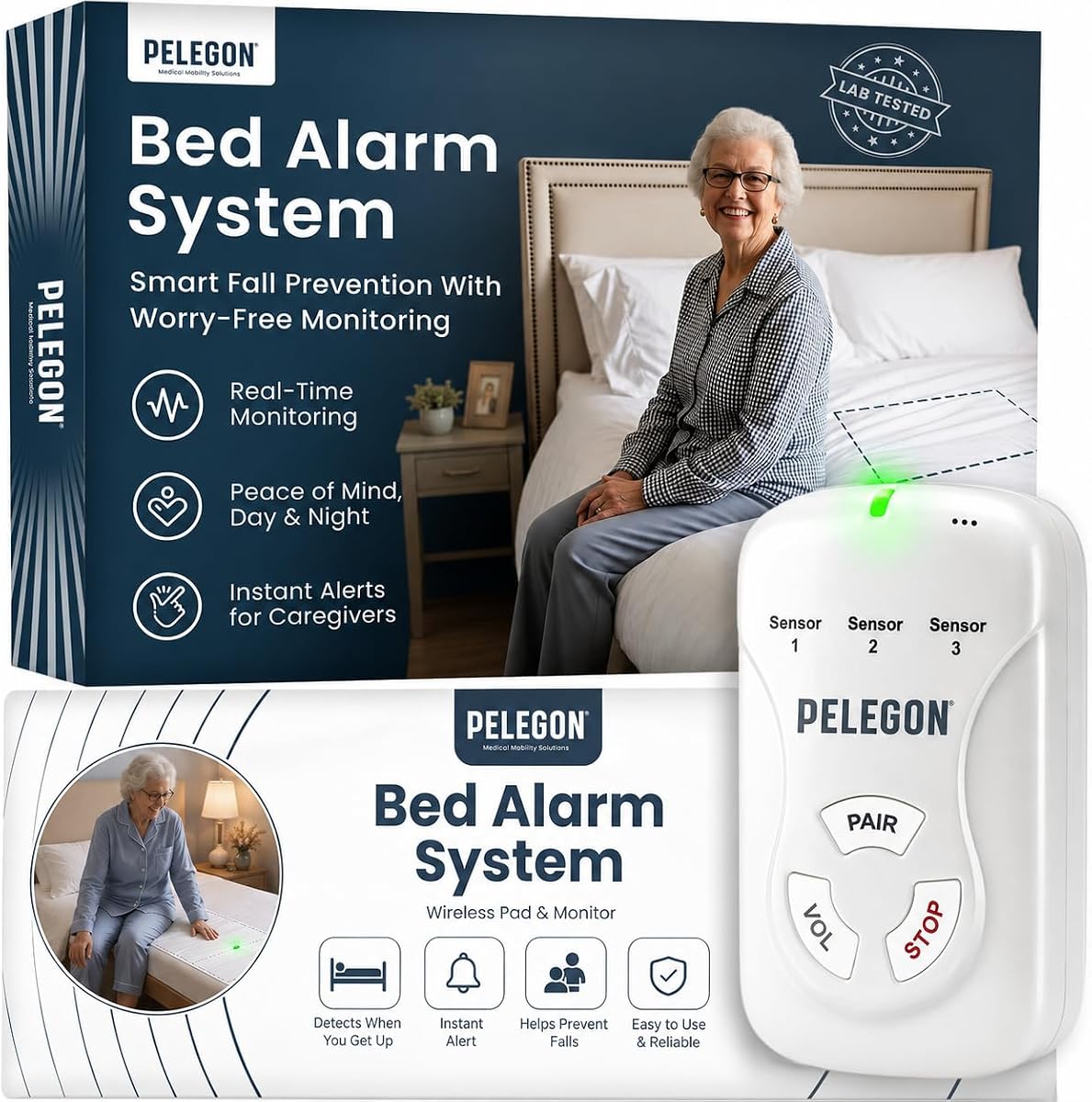
The PELEGON Bed Alarms system stands out as a top choice for caregivers seeking reliable fall prevention technology. With a high user rating of 4.7, this system offers a wireless sensor pad that detects movement as a loved one begins to rise, giving valuable seconds to assist before a fall occurs.
We may earn a commission when you buy through this link, at no additional cost to you.
Its long-range pager works up to 328 feet, allowing caregivers to monitor from another room with confidence. The customizable alert modes let you choose between sound, volume adjustments, or vibration-only settings, making it versatile for shared rooms or quiet overnight care environments.
While the system is robust, the sensor pad is not explicitly waterproof, which might be a consideration for patients with incontinence needs. Additionally, the pager relies on batteries that will need periodic replacement to maintain continuous operation without interruption.
For families prioritizing quick response times and flexible alert options, this system delivers excellent value. It is particularly well-suited for dementia care where reducing wandering risk and ensuring safety are paramount concerns for daily living.
The system detects movement early, allowing caregivers to intervene before a fall happens.
Caregivers can choose sound or vibration alerts to suit their specific home environment.
We may earn a commission when you buy through this link, at no additional cost to you.
The Smart Caregiver Bed Alarm offers an accessible entry point for those needing basic fall prevention without advanced features. It instantly alarms when pressure is removed from the pad, allowing caregivers to know when their loved one is safe in bed or attempting to rise.
We may earn a commission when you buy through this link, at no additional cost to you.
Its flexible alert options include an in-room alarm or an optional wireless add-on kit sold separately. The durable 10 by 30 inch vinyl sensor pad is sealed for incontinence protection and easy to clean with a wet cloth for daily use.
While effective, the corded connection might limit placement flexibility compared to fully wireless models. The optional wireless kit adds cost, so users seeking seamless mobility should weigh this against the budget-friendly base price.
Ideal for tight budgets, this unit provides reliable core functionality for monitoring bed exits. It is a solid choice for caregivers who need a straightforward solution to know when their loved one is safe in bed.
The system triggers alerts when pressure is removed from the sensor pad under the sheet.
Vinyl material resists wear and is sealed for easy cleaning in caregiving environments.
We may earn a commission when you buy through this link, at no additional cost to you.
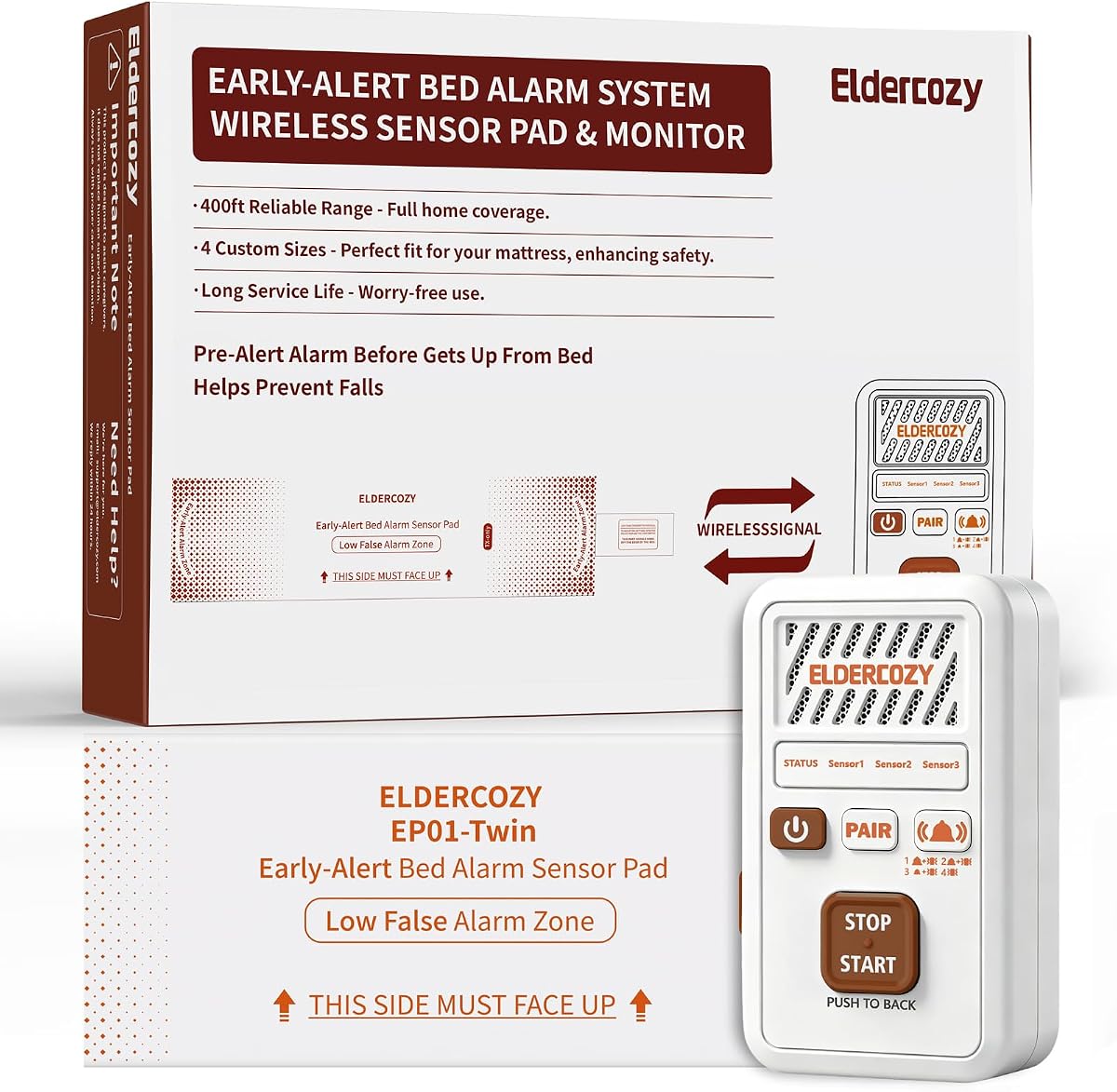
This Twin Size Wireless Bed Alarm system is designed for comfort and early detection. The TPU composite material never crunches when rolling over, ensuring uninterrupted sleep while providing reliable alerts when a loved one sits on the edge of the bed.
We may earn a commission when you buy through this link, at no additional cost to you.
Its wireless signal reaches up to 400 feet, offering extensive coverage without constant hovering. The replaceable AAA batteries extend the system's lifespan indefinitely, avoiding the need to discard pads after a short period of use.
The waterproof design resists stains and wipes clean instantly, which is vital for hygiene. Caregiver mode temporarily pauses alarms for twenty minutes during assistance, reducing false alerts and maintaining dignity for the patient.
For those prioritizing comfort and long-term value, this premium system is worth the investment. It balances high-end features with practical caregiving needs, making it a top contender in the current market for bed alarms.
TPU composite avoids the crinkly noise common with older PVC sensor pads.
Alerts trigger when sitting on the edge, before the patient stands up fully.
We may earn a commission when you buy through this link, at no additional cost to you.
This Upgraded Version Bed Sensor Alarm uses a motion sensor placed on the floor to detect feet touching the ground rather than weight on a pad. This setup can reduce false alarms from bed movements and offers a unique approach to monitoring patient exits.
We may earn a commission when you buy through this link, at no additional cost to you.
The 918-foot transmission range in open areas ensures coverage even across large homes. Dual power options via alkaline battery or Micro USB provide flexibility, while dual reminders of LED lights and sound enhance notification reliability.
The system includes a self-test procedure when turned on, which might delay initial activation slightly. Placement under the bed is required, so users must ensure the sensor is positioned correctly to detect foot movements accurately.
Ideal for those avoiding in-bed pads, this system focuses on exit detection at the floor level. It is a practical option for caregivers seeking wireless monitoring without direct contact with the bedding or patient.
Triggers when a patient's foot is about to touch the ground instead of weight on a pad.
Supports both battery and USB power to ensure continuous operation without downtime.
We may earn a commission when you buy through this link, at no additional cost to you.
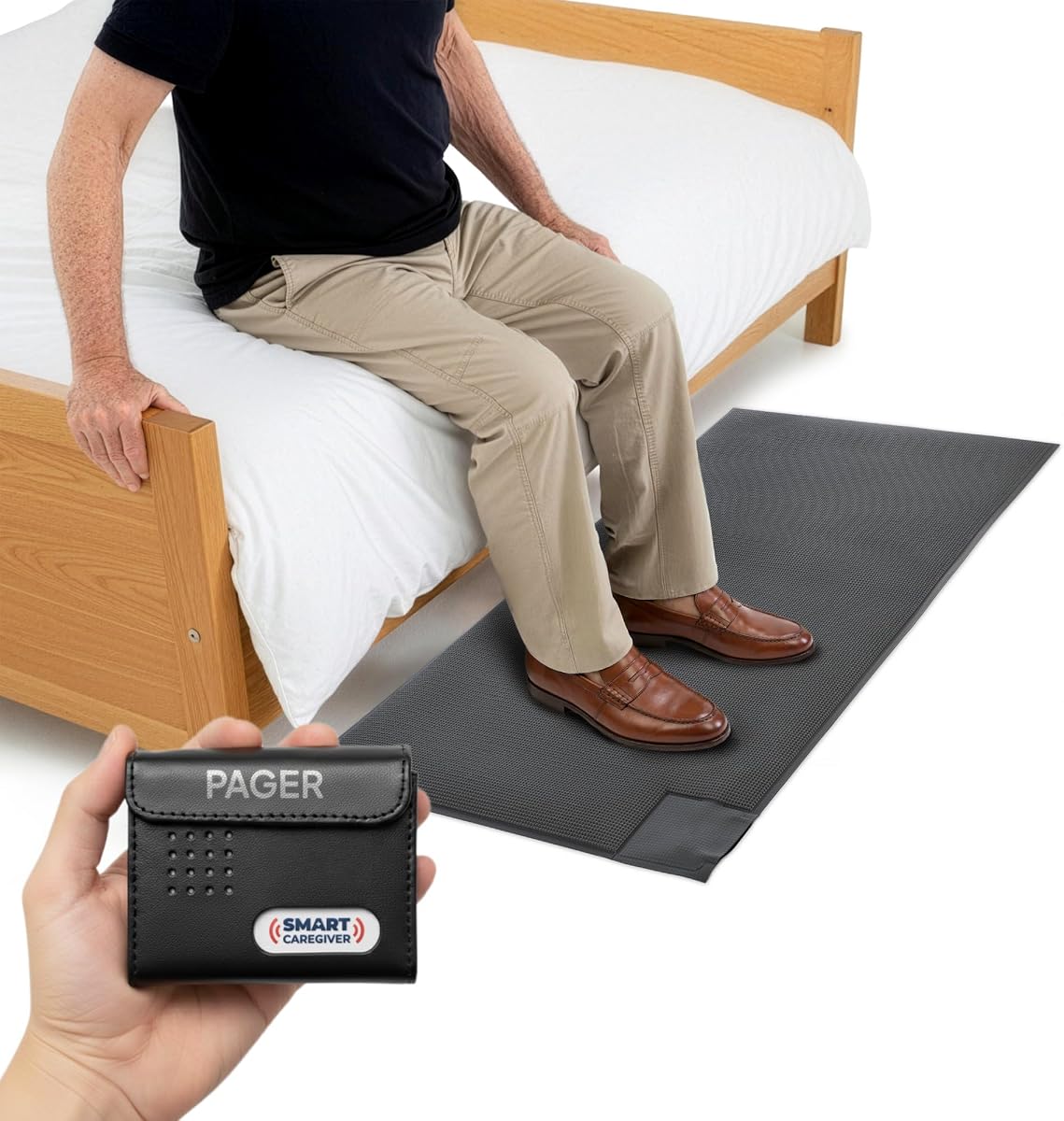
The Smart Caregiver Floor Mat Alarm system alerts caregivers immediately when patients step on a weight-sensing floor mat placed next to the bed or by an exit door. This prevents falls and wandering by detecting movement at the floor level rather than on the mattress.
We may earn a commission when you buy through this link, at no additional cost to you.
With a 300-foot wireless range, the pager can be carried anywhere in the home while maintaining connection. The system supports multiple devices, allowing for a broader monitoring network covering beds, chairs, and doorways for comprehensive safety.
The mat itself is a durable 24 by 48 inch sensor that is easy to place. However, the system requires specific floor space for the mat, which might limit options in very small rooms or crowded hallways.
For users needing a robust floor-level monitoring solution, this system offers excellent range and expandability. It is particularly useful for preventing wandering incidents by alerting when a patient heads toward an exit door.
Alerts when steps are detected on the mat placed by the bed or door.
Can be paired with other sensors for full coverage of multiple areas in the home.
We may earn a commission when you buy through this link, at no additional cost to you.
This Bed Exit Alarm features a full-coverage weight sensor that alerts caregivers when pressure is removed, signaling the patient has left the bed. The large contact sensor is engineered to reduce false alarms common with early alert pads.
We may earn a commission when you buy through this link, at no additional cost to you.
The included pager supports both vibrate and sound alerts, enhancing response times. It allows for an expandable network of up to six sensors, enabling monitoring of beds, chairs, and doorways for complete fall prevention coverage.
While effective, the system relies on a cord running from the pad to the monitor. This can limit placement flexibility compared to fully wireless sensors, though it ensures a stable connection for critical alerts.
For households needing comprehensive monitoring across multiple points, the expandable feature is a key advantage. The support from a U.S.-based company adds reliability for those prioritizing customer service and product durability.
Extra-large contact sensor reduces false alerts caused by accidental pressure shifts.
Supports multiple sensors to create a full safety net for various areas.
We may earn a commission when you buy through this link, at no additional cost to you.
The CallToU Bed Alarms system uses an infrared motion sensor positioned beside the bed to detect feet touching the ground. This approach avoids needing direct contact with the patient and reduces false triggers from minor bed movements.
We may earn a commission when you buy through this link, at no additional cost to you.
The receiver offers 18 ringtones and 5 volume levels, allowing for customization. A Type-C charging port adds convenience, and the 360-degree sensor rotation helps align detection zones precisely to prevent unnecessary alerts.
While the detection range is between 3 to 10 feet, it requires careful placement to ensure accuracy. The battery-powered sensor ensures portability, but the lower user rating suggests potential inconsistencies in reliability for some users.
Ideal for those seeking a wireless, non-contact solution, this system offers flexibility. It is best suited for caregivers who prioritize silent vibration alerts and customizable tones to suit their specific environment.
Infrared sensor detects feet without requiring the patient to touch the device.
Multiple ringtones and volume levels help tailor notifications to user preferences.
We may earn a commission when you buy through this link, at no additional cost to you.
This system uses a wireless motion sensor that triggers an alarm when a patient's feet are about to touch the floor. It is a practical alternative to pressure pads, avoiding issues related to incontinence or displacement of the mat.
We may earn a commission when you buy through this link, at no additional cost to you.
Transmission reaches 918 feet in open areas, allowing for substantial freedom of movement. The receiver supports multiple alert modes including sound, LED, and vibration, which can be adjusted via a dedicated button on the side.
The dual power options via battery or Micro USB reduce downtime. However, the initial self-test procedure adds a brief delay before the device becomes active, which users should account for during setup.
For those needing a versatile motion-based solution, this system offers good range and customization. It is best suited for caregivers who want to monitor exits without direct contact with the bed or mattress.
Up to 918 feet of open area coverage ensures alerts reach the caregiver anywhere.
Supports both battery and USB power to keep the system running continuously.
We may earn a commission when you buy through this link, at no additional cost to you.
This system includes both a bed pad and a chair pad for monitoring falls from either location. It alerts caregivers immediately when pressure is removed, indicating an attempt to get up and providing vital seconds for assistance.
We may earn a commission when you buy through this link, at no additional cost to you.
The phone-style clip makes it easy to switch between using the bed and chair pads with the same monitor. This versatility ensures comprehensive coverage for patients who spend significant time sitting in chairs as well as in bed.
The setup involves a cord running from the pad to the monitor, which can limit flexibility. Additionally, users needing monitoring in multiple rooms may need to purchase additional monitors separately for full coverage.
For caregivers needing a dual-purpose solution, this system simplifies management of alerts. It is particularly useful for those who want to monitor both sitting and lying positions with a single device.
Includes both bed and chair pads to cover multiple fall risk locations.
Phone-style clip allows quick switching between pads for versatile use.
We may earn a commission when you buy through this link, at no additional cost to you.
This Bed Sensor Pad utilizes advanced pressure motion detection to monitor movements and trigger alarms when a patient attempts to leave the bed. The 32 by 13 inch pad is designed to be durable and easy to clean with incontinence-resistant materials.
We may earn a commission when you buy through this link, at no additional cost to you.
The wireless pager features adjustable volume, music, and vibration modes, providing discreet notifications. With a range up to 300 feet, caregivers can move freely while maintaining reliable monitoring for home or hospital use.
While the features are robust, the lower user rating suggests some inconsistencies in performance or comfort. Users should consider these potential limitations when evaluating the system against higher-rated alternatives in the market.
For those seeking a versatile pad solution with multiple alert types, this system offers potential value. It is a suitable option for facilities needing hygienic and portable monitoring devices across different care settings.
Durable latex-free materials resist tears and water for simple hygiene and longevity.
Suitable for home, hospital, and rehabilitation center use across different environments.
We may earn a commission when you buy through this link, at no additional cost to you.
Selecting the right bed alarm requires understanding the specific needs of your loved one and your caregiving routine. Below are key factors to consider before making a purchase.
The most critical factor is choosing between pressure-sensitive pads and motion sensors. Pressure pads detect weight changes when a patient shifts or stands, while motion sensors detect movement on the floor or at the door. Motion sensors can reduce false alarms from incontinence or tossing and turning, whereas pads offer earlier detection of rising attempts.
Consider your loved one's movement patterns. If they tend to lie still before standing, a pressure pad may be better. If they are restless sleepers, a motion sensor placed under the bed might avoid nuisance alerts.
Wireless range determines how far you can move from the sensor while receiving alerts. Models range from 300 feet to nearly 1000 feet in open spaces. Ensure the range covers your bedroom size and any adjacent areas where you might be working.
If you often leave the room for long periods, a longer-range system ensures you won't miss an alert. Always check the open-area rating, as walls and furniture can reduce signal strength.
Alert modes vary from simple beeps to customizable ringtone and vibration options. Vibrations are useful for hearing-impaired caregivers or quiet rooms. Look for systems that allow volume control and silent modes to avoid startling the patient.
Choose a system that lets you switch between sound and vibration easily. This flexibility helps adapt to different times of day or specific care scenarios without changing devices.
Some systems require mounting or complicated wiring while others are plug-and-play. Look for tool-free setups where the pad slides under the sheet and the pager connects automatically. This simplifies installation and reduces the risk of incorrect placement.
If you are not technically inclined, prioritize systems with clear instructions and pre-paired components. Quick setup means less downtime during critical transition periods.
Battery types impact maintenance. Some systems use built-in rechargeable batteries while others use disposable AAA or 9-volt cells. Replaceable batteries are often easier to manage for long-term use without worrying about charging ports.
Check how long batteries last on a single charge or set. Systems that alert on low battery help ensure you never lose monitoring capability unexpectedly during the night.
For patients with incontinence, waterproof or sealed pads are essential. Look for materials like vinyl or TPU that resist moisture and wipe clean easily. This extends the life of the sensor and maintains hygiene.
Durability is key for daily use. Ensure the sensor is sealed against leaks to prevent electrical damage and keep the material soft enough to prevent skin irritation.
If you need to monitor chairs or doors as well, choose a system that supports multiple sensors. This creates a network where one pager receives alerts from different zones, providing comprehensive safety without multiple devices.
This feature is vital for dementia patients prone to wandering. It ensures you are alerted whether they attempt to leave bed or move toward an exit door.
Real-world feedback reveals reliability issues not always found in specs. Read reviews to see if the device stays true to its stated range and alert speed. A high rating often correlates with consistent performance in caregiving settings.
Pay attention to comments about false alarms or connection drops. A reliable device is more important than one with many features that fail in critical moments.
Start by placing the sensor pad flat under the fitted sheet, ensuring it aligns with the patient's shoulder blades or hips. If using a motion sensor, position it on the floor beside the bed or under the bed frame to detect foot movement effectively.
Test the system before bedtime by lifting the pad or simulating movement to confirm the pager triggers an alert. Adjust the volume and alert modes based on whether you prefer sound or vibration to suit your sleeping arrangement.
Clean the sensor pad regularly with a damp cloth to maintain hygiene and sensor sensitivity. For wireless components, check battery levels weekly and ensure the receiver is always within the specified range to avoid signal loss.
Bed alarms provide early alerts when a patient attempts to rise, giving caregivers time to intervene. While they cannot guarantee fall prevention, they significantly reduce the risk by facilitating quicker assistance compared to leaving a patient unsupervised.
Most modern systems have vibration or silent modes specifically designed to avoid startling the patient. The sensor triggers an alarm for the caregiver, not the patient, ensuring the environment remains quiet and restful during nighttime hours.
Look for models with waterproof or sealed vinyl pads that resist liquids. These designs protect the internal electronics and make cleaning easy, ensuring the system remains functional even if accidents occur during the night.
Wireless ranges vary from 300 to nearly 1000 feet depending on the model. Always check the open-area rating and consider how walls and floors in your home might reduce signal strength before placing sensors far from the receiver.
Most bed alarm systems are battery-powered and require no software or Wi-Fi connection. They operate directly via the pager receiver, making them simple to set up without technical configuration or internet requirements.
Some systems offer dual pads for bed and chair monitoring. Alternatively, portable motion sensors can be placed beside a chair to detect when a patient stands, providing versatile coverage across different furniture types.
The PELEGON Bed Alarms lead our list with fast response and customizable alerts. The Smart Caregiver Bed Alarm offers a cost-effective solution for basic needs, while the Twin Size Wireless Bed Alarms excel in comfort and long-term value.
Prioritize systems that balance range and battery life to ensure consistent monitoring. Consider your loved one's specific movement patterns and hygiene needs to select a sensor that fits seamlessly into your daily routine.
Always verify the current availability and specifications before purchase. As technology evolves, newer models may offer improved features that better suit your specific caregiving requirements and home environment.